Why Now Is the Time to Plan Farm Succession, Findex Says
OPINION: Succession and long-term planning are perennial topics because it is perpetually sidelined on busy farms.
 increase font size
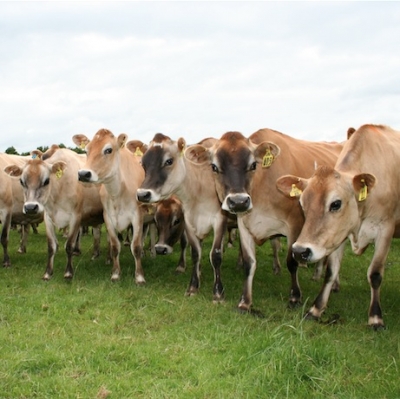
DAIRY FARM running costs haven’t abated after increasing a lot in 2007-08 and they are now out of kilter with the consumer price index, LIC chairman Murray King says.
“As we all know the milk price is under pressure and farmers are looking closely and scrutinising their costs,” King told the annual meeting.
Farming systems have changed much over the last 10 years with about one million cows moving out of low cost farming systems to feed intense systems.
However breeding and herd improvement is a very small contribution to the overall costs in most farming businesses. “The value we give you through herd improvement is significant,” King said. “Genetic merit in the industry equates to about $400m per year of annualised gains. With our market we contribute over $300m of that.”
Lifting in-calf performance could bring gains of $35m-$40m in the dairy industry. Identifying the poorest cows – important during a low milk price period so they can be culled – could also bring gains of about $40m.
King said 2013-14 was a great season for dairy with a high demand for LIC’s herd testing and artificial breeding services and an increase in farmers investing in technology which drives efficiency gains onfarm notwithstanding the drought last summer in Northland and Waikato.
Annual results showed revenue in the financial year to May 31, 2014 was $211m. The dividend was $11.17m, down from $16.75m last year but similar to 2012, with 8.65c per cooperative control share and 35.90c per investment share.
The annual dividend payment over the last few years have averaged $12m per year, King said. “As we are closely linked to the fortunes of the highly volatile dairy industry these payments tend to fluctuate. Nevertheless a respectable dividend yield has been achieved – now coming under pressure as the share price rose significantly over the years and we invested more heavily in growing the business.”
There were 10,236 shareholders as at May 31 – up 123 from previous years.
“We intend the business to be significantly bigger. It will involve core products and services in genetics, information and hardware onfarm and more in the international market… because that’s where our competitors potentially come from. We also get the opportunity to learn a lot from what’s happening in the world.”
Some of the growth will be from the current core business, some from innovation we are developing now and in the future. Some will be from IT offerings from farm hardware, diagnostic testing.
OPINION: Succession and long-term planning are perennial topics because it is perpetually sidelined on busy farms.
Farms across the upper North Island are trialling different pasture mixes as part of a research programme that aims to build greater resilience into farming systems.
Election years are always a concerning time for farmers, according to DairyNZ chair Tracy Brown.
Matt Collier, Probiotic Revolution, says calves will drink a lot of milk once-a-day with their probiotic Calf Xtreme.



Striking a balance between meeting the needs of industry to speed up approval time for products but on the other hand ensuring that risks are properly assessed.
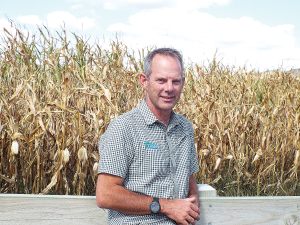
Surprised, humbled and quite thrilled. That’s the reaction of James Allen, one of the founding partners and now chief executive of AgFirst, on being made a life member of the Institute of Rural Professionals.
It was billed as a chance for all the political parties to woo the rural vote, but question marks hang over just how effective this was.
Minister of Conservation Hon Tama Potaka has appointed Susan O'Regan as Chair of the Queen Elizabeth II National Trust (QEII) for a three-year term.
Red meat farmers are welcoming Labour’s plan to review the Emissions Trading Scheme and not to campaign on pricing agricultural emissions.
Now in its fourth year, the 2026 Fencing Industry Awards, formed part of the proceedings of the FCANZ Conference, held in Nelson during August.