
Beef + Lamb New Zealand Awards 2026 Winners Announced in Christchurch
Last night saw the winners of the 2026 Beef + Lamb New Zealand (B+LNZ) Awards named at a gala dinner at Te Pae Christchurch Convention Centre.
 increase font size
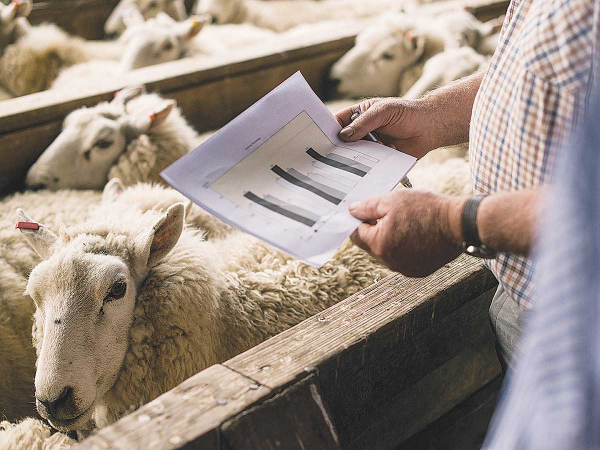 The report found that the high level of ingenuity in the rural communities was a key element to their resilience and capacity to overcome movement restrictions and the disruption caused by Covid. Photo: Kieren Scott.
A new study has found a strong ‘can do’ attitude and cooperative spirit in the agricultural sector were significant factors in minimising losses and uncertainties during the Covid restrictions last year.
The report, co-authored by Lincoln University’s Dr Lei Cong – with contributors from AgResearch, The University of Queensland, NZ Institute of Economic Research, and Plant and Food Research – measured the immediate impacts of Covid-19 restrictions to June 2020 on the Australian and New Zealand agri-food systems and how resilient these systems were.
It found the effects on both countries were broadly similar, with relatively minor economic impacts across the surveyed agri-sector industries.
The report says the high level of ingenuity in the rural communities, both in Australia and New Zealand, was likely a key element to their resilience and capacity to overcome movement restrictions and the disruption of value chains.
“Restrictions and new rules of engagement and interaction were adopted rapidly as ‘people accepted a new reality and adapted to it’.”
According to the report, the agricultural sectors in both countries “assimilated the many ‘unmanageable disruptions’, such as the loss or disruption to export markets and short supply of inputs. This created impetus for diversifying markets and strengthened business cases for value-adding and local manufacturing.”
It also suggests that this resilience emerged from a combination of the agri-sector industries having relatively high technology, being well connected/networked and having some experience of prior shocks – as well as being well supported, primarily logistically, by their governments.
“Agricultural producers in Australia and New Zealand are well organised and business-oriented, and thus had the right structures and sufficient financial backing to manage through a pandemic,” the report states. “Product demand was maintained domestically due to income support, while export markets remained fairly constant.”
It also noted that some important lessons – such as the need to upskill young people in rural areas and control or reverse the negative rural migration, the need to diversify export markets, as well as the need to plan for the ‘unplannable’ to deal with the next ‘Black Swan’ event.
The researchers conducted 44 interviews and had 321 responses to the survey with similar numbers of responses from non-farmers across the two countries. They had about twice as many responses from farmers in New Zealand than in Australia.
Last night saw the winners of the 2026 Beef + Lamb New Zealand (B+LNZ) Awards named at a gala dinner at Te Pae Christchurch Convention Centre.
A significant breakthrough in understanding facial eczema (FE) in livestock brings New Zealand closer to reducing the disease’s devastating impact on farmers, animals, and rural communities.
A breakthrough in the understanding of Facial Eczema (FE) in livestock could bring New Zealand closer to reducing the disease’s impact.
An innovative idea for transforming mechanically deboned meat (MDM) into a meat flake for seasoning has taken top honours in the Meat Industry Association’s (MIA) first-ever Dragon’s Den competition.
The Government's plan to merge the seven crown institutes presents exciting possibilities for plant technology company Grasslanz Technology, says chief executive Megan Skiffington.


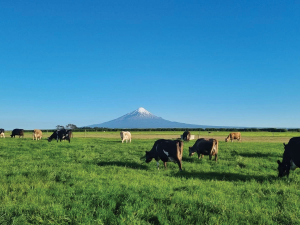
A spate of southerly winds bringing cold temperatures has presented challenges for Taranaki dairy farmers.
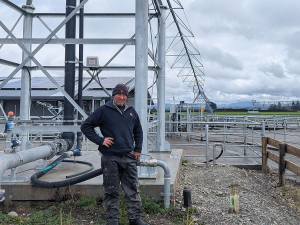
Converting a longstanding cropping farm to dairy was the only way to ensure the land stayed in the family long term, says new dairy farmer Rod May.
As the election heats up, Organics Aotearoa New Zealand (OANZ) has launched its election scorecard designed to help voters wanting to support policies that grow organic and New Zealand's organic sector.
A 'tsunami' of milk from key exporting countries is winding down and this may be good news for New Zealand dairy farmers.
Will the good times last? That's one of the key issues to come out of the latest Federated Farmers confidence survey.
Outgoing Fonterra Co-operative Council chair John Stevenson says that it has been a privilege to represent the co-op's farmer shareholders.




