
All sizzle, no sausage — Editorial
OPINION: Despite all the hype and political theatre surrounding last week’s release of the Primary Sector Council’s report, the document seems more like a horoscope than a clear guide to anywhere.
 increase font size
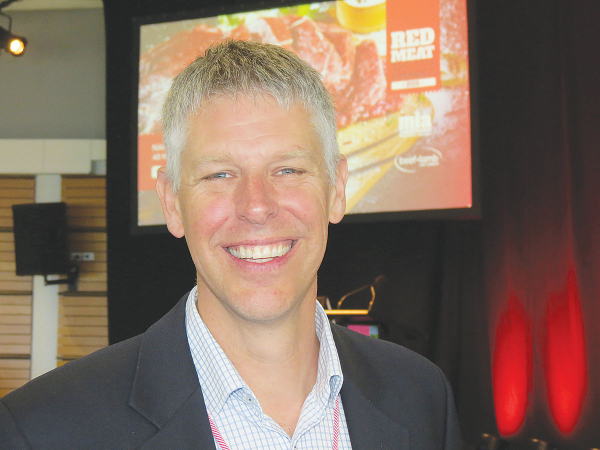 Lain Jager says the report is designed to inform policy makers on the path of travel NZ's primary sector needs to take in the future.
A primary sector think tank believes it's incredibly important for the NZ sector to grow exponentially and a big focus should be on developing exports in the 'wellness' space.
Lain Jager head Te Puna Whakaaronui - an offshoot of the Primary Sector Council - which has just produced a 48 page report. Jager claims the report is designed to inform policy makers on the path of travel NZ's primary sector needs to take in the future.
Jager says it's not unreasonable for the primary sector exports to grow by 2% annually, with the aim of reaching $85 billion by 2050. He says this is necessary because our economy faces higher superannuation and health costs - caused by an aging population along with the cost of de-carbonising the economy and dealing with ongoing labour shortages.
"The report looks at how we can retain our current food and fibre sector - that means dairy, sheep and beef, horticulture, wine, forestry and fishing - and how can we continue to grow these," Jager told Rural News. "The report also looks at new growth opportunities and how we can unlock these."
One issue the report highlights is the 'wellness' niche and it says the global pandemic has seen increased consumer focus on healthy food and nutrition. It says a tightening of our focus on wellbeing enables NZ to "leverage the best of our Food and Fibre Sector, as well as fairly the value of our rich Māori heritage and our reputation for providing quality food".
The report claims the wellness economy is one of the largest and fastest growing global consumer segments. It says, in the past, NZ companies have tried to access segments of this market but have made slow progress. The report quotes McKinsey as predicting that over the next decade 80% of consumption growth in Asia will come from the top two income tiers. It says this aligns with NZ's aspirations to claim market position in high value health and nutrition market segments.
According to Jager, while the global economy is looking pretty ropy at the moment, the future is bright for the NZ primary sector - if it can capitalise on its strengths and ensure this is matched by quality science and innovation.
"I would argue that this report and reports like this are as relevant as they have ever been," Jager claims. "The reason is that climate change is sitting across everything and - as a consequence of that - is the unparalleled rate of technological change globally in food value chains."
He claims this is leading to the evolution of consumer preferences, at both the commodity and high value end, and the geopolitical tensions driving interest in food security and shortening supply chains.
Jager says the good news is that there are clearly growth opportunities for the NZ food and fibre sector.
OPINION: Despite all the hype and political theatre surrounding last week’s release of the Primary Sector Council’s report, the document seems more like a horoscope than a clear guide to anywhere.

Late last year, the Primary Sector Council (PSC) unveiled its vision for the future of New Zealand’s primary industries.
The Primary Sector Council believes it’s no longer appropriate to refer to “the primary sector”.
Your old mate notes that after almost two years of cosy meetings and more than $2 million wasted, Ag minister Damien O’Connor’s brainfart, the Primary Sector Council, released its ‘strategy’ on the eve of Christmas, last year.
The Primary Sector Council (PSC) has unveiled its vision for the future of New Zealand’s primary industries.


For Canterbury dairy farmers Sian Meijer and Rick Wobben, wearable technology has become one of their most valuable on-farm tools - helping manage 1850 cows across an expansive, high-performing dairy operation while improving efficiency, mating outcomes and day-to-day decision making.
Fonterra has unveiled its annual results for the 2026 financial year, posting $27 billion in revenue and close to $20 billion returned to New Zealand farmer owners and unit holders.
The first major update to the Dairy Cattle Code of Welfare in more than a decade has been released, marking what DairyNZ describes as an important step in ensuring animal welfare standards continue to evolve alongside scientific evidence and on-farm realities.
Ravensdown shareholders have elected Jane Montgomery and Kate Acland to the Ravensdown Board for three-year terms, following a closely contested director election.
Federated Farmers says new legislation replacing the Resource Management Act will cut red tape, unlock investment and help grow New Zealand's export-led economy, after the Planning Bill and Natural Environment Bill passed their third reading in Parliament yesterday.
Leading figures from the major political parties will be questioned on their primary sector policies at the Rural Issues Debate at Mystery Creek Events Centre, Hamilton, on 30 September.