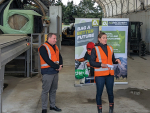
New Rural Recycling Scheme to Replace Voluntary Farm Plastics Programmes by 2027
Environment Minister Nicola Grigg has announced details of a new rural plastics recycling scheme.
 increase font size
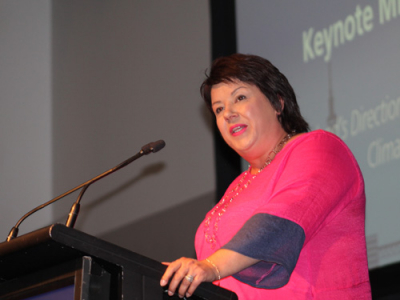 Climate Change Minister Paula Bennett.
New Zealand’s Paris target, of 30% reduction in 2005 emissions levels by 2030, is fair and ambitious, and will not be easy to reach, says Climate Change Minister Paula Bennett.
“It’s going to require some changes from all parts of society, but I have no doubt that New Zealanders are up for it,” she told a Climate Change and Business Conference in Auckland yesterday.
“We’re a nation that believes in and practices constant progress, even when people don’t realise it, and the next 18 months will be critical as we plan New Zealand’s response to climate change.
“Large parts of our plan are already underway, and our target will be met through a combination of domestic emissions reductions, removals of greenhouse gas emissions in the atmosphere by forests, and international carbon markets.
“The Government is currently looking at pulling together the various threads required to figure out a mix that works for our particular domestic circumstances.”
Day 1 of the conference started with speeches from France’s Ambassador to New Zealand, Florence Jeanblanc-Risler, and from Bennett, on the next stages of the Paris Agreement on climate change and the implications for New Zealand.
The ambassador, whose country’s diplomacy is credited with the successful negotiation of the Paris Agreement in December 2015, said it is critical that all aspects of society get involved in developing plans to reduce global emissions.
The Minister said the Government recognised the need for policy certainty and a comprehensive plan to reduce New Zealand’s emissions in line with the country’s Paris Agreement pledge (to cut emissions by 11% on 1990 levels by 2030), and said progress was being made on a cross-party consensus on climate change policy.
Diplomats and international experts outlined approaches being taken in other countries, with emphasis on the actions of the world’s largest emitters, China, the United States and the European Union.
The Ministry for the Environment’s director of climate change, Kay Harrison, says the current review of the Emissions Trading Scheme is a chance to fix mistakes in the original design to the scheme and prepare it for the Paris Agreement, which comes into force in 2021. She stressed the need to take it slowly and get it right, and said officials will be seeking more input from businesses and other organisations.
A discussion on the operation of the ETS focussed largely on the future supply of carbon credits, as New Zealand and other countries are relying on the ability to purchase credits internationally to meet their Paris Agreement pledges. There was also a good deal of discussion on how New Zealand should deal with biological emissions from agriculture, which make up nearly half New Zealand’s total emissions profile.
Examples from the real world saw businesses outlining how they are cutting emissions – Ikea has installed 700,000 solar panels on the roofs of its buildings, NZ Bus is converting its fleet of diesel buses to electricity, Fonterra is using heat recovery to avoid using more coal, and Countdown is using natural refrigeration to cut emissions and LED lights to slash energy consumption (and cutting 40% off its energy bill).
Environment Minister Nicola Grigg has announced details of a new rural plastics recycling scheme.

For the first time in a quarter of a century, Federated Farmers has something positive to say about the Labour Party’s climate change policy leading into a general election.
The Ballance Farm Environment Awards are coming to the West Coast of the South Island.
Climate, nature and animal wellbeing make up Fonterra's refreshed sustainability roadmap released last week.
There's been widespread support from the primary sector for the Government's announcement on changes to freshwater farm plans that come under the Natural Environment Bill, which is now set to replace the existing RMA.


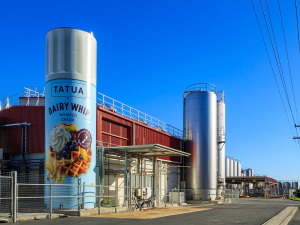
Waikato milk processor Tatua has again declared a record milk payout to farmer shareholders, leaving other processors in the dust.
A Labour-led Government won’t be bringing back the controversial freshwater rules of 2020.
National’s much-touted free trade deal with India featured in the Rural Issues Debate at Mystery Creek, Hamilton on Wednesday night.
New Zealand's 2026-27 freshwater fishing season has opened, with anglers encouraged to head to rivers and lakes over the coming days as conditions look favourable across much of the country.
Central Otago District Council (CODC) has voted against a plan to spread treated sewage sludge from Cromwell and Alexandra on farmland near Lauder, a decision Federated Farmers says reflects strong opposition from rural residents.
Pāmu has released its FY26 Integrated Annual Report, reporting a Net Operating Profit of $113 million, more than double the $49 million recorded in FY25.