
NZ Milk Price Could Hit $10/kgMS as Global Supply Eases
A 'tsunami' of milk from key exporting countries is winding down and this may be good news for New Zealand dairy farmers.
 increase font size
 Rabobank New Zealand country banking general manager Bruce Weir.
Rabobank's latest rural confidence survey shows a minus 72% confidence reading - eclipsing last June’s historic minus 57% - the lowest in the survey’s 20-year history.
Some 77% of farmers expect conditions in the broader agricultural economy to worsen over the next 12 months, with only 5% expecting conditions to improve. Rabobank New Zealand country banking general manager Bruce Weir says lower commodity prices are the main source of farmer anxiety, with 54% of farmers attributing this as a reason for their pessimistic view on the year ahead.
“Following our last survey, we saw Fonterra lower the mid-point of their farmgate milk price forecast from $8.00kg/MS to $6.75kg/MS, while schedule prices for sheep and beef products have also tumbled,” Weir says.
“Fonterra’s subsequent revision of the milk price to a new mid-point of $7.25kg/MS is a significant boost for the industry. However, this lift was made after the survey period and is therefore not reflected in the latest results.”
Other pressing concerns for farmers are rising input costs (46%), government policies (35%), overseas markets (29%) and rising interest rates (18%). The latest survey show that – for the first time since 2020 – government policy was not in the top two main reasons for concern. It was also cited as the main reason for optimism among farmers expecting conditions to improve.
Other pressing concerns for farmers are rising input costs (46%), government policies (35%), overseas markets (29%) and rising interest rates (18%). The latest survey show that – for the first time since 2020 – government policy was not in the top two main reasons for concern. It was also cited as the main reason for optimism among farmers expecting conditions to improve.
Weir urges farmers not to overlook their own health and wellbeing, with the survey finding more farmers less optimistic about the prospects for their own farm businesses and more likely to view their operations as unviable.
There is a small silver lining though, with an uplift in growers’ confidence in their operations, rising from -8% to +22%.
Rabobank says it has launched a new module of its free one-day financial skills workshop. It will run 19 workshops across the country, open to its clients and non-clients, with more scheduled to come in late 2023- early 2024.
“Given all the challenges facing industry participants, it’s important to reaffirm Rabobank’s commitment to our food and agri clients and to the wider sector,” Weir says.
A 'tsunami' of milk from key exporting countries is winding down and this may be good news for New Zealand dairy farmers.

Chinese beef trade quotas and a looming suspension of Brazilian beef imports into the European Union are expected to reshape global beef trade flows over the remainder of 2026, with implications for New Zealand exporters, according to Rabobank's Q3 Global Beef Quarterly report.
New Zealand consumers are paying more for beef mince than ever before, with the average retail price now sitting above $24 per kilogram, according to Rabobank.
West Otago dairy farmer Luke Kane has been awarded the 2026 Rabobank Dr John Morris Business Development Prize.
Twenty five secondary school students from around New Zealand recently completed a three day residential programme designed to explore career opportunities across the food and fibre production supply chain.


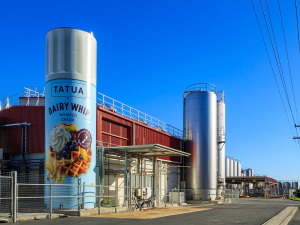
Waikato milk processor Tatua has again declared a record milk payout to farmer shareholders, leaving other processors in the dust.

A Labour-led Government won’t be bringing back the controversial freshwater rules of 2020.
National’s much-touted free trade deal with India featured in the Rural Issues Debate at Mystery Creek, Hamilton on Wednesday night.
New Zealand's 2026-27 freshwater fishing season has opened, with anglers encouraged to head to rivers and lakes over the coming days as conditions look favourable across much of the country.
Central Otago District Council (CODC) has voted against a plan to spread treated sewage sludge from Cromwell and Alexandra on farmland near Lauder, a decision Federated Farmers says reflects strong opposition from rural residents.
Pāmu has released its FY26 Integrated Annual Report, reporting a Net Operating Profit of $113 million, more than double the $49 million recorded in FY25.