Mark Hooper Joins NZPork Board as Independent Director
Rural leader Mark Hooper has been appointed as an independent director to the NZPork board, bringing extensive farming, governance and advocacy experience to the role.
 increase font size
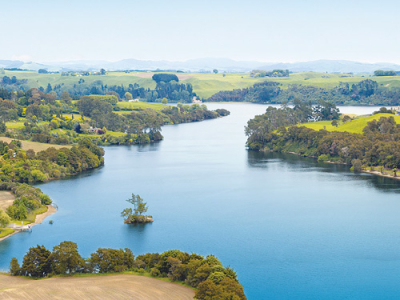 Farmers in Waikato will be testing a proposed plan to improve water quality in the region.
Farmers in Waikato will be testing a proposed plan to improve water quality in the region.
The Healthy Rivers: Plan for Change recommends getting more stock out of water and further restricting land use intensification -- proposals that are of concern to farmers.
Federated Farmers is leading a project to find out how tricky it will be for farmers to comply with the new plan. It will be the first time Feds has had time to test a plan, give feedback and press for changes.
The ‘Healthy Rivers On-Farm Project’ will study the application of the new plan change in a practical, onfarm way, using 12 different farmers and farm types as case studies.
“Normally we only find out how much impact a plan change will have after it’s been put into regulation,” Federated Farmers Waikato chair Chris Lewis says.
“But done this way, we get to test drive the council’s thinking, then we get time to gather feedback from our members and go back to the council with solid suggestions for improvements to their plan.”
The project is being jointly funded by Federated Farmers Waikato, Waikato Regional Council, Fonterra, DairyNZ and the Foundation for Arable Research. Of the 12 farms selected, 10 are either all drystock, or a mix of sheep, beef, dairy and arable.
Council chief executive Vaughan Payne acknowledges farmers’ concerns about the proposed new land use restrictions, which would make it harder for them to more intensively farm land.
But there are benefits, he says, notably that the rule would require application for resource consent by farmers who want to intensify, and this would enable the council to require mitigation of any extra contaminants contributing to water quality decline.
“The concept of controlling water quality impacts by requiring resource consents has been applied to the intensification of urban areas for decades. It’s appropriate that we now apply the same approach to the intensification of rural areas,” Payne says.
“Another key benefit is that land use intensification restrictions, along with other proposed rules in the plan change, would help protect the huge investment already made by taxpayers, ratepayers and individual farmers and growers, in improving water quality in the region.”
Lewis says the project will make all members in the Waikato and Waipa catchments think about the plan change.
“We need members to understand what it means for their businesses,” he says.
There will be pain
Federated Farmers is concerned that members living outside the immediate Waikato Federated Farmers province have not heard enough discussion about the plan change.
“Farmers in Rotorua/Taupo and Auckland Feds provinces also need to get up to speed on this process,” Rotorua/Taupo provincial president Alan Wills says.
“The council is trying to give the people affected time to adjust, but there will be people who have not caught up with what’s going on.
Feds has been working almost three years on the implications of
the plan change as part of the council’s stakeholder consultation group.
Rural leader Mark Hooper has been appointed as an independent director to the NZPork board, bringing extensive farming, governance and advocacy experience to the role.
Farms across the upper North Island are trialling different pasture mixes as part of a research programme that aims to build greater resilience into farming systems.
The terrible floods that hit the Wairarapa may have subsided, but the danger to farmers still exists, according to local Federated Farmers president Rob Hickson.
Will a stronger, more coordinated voice help rebuild confidence and improve returns in the wool sector?
Farms across the upper North Island are trialling different pasture mixes as part of a research programme that aims to build greater resilience into farming systems.
Election years are always a concerning time for farmers, according to DairyNZ chair Tracy Brown.
The Ballance Farm Environment Awards are coming to the West Coast of the South Island.
Most dairy regions around the country have had a pretty good season so far says Tracy Brown.
Rural leader Mark Hooper has been appointed as an independent director to the NZPork board, bringing extensive farming, governance and advocacy experience to the role.