NZKGI Responds to Migrant Worker Exploitation Reports
Where any worker in the kiwifruit industry is mistreated, we expect the authorities to take action.
 increase font size
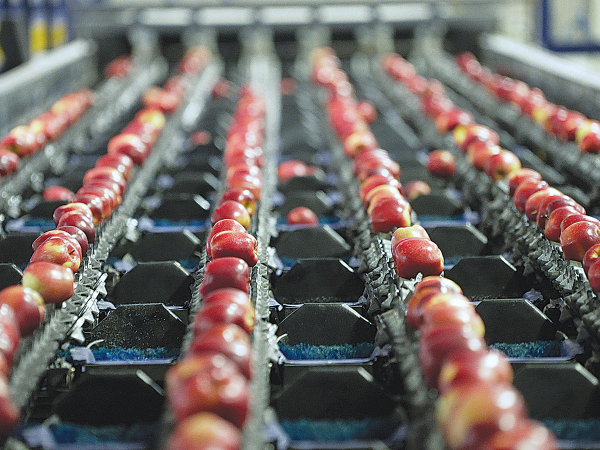 The apples and pears sector outstripped national export growth, sending $892m worth of fruits overseas in 2023.
Apples and pears growers, targeting $2 billion in revenue by 2035, are banking on the support of local and central government.
The country's 288 export growers exported $892 million worth of apples and pears in 2023, compared to $347m in 2012, outstripping national export growth.
New Zealand Apples and Pears chief executive Karen Morrish says the growth in export value has come from increased productivity, investment in high value varieties as well as the diversification of international markets.
Morrish says this means the sector is well placed to further align with the Government's desire to double export value in 10 years.
However, growth is dependent on the supportive economic and regulatory conditions.
"Since 2020, conditions have not been ideal with growers struggling to access labour due to Covid-19 border closures, and Cyclone Gabrielle decimating the 2023 crop. As a result, industry revenue has declined by around 0.5%, per year from 2020 to 2023," Morrish told Rural News.
"We want to ensure there is an operating environment that is conducive to growth.
"The general cost of production has increased like most parts of the agricultural and horticultural industry, so that's squeezed margin and had a significant impact on orchard gate returns.
"We want to focus on improving returns for growers, which could include a change of settings for labour, capital compliance, market access, terms of trade, environmental regulations and water security as well as the ongoing accessibility to tools."
Last month, New Zealand Apples and Pears released new research from MartinJenkins that showed the industry contributes almost $2 billion of total revenue impact to the national economy. It found that the industry contributes $918 million to New Zealand's GDP, comprising of $348 million direct sector contribution and $570 million of industry linkages and spending. Regionally, the industry is more significant again, particularly in Nelson, Tasman and Hawke's Bay, where it is the second and third largest contributor to regional GDP respectively.
The industry has 10,727ha of land with orchards, and 45 export packhouses send about 18 million TCEs (18kg Tray Carton Equivalents) overseas.
Morrish says they hope the new report will further encourage local and central governments to recognise the value of the industry and work with them to ensure there is an operating environment that is conducive to growth.
"If this is in place, our growers will continue to grow the value of the sector and see our communities further supported.
"With the right settings, the valuable role of our industry to national and regional economies can be secured, and we can continue to produce the world's best quality fruit right here in New Zealand."
Where any worker in the kiwifruit industry is mistreated, we expect the authorities to take action.

Kiwifruit growers are watchful but remain optimistic as concerns around the potential effects of the El Niño weather pattern this season.
James Blair, an agronomist for AS Wilcox and the Pukekohe regional champion, has won the 2026 Young Grower national title.
Claimed to be the first autonomous robot for New Zealand vegetables growers, the first Kilter AX-1 unit has arrived in the country.
After delivering a strong financial year, rural trader PGG Wrightson says the coming months will depend on customer confidence and weather.



LIC shareholders have elected a new North Island representative to the co-operative's Board, along with five representatives to its Shareholder Reference Group (SRG), following the company's Annual Meeting held in Invercargill.
Farmers across parts of Southland and South Otago are continuing to deal with difficult conditions after a prolonged run of wet weather, with pressure building around feed supply, stock management, pasture damage, farm infrastructure and everyday workloads.
Federated Farmers says it welcomes Labour's commitment to reviewing the Sharemilking Agreements Act, calling on other major parties to do the same.
For Canterbury dairy farmers Sian Meijer and Rick Wobben, wearable technology has become one of their most valuable on-farm tools - helping manage 1850 cows across an expansive, high-performing dairy operation while improving efficiency, mating outcomes and day-to-day decision making.
Fonterra has unveiled its annual results for the 2026 financial year, posting $27 billion in revenue and close to $20 billion returned to New Zealand farmer owners and unit holders.
The first major update to the Dairy Cattle Code of Welfare in more than a decade has been released, marking what DairyNZ describes as an important step in ensuring animal welfare standards continue to evolve alongside scientific evidence and on-farm realities.