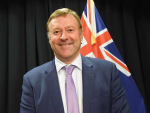
Mark Hooper Joins NZPork Board as Independent Director
Rural leader Mark Hooper has been appointed as an independent director to the NZPork board, bringing extensive farming, governance and advocacy experience to the role.
 increase font size
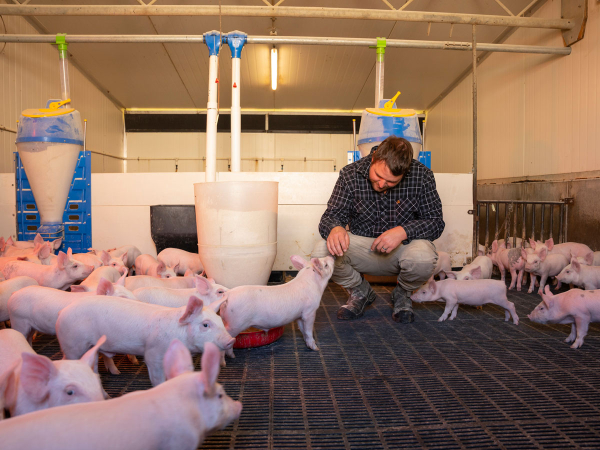 Pig farmers claim the Government is saying land impacted by the policy should only be for certain types of farming and pig farming is not one of those.
The Ministry for the Environment (MfE) has found itself in a stoush with NZPork over the controversial National Policy Statement for Highly Productive Land (NPS-HPL).
The NPS-HPL aims to ensure the availability of favourable soil for food production while more land is opened up for housing projects.
Last week, pork farmers accused MfE, along with local councils, of misinterpreting the policy statement, leading to the exclusion of pig farms from land suitable for agriculture.
NZPork chief executive Brent Kleiss says it has been led to believe that the MfE is saying land impacted by the policy should only be for certain types of farming and pig farming is not one of those.
“This interpretation of the policy will make it hard for new pig farms to be established and for existing farms to grow or change the way they do things,” Kleiss says.
He says pig farms are often part of bigger farms where pig manure is used as a natural fertiliser on cropping and pastoral land.
“This is why many pig farms are on land that’s considered good for farming under the policy,” he says.
Kleiss says NZPork has asked the Government to change its policy to ensure it protects good farming land while allowing for pig farming.
He says consultation on the proposed NPS-HPL stated the intention to protect highly productive land for ‘primary production purposes’ in an effort to avoid the loss of highly productive land to uncoordinated urban expansion and rural land fragmentation.
“NZPork supported that,” he says. “However, the published version of the statement changed that wording to ‘land-based primary production’.”
Kleiss says this is being interpreted by MfE staff to mean that despite being a primary production food-producing activity, indoor primary production activities like pig farms are an inappropriate land use on highly productive land.
“We are also seeing this interpretation from councils as they begin to implement the NPS-HPL.
“We believe the current interpretation of the policy is inconsistent with its original intent of protecting highly productive land for primary production and represents an overreach in a policy initially proposed to protect land valued for food production from urban activities.”
MfE says the Government has committed to reducing consenting barriers for infrastructure, housing and primary production.
“This includes MfE exploring options to amend the NPS-HPL to enable more flexibility of what activities can occur where,” a spokesperson told Rural News.
The spokesperson says officials have reviewed submissions from consultation last year on two potential amendments to the NPS-HPL.
“These related to the development of new specified infrastructure: renewable energy generation, intensive indoor primary production such as pig farming and greenhouses on HPL.
“Ministers will seek a Cabinet decision on these potential changes later this year.”
Rural leader Mark Hooper has been appointed as an independent director to the NZPork board, bringing extensive farming, governance and advocacy experience to the role.

As the cost-of-living crisis continues to put pressure on household grocery budgets, new figures show pork remains one of the most affordable fresh meat options for New Zealand families.
New data shows that pork remains one of the more affordable meat options for New Zealand households at a time when grocery costs continue to put pressure on budgets.
NZPork says the Government needs to strengthen its proposed planning laws to ensure New Zealand's pig farmers can continue to produce pork.
Following a recent director election, Canterbury farmer Sean Molloy has been appointed to the New Zealand Pork Industry Board.


OPINION: There could hardly be a more appropriate theme for a conference than the one chosen by the red meat sector - Navigating Volatility.
When Northland leather worker Vernon Suckling started making horse saddles 50 years ago, quad bikes and side-by-side vehicles were unheard of.
Alliance Group has confirmed that eligible farmer-shareholders who supply and continue to back the business will receive up to $20 million later this year, following the strategic investment partnership with Dawn Meats.
With a general election under five weeks away, Rural News is asking major political parties about their policies and positions on key issues facing the primary sector. We will run their responses to each question over the next four weeks. The ACT Party and the Greens didn't respond in time.
The red meat sector is in great heart.
Entries opened on Monday, 5 October 2026 for the 2027 New Zealand Dairy Industry Awards (NZDIA), which organisers describe as the nation's biggest celebration of excellence in the dairy sector.