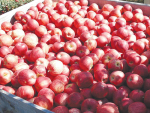
Dead in the water
OPINION: In a victory for common sense over virtue signalling, David Parker's National Policy Statement (NPS) work on freshwater is now dead in the water.
 increase font size
 Claims made by David Parker that the primary sector had an "excessive reliance" on immigrant labour has irked industry representatives.
A comment made by Minister David Parker on primary sector labour issues has sparked a sharp rebuke from NZ Apples & Pears' new chief executive.
Parker was at the recent release of MPI's latest Situation and Outlook for Primary Industries (SOPI), where he warned the primary sector about the labour challenges coming and that government can't fix them. He went on to say that there is a risk for all sectors if they maintain their "excessive reliance" on immigrant labour.
"I don't think there will be an appetite for going back to the high rate of net migration that we had pre Covid, which is causing so many other difficulties in society - including pressure on infrastructure and housing," Parker claimed.
He concluded by claiming that the primary sector should be able to sort out its own labour issues and not rely excessively on migration to do it.
But NZ Apple & Pear boss Terry Meikle told Rural News he heard Parker's comments and differs 100% from the minister.
"I believe the ideology coming out of this Government on temporary migration is flawed and it is missing a very important piece of the puzzle," Meikle explains.
"It's all very well for the Government to say that the labour problem can be driven by innovation, but it will take time to transition to such a position."
Meikle says if the horticulture sector is to increase productivity it needs to get fruit harvested so that it has the money to invest in technology.
"There has to be change in philosophy from this Government about the transition to this and - up until now - it has been relying heavily on an argument that says give more jobs to Kiwis," he explains.
"The last couple of years have proven that its prognostications around what was going to happen post Covid, where everyone was going to flock to the horticultural and agricultural sector and help us out, simply didn't happen."
Meikle notes that NZ has the lowest unemployment rate since records were first taken. He adds that the country cannot rely on the horticultural sector being the solution for the problems of the Ministries of Social Development and Corrections.
Meikle adds that temporary seasonal employment for such people is not an answer for these people anyway. He says they need permanent jobs, not short term seasonal work.
"Australia is talking about a global supermarket for labour," he add. "It is also talking about the baby boomers exiting the workforce, and that is starting to happen, so and we are going to have a natural drop in the labour force between the ages of 15 and 64 anyway, complicated further by the impacts of Covid.
"The simple answer is to bring in migrant labour - it works and it is a solution."
Meikle says migrant labour doesn't just have to be sourced from the Pacific Islands. From his experience, there are also people from Mexico, the Philippines and Vietnam who would be willing to do seasonal work in NZ.
He says the issue of using migrant labour is not about taking jobs from Kiwis. "Work in the horticulture sector is very short term and temporary in nature." Meikle plans to take up the issue with the new Minister of Immigration Michael Wood and explain the challenges his sector is facing in terms of labour.
OPINION: In a victory for common sense over virtue signalling, David Parker's National Policy Statement (NPS) work on freshwater is now dead in the water.
OPINION: When we finally get a government (no agreement had been finalised at time of writing), the first thing the new administration needs to review is all the regional and district plans that are being rolled out across the country to comply with the new National Policy Statement (NPS).
OPINION: Environment Minister David Parker, likely in the final weeks of the job, remains hell-bent on burning bridges with farmers.
New national standards will give local councils more power to decide where new commercial forests – including carbon forests – are located, to reduce the impacts on communities and the environment, says Environment Minister David Parker.


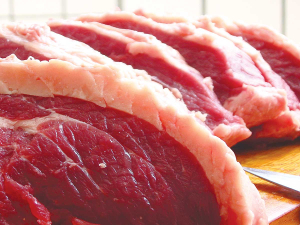
OPINION: There could hardly be a more appropriate theme for a conference than the one chosen by the red meat sector - Navigating Volatility.
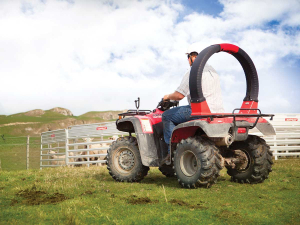
When Northland leather worker Vernon Suckling started making horse saddles 50 years ago, quad bikes and side-by-side vehicles were unheard of.
Alliance Group has confirmed that eligible farmer-shareholders who supply and continue to back the business will receive up to $20 million later this year, following the strategic investment partnership with Dawn Meats.
With a general election under five weeks away, Rural News is asking major political parties about their policies and positions on key issues facing the primary sector. We will run their responses to each question over the next four weeks. The ACT Party and the Greens didn't respond in time.
The red meat sector is in great heart.
Entries opened on Monday, 5 October 2026 for the 2027 New Zealand Dairy Industry Awards (NZDIA), which organisers describe as the nation's biggest celebration of excellence in the dairy sector.