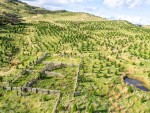
New national standards will give local councils more power to decide where new commercial forests – including carbon forests – are located, to reduce the impacts on communities and the environment, says Environment Minister David Parker.
He says the new standards give councils greater control over commercial forestry, setting out clear rules on harvesting practices and new requirements to remove slash from erosion-prone land.
“Under the changes, non-indigenous forests planted for carbon sequestration will now be managed in the same way as plantation forests,” says Parker.
He says councils will be able to have rules in their plans controlling where new commercial forests are located, developed in consultation with their communities.
“There has been a big increase in carbon forests since the forestry regulations were introduced in 2018. Carbon foresters will now need to meet the same environmental standards as plantation foresters,” says Parker who adds there will also be new provisions for the managing of wilding tree spread.
Forestry Minister Peeni Henare says slash provisions have been tightened to reduce the risks of damage to downstream communities as experienced in Tairāwhiti and Wairoa during Cyclone Gabrielle.
“Under the new regulations, slash longer than two metres, and with a large-end diameter of more than 10cm, must be removed after harvesting from erosion-prone land unless it is unsafe to do so,” says Henare. “This is a minimum standard across the country and councils can apply more stringent requirements if they choose.”
“Where foresters are unable to meet these national standards, they will need to obtain resource consent, meaning councils consider the risks and impacts on a site-by-site basis,” he adds.
The changes follow consultation on changes to environmental standards for plantation forestry. The need for this was highlighted by the Ministerial Inquiry into Land Use in Tairāwhiti and Wairoa released in May.
The regulations, to be gazetted this week, will be known as the National Environmental Standards for Commercial Forestry (previously the National Environmental Standards for Plantation Forestry), to reflect the inclusion of carbon forests.
The changes come into force from 2 November this year. The Ministry for the Environment and councils will work together to implement the changes, while Te Uru Rākau - New Zealand Forest Service is developing risk assessment and management tools for landowners and councils.