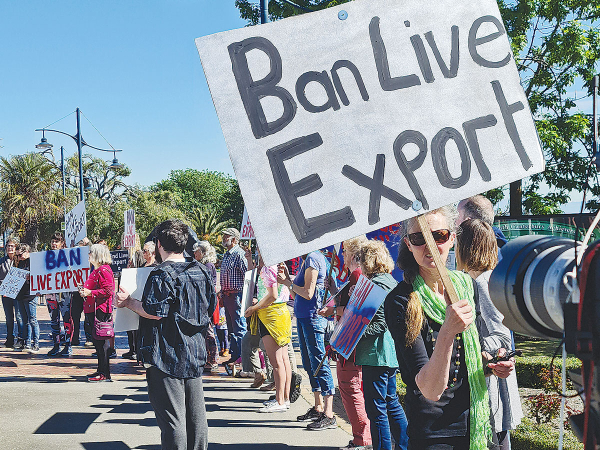
One of the country's former experts in animal welfare is taking the new Government to task over its plans to allow the export of live cattle.
John Hellstrom, ex chief veterinarian of MAF and chair of the National Animal Welfare Advisory Committee (NAWAC) - whose role was to advise government on animal welfare standards, says the move is disgraceful. He has now organised a petition to try and get the government to stop going ahead with its plans.
In a previous life, Hellstrom’s role as chair of NWAC was to advise government on animal welfare standards and in that capacity he made no secret of his opposition to live exports.
He claims a move to reinstate live exports could put at risk NZ’s reputation as a primary exporter of quality sustainable products. He says both the Europeans and British will not be happy, because they are moving away from such practices.
Hellstrom told Rural News resuming the trade could lead to a reduction in welfare standards for the cows being sent overseas. He says while the ship journeys ships today are not as bad as the standards of the past, they are still bad.
“There is no doubt that cows suffer on these voyages despite the best intentions,” he claims. “Even if they put weight on they are still have their social hierarchy disrupted, they are subjected to rough sea voyages, often they can’t lie down or get thrown around and sometimes they have to lie down in their own faeces.”
Hellstrom says today it is still a two or three week voyage where up to 80 cows will be crammed into a container, and when they reach their final destination they will not enjoy the protection of the animal welfare rules in NZ. Hellstrom believes instead most of the animals will end up in feed lots and never see grass again.
“They will live short and brutish lives.”
Hellstrom claims even the best feedlot operation in the world is nowhere near as good as pastoral farming in NZ. He says if NZ was exporting to countries which had equivalent animal welfare legislation and protected farming practices he wouldn’t be that concerned about it.
He says he can’t emphasise how little concern is taken for these animals at the other end, wherever they go.
Hellstrom claims the move to reinstate live exports appears to have come from a small minority of farmers. He says many other farmers are against live exports because they can see the potential reputational risk to NZ.
Hellstrom also questions just how much the trade would be worth to the NZ economy, saying the numbers he’s seen are ‘all over the place’.
The petition has only been going a few weeks and already Hellstrom says there has been a strong response to it. The aim he says is to keep it open until June before handing it into Parliament.
However, he adds that if the present Government acts quickly on the legislation, he will close the petition off earlier to make sure it can be presented to Parliament.