NZ Must Prioritise Food Security, Says HortNZ's Malley
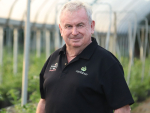
New Zealand needs to make sure that it continues to focus on its own food security, according to HortNZ board member and blueberry grower Dermott Malley.
 increase font size
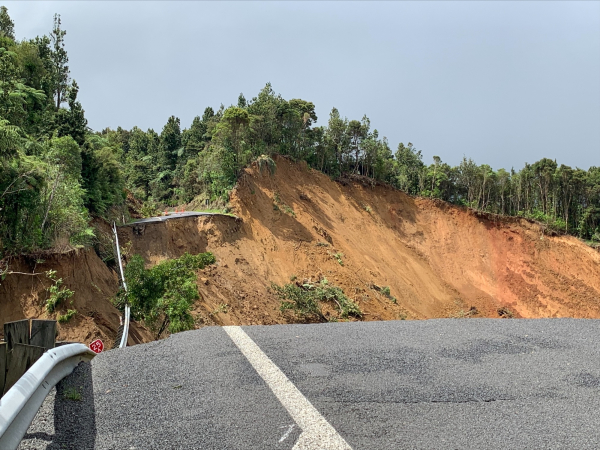
Red meat farmers want the Government to urgently commit to road repairs in isolated Hawke’s Bay and Tairawhiti farming communities.
Beef + Lamb New Zealand (B+LNZ) chief executive Sam McIvor says cyclone-ravaged roads, particularly to remote properties, and the level of devastation caused by forestry slash are farmers’ main concerns.
“The scale of damage cannot be understated,” he says.
McIvor recently visited Hawke’s Bay farmers in Ōtāne, Rissington, and Glengarry, before travelling to Tolaga Bay, and Ruatōria, and video calling other Tairawhiti farmers in Pehiri, Wharekōpae, Hangaroa and Rere.
“Many of the farmers I have spoken to are completely cut off and there is a small window of four to six weeks to move stock in and out of their properties. For some isolated farmers that window is shorter,” he says.
“There is a significant number of lambs that need to be moved off properties for processing or as store, and beef weaner sales aren’t far away.
“It’s critical that the Government prioritises roading infrastructure to these remote areas and repairs must be robust enough for stock trucks and machinery to restore farm tracks.”
McIvor says he was shocked by the damage caused by forestry slash throughout the East Coast and insisted the Ministerial Inquiry must prevent this from ever happening again.
“People have lost their homes because of slash-induced flooding. Other people I have spoken to have had valuable farming land on the flats destroyed by forestry slash and silt,” he says.
“One farmer calculated it would cost $3,000 per hectare to restore valuable flats and infrastructure back to production.”
McIvor says farmers are working hard to restore farm infrastructure, tracks, fences and water systems, but the impact of forestry slash will be felt for a long time.
“It has destroyed countless kilometres of fencing, a significant number of bridges, valuable crops, blocked access to farms, and damaged farm infrastructure that will take farmers years to rebuild.
“Farmers face significant costs in reinstating land and infrastructure, as well as lost income and loss of land value.
“They are also worried that this could happen again with the Government’s Emissions Trading Scheme and foreign investment settings allowing for large areas of food producing land to be converted into carbon price induced forestry. The Ministerial Inquiry must be thorough.”
McIvor says it is critical that farming communities have their say after experiencing the devastating impacts of poor policy.
The B+LNZ Havelock North office has been repurposed as a response hub for the Hawke’s Bay Rural Advisory Group (RAG), which includes B+LNZ, the Ministry for Primary Industries, Rural Support Trust, Federated Farmers, DairyNZ, Fonterra, and rural communities.
New Zealand needs to make sure that it continues to focus on its own food security, according to HortNZ board member and blueberry grower Dermott Malley.
Bank of New Zealand (BNZ) and Pāmu (Landcorp Farming Limited) have developed a new way for landowners to earn revenue from existing native forests.
Forestry Minister Todd McClay has today congratulated the winners of the 2026 Growing Native Forests Champions Awards at Fieldays.
The Fieldays Forestry Hub returns to Fieldays in 2026 for the fifth consecutive year, highlighting the important role forestry and wood processing play in supporting New Zealand's economy, environment, and regional communities.
Two forestry companies have been sentenced for road failures that led to the death of Coromandel truck driver Greg Stevens.
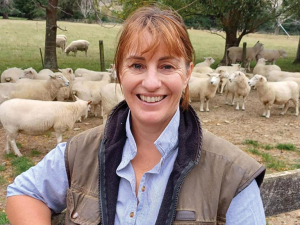
B+LNZ's Wormwise veterinarian Mary Bowron has won the Best Sheep and Beef Vet of the Year Award in recognition of her outstanding contribution to New Zealand’s sheep and beef sector.
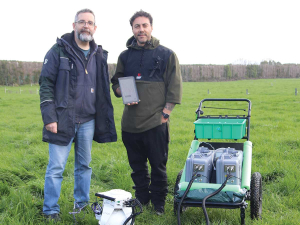
Researchers at Massey University are using a special piece of scientific equipment to improve the measurement of greenhouse gas emissions from pasture soils.
More signs of a booming kiwifruit sector.
OPINION: David Seymour and James Meager's plan to make it easier for farmers and orchardists to operate drones can best be described a 'courageous' move.
New Zealand wool is reaching new heights as air filtration companies move away from synthetic products to biodegradable alternatives.
Opuha Dam's ability to protect South Canterbury communities from major flooding has taken a significant step forward, with Opuha Water Limited (OWL) successfully commissioning a new outlet valve capable of releasing record volumes of water from the dam ahead of a weather event.