Don't Sell Yourself Short On Insurance
Ensure your insurance is fully comprehensive and up to date because as a rural contractor you don’t know what’s around the corner.
 increase font size
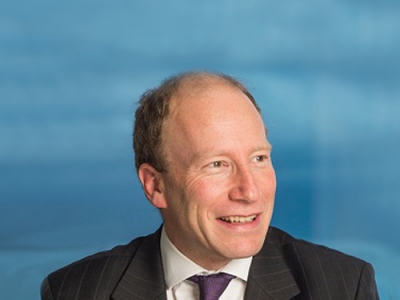 Toby Gee.
Toby Gee, from national law firm Minter Ellison Rudd Watts, poses questions he would ask, and the answers he would give, about business insurance and ways to save money and hassle.
Q: When did you last do a general risk assessment for your business?
A: Each business' risks are different. Identifying your risks is the start of risk management. Assessments, which may be less obvious, include analysing the nature and level of liabilities to customers, a risk that business premises are deemed earthquake prone or cyber-risks.
Q: How well does your insurance broker understand your business?
A: A good insurance broker who understands your business can identify unacceptable risks that may be 'slipping' between insurance policies. But a broker's advice can only be as good as the information provided. Invite them in.
Q: Do you regularly review your insurance policies?
A: Risks change due to changes in a business, the business environment or the law. Insurance policy terms are revised in light of legal changes and insurers' analysis of risk. You should regularly review your policies.
Too many businesses neglect to check the small print, only to find when an adverse event occurs that cover is inadequate or, worse, excluded.
Q: Do you discuss with your insurer or broker how to minimise risk?
A: You and your insurer have a common interest in minimising the likelihood and potential impact of an adverse event. Your broker, or a proactive insurer, may be able to help you identify risks and advise on steps to reduce them. Some insurance policies also include assistance after certain types of events, where good crisis management can reduce impact on a business from catastrophic to survivable, for example a serious data breach or food product contamination.
Q: When selecting an insurance policy, is your main criterion the premium, the cover provided or the insurers' anticipated claims service?
A: Premium is a key matter for most businesses. However, the precise details of the cover provided and the quality of claim handling make a huge difference if an adverse event occurs.
Shaving a small amount off the premium may have substantial cost consequences down the track. Ask for details of previous claims and references from other customers of the insurer who have made claims, to assess the likely response to a claim.
Q: Does your third party liability cover accurately reflect your potential liabilities to suppliers, contractors or other trading partners?
A: It is important to compare the terms on which you do business with those of your insurance policy, to check that potential business liabilities to others are accurately reflected. For example, some insurance policies exclude liability if the insured fails to use 'due diligence'. If your business may incur a liability due to negligence, then such a policy would not provide adequate cover.
Q: Will your statutory liability policy adequately protect owners, directors and officers in the event of health and safety prosecutions against them personally?
A: Under the health and safety reform bill owners, directors and officers will be at higher risk of personal prosecution. This, combined with the risk of substantial reparation awards under the recently amended Sentencing Act, makes it vital to check that the terms of the policy accurately reflect the potential for such personal liabilities, and include cover for all employees sufficiently senior to attract potential personal liability.
• Minter is a law firm with experience at the farm gate and in the commercial world. For more information on practical pragmatic legal advice got to: www.minterellison.co.nz or Tel: 0800 862 774
Ensure your insurance is fully comprehensive and up to date because as a rural contractor you don’t know what’s around the corner.

2025 marks 120 years of FMG Advice and Insurance in New Zealand's rural communities.
The Insurance & Financial Services Ombudsman Scheme (IFSO Scheme) received a record number of enquiries in the past year - close to 5,000, a 21% increase on the previous year.
Talk the language of business when communicating the benefits of Free Trade Agreements (FTAs) - that's the message to the Government and its officials from public and international trade law expert Sarah Salmond.
As storms and flooding continue to batter the East Coast, the Insurance & Financial Services Ombudsman has issued advice for those impacted and looking to claim with their insurer.


Pāmu has released its FY26 Integrated Annual Report, reporting a Net Operating Profit of $113 million, more than double the $49 million recorded in FY25.
Meat Industry Association data, released alongside the Red Meat Sector conference in Wellington, shows export value climbing across the US, China, UK and Canada.
Applications are set to open for the 2027 Zanda McDonald Award, a trans-Tasman award recognised for identifying and fast-tracking talented young leaders in agriculture and agribusiness.
The Royal New Zealand College of General Practitioners (the College) and Hauora Taiwhenua Rural Health Network are calling for investment in a proposed new training pathway for rural GPs, warning that many rural practices are struggling to recruit while a large share of the existing workforce nears retirement.
Federated Farmers has called on Central Otago District Council (CODC) to drop or vote down a plan to truck sludge from Alexandra and Cromwell to farmland near Lauder, warning it would compound an "outrageous" situation created by a separate council's decision weeks earlier.
Synlait has swung to second-half profit as operations stabilise, but the dairy processor still posted a $75.4m annual loss.