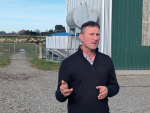
Farm Safety Improves Through 'Incremental Gain', Says Birkett
Improving health and safety is about incremental gain rather than a sudden decision, says Leeston farmer and Federated Farmers health and safety spokesman David Birkett.



 increase font size
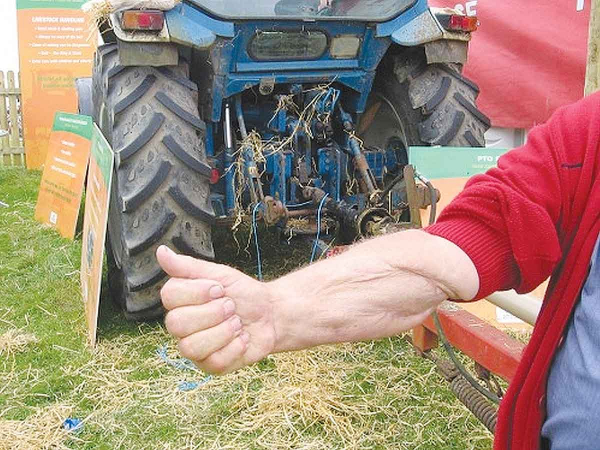
With on-farm safety being a real challenge, especially for employers, the Smart HS approach might offer some answers.
Developed by Donna Clarke and Graham Foote, the online resource delivers structured training delivered in a straightforward manner with common sense as a key driving force.
Both from a rural and corporate background, the couple now operate a kiwifruit orchard in the Bay of Plenty. Graham, who also worked as a dairy farmer, put his practical skills to good use in the training sector. This included working with Farmsafe, Drive Zone and Ag Challenge, training operators to NZQA standards for the use of quads, side-by-sides, tractors and 4WD vehicles. He also did training for Fonterra, NorthPower, the Department of Corrections and of course many farmers and growers.
Smart HS offers a series of online training courses, covering the likes of motorbikes, quads, side by sides and tractors.
Each course is broken into modules. For example, with side by sides, the course covers the legal requirements and regulations, safety and maintenance, machine controls, driving tips, load dynamics and recovering from awkward situations.
As the candidate moves through each of the modules – a process that can be monitored by the employer – they receive current, straightforward information, supported by video content that demonstrates the likely outcomes if good health and safety practice is not applied.
In the case of farm tractors, the modules consist of the legalities, safety and maintenance, controls, safe towing, safe use of 3-point linkage and PTO driven implements, managing tractor dynamics and common mishaps. Once again, the information is practical, well thought out and clearly demonstrates Foote’s experience gained over many years.
Moving on from the study modules, the owner or operators can move onto practical modules, putting the theory into practice. Indeed, should farm owners or managers wish to upskill, they can also undertake courses to become a Smart HS assessor. This helps them to understand a trainees’ ability to understand, make behavioural changes and ultimately benefit from the content.
The online information is also available to use as refresher training for existing employees, so with a typical theory and practical module costing around $270, it seems a small price to pay for sound, practical advice that meets the requirements of the Health and Safety at Work Act of 2015.
Improving health and safety is about incremental gain rather than a sudden decision, says Leeston farmer and Federated Farmers health and safety spokesman David Birkett.
A safety push across New Zealand has revealed significant gaps in hazardous substances management, farm vehicles, tractors, quad bikes and side-by-sides.
Keeping healthy and safe during vintage 2026
Following a side-by-side rolling into a gully, Safer Farms has issued a new Safety Alert.
Farmers are welcoming new Government proposals to make farm health and safety rules more practical and grounded in real-world farming.


Farmer-owned fertiliser company, Ballance Agri Nutrients is welcoming National’s plan to negotiate security agreements with key supplier countries to protect New Zealand-bound products from export restrictions and greater supply chain certainty.
Carrfields has announced the appointment of Stu Hall to the newly created role of chief operating officer, Carrfields Ltd, reflecting the continued growth of their agribusinesses and the need to ensure the company has the leadership capacity and support in place as it pursues the emerging opportunities ahead.
New Zealand's role is not to compete with Indian growers, according to NZ Apples and Pears.
The potato industry is celebrating the success of two rising stars - James Blair, the 2026 Young Grower of the Year and runner-up and innovation award winner, Amber Davy.
Twenty-eight emerging leaders from across the horticulture sector spent two days last month learning valuable skills and connecting with industry experts.
There are five entrants in this year’s Young Horticulturist of the Year, competing in a series of technical, practical, business and leadership challenges.




