Fall Armyworm in NZ Maize: Four Years of Research
Four years since it was first detected in New Zealand, researchers and growers now know much more about management of maize pest fall armyworm (FAW).
 increase font size
 Ian Williams.
The grass has never really fired this spring and as I travel around the country it appears many farmers will have little surplus for silage.
If you are in a warmer district and your feed budget shows a summer or early autumn feed deficit, it is not too late to plant forage sorghum x sudan grass, or maize for silage or greenfeed. These crops are also great options if you have encountered establishment issues and have patchy brassica or fodder beet crops.
Forage sorghum x sudan grass hybrids (eg Pioneer brand Bettagraze) are an excellent option for summer feed in warmer districts, producing good yields of moderate quality feed in a relatively short time even under dry growing conditions. Because they grow rapidly, crops can be grazed or harvested (at 80 - 100 cm in height) as little as 35 - 45 days after planting.
Unlike many other crops which must be grazed when they are mature, forage sorghum x sudan grass hybrids are versatile. Though they can be grazed, if the feed is not required, they can be harvested as silage or hay and stored for feeding later when there is a genuine feed deficit. When harvested at the optimum stage (80 - 100 cm in height) sorghum x sudan grass has good energy and protein levels.
Maize is also an excellent late planting option producing high yields of quality drymatter even under dry growing conditions.
The method of planting and maize seed choice will be determined by how you plan to use the crop.
The feed value for greenfeed maize is in the range 10.3 - 10.8 MJME/kgDM with higher energy levels achieved as the grain content increases.
Greenfeed maize can be chopped and fed in the paddock or break fed. Feeding behind an electric wire reduces crop wastage from trampling. Care should be taken when green-feeding crops that have high amounts of grain present as excessive grain intake can lead to acidosis (also known as grain overload).
Maize silage crops mature according to heat unit accumulation, resulting in later planted crops maturing in fewer days than earlier planted. Throughout the North Island it is possible to plant maize crops until the end of November and still have silage harvested before the end of the first week of April.
*Based on long range weather data collected from Whangarei, Whakatane, Tauranga and Palmerston North airports. Harvest dates are estimates only.
• Ian Williams is a Pioneer forage specialist. Contact him at This email address is being protected from spambots. You need JavaScript enabled to view it.
Four years since it was first detected in New Zealand, researchers and growers now know much more about management of maize pest fall armyworm (FAW).
The transition period (typically defined as the three weeks prior to and the three weeks immediately after calving) sets the biological and productive trajectory for the entire lactation by determining how well the cow adapts from pregnancy to peak milk production.
As spring calving cows head into dry-off, the priority shifts to one thing: setting cows up to calve at the target body condition score (BCS).
Early December marks a key transition for many dairy farmers, as weaned replacement heifers head off-farm to grazing.
Grass silage is pickled pasture, preserved through the conversion of its sugars into lactic acid by bacteria.


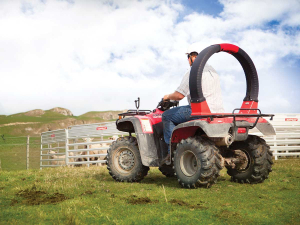
When Northland leather worker Vernon Suckling started making horse saddles 50 years ago, quad bikes and side-by-side vehicles were unheard of.

Alliance Group has confirmed that eligible farmer-shareholders who supply and continue to back the business will receive up to $20 million later this year, following the strategic investment partnership with Dawn Meats.
With a general election under five weeks away, Rural News is asking major political parties about their policies and positions on key issues facing the primary sector. We will run their responses to each question over the next four weeks. The ACT Party and the Greens didn't respond in time.
The red meat sector is in great heart.
Dr Scott Champion, Foundation for Arable Research chief executive, says that everyone in the supply chain had a role to play in driving the sector's long-term success.
Entries opened on Monday, 5 October 2026 for the 2027 New Zealand Dairy Industry Awards (NZDIA), which organisers describe as the nation's biggest celebration of excellence in the dairy sector.