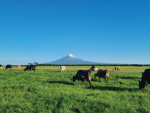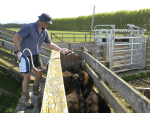
Selenium pour-on back on the market due to demand
Selenium pour-on is back on the market due to demand from veterinarians and farmers for the selenium specific veterinary treatment, says animal health company Inovata.
 increase font size
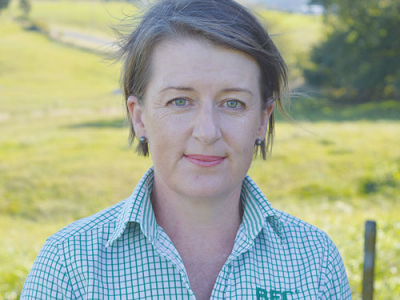 Trina Parker.
Dealing with the adverse effects of selenium deficiency is a reality for many dairy farmers, with some completely unaware of its effects, says Trina Parker, country manager for BEC Feed Solutions.
Selenium is known to be deficient in New Zealand soils, and so in plants and livestock.
Parker says as the modern dairy cow becomes more productive, her nutritional needs are amplified.
“In NZ dairying systems, selenium has historically been supplemented using cheap yet poorly bio-available inorganic selenium sources,” she says.
But selenium supplements for ruminants have improved, says BEC, which recently toured NZ with Adisseo, which makes a fourth-generation, water-soluble organic selenium called Selisseo.
They spoke to ruminant nutritionists, feed companies, veterinarians and farmers about recent research on supplements and promoted their product, said to be the first and only liquid 100% organic selenium available in NZ.
Selenium deficiency impairs animals’ immune function and so their health and production; it has a bearing on empty rates, somatic cell counts and mastitis, says Parker.
“With similar rising trends in NZ dairy production, I see no coincidence given the fact that baseline diets are likely to be deficient too. Good operators, once ruling out all other contributing factors, often continue to face rising animal health costs, production limitations and fertility concerns; they put much of their best genetics on a truck.”
According to Parker, while NZ farmers know their stock need selenium, many know little of the difference between inorganic and organic forms and what is actually available to the cow.
The source is vital in determining its adequacy.
She says NZ dairy farmers using Selisseo are improving production and saving money by reducing empty rates and somatic cell counts.
Farmers’ result speaks
BEC Feed Solutions has been monitoring bulk-tank milk selenium levels on NZ farms using Selisseo supplement; the company presented results of this at its recent seminars.
“Milk selenium levels help us to validate dose rates and adequacy and assess herd selenium status,” says Jen Ross, technical officer BEC Feed Solutions.
BEC estimates a 3:1 return on spending on its selenium supplementation, as a result of lower somatic cell counts and greater milk solids production. The cost of treating an average NZ dairy cow with 5mg of selenium via Selisseo for 300 days is about $21, says Ross.
With dry-off just a few months away for spring calving herds, some farmers who attended the BEC seminars are said to have acknowledged they are under pressure to reduce or stop dry-cow therapy interventions, and so are looking at preventing mastitis by other means.
Speaking in Waikato, Manawatu and Canterbury, Dr Haihong Peng, a ruminant nutrition manager from China, told audiences Selisseo works on a cellular level to reduce antioxidant stress, improve immunity, reduce somatic cells and allow and maintain pregnancy in the animal.
Selenium pour-on is back on the market due to demand from veterinarians and farmers for the selenium specific veterinary treatment, says animal health company Inovata.
OPINION: When Les Hailes was named third form dux at St Kevin's College in Oamaru in 1944 his parents were aghast.
A new generation of organic selenium supplementation will be introduced into New Zealand this year, helping to solve NZ soil's issue of low selenium.
ADD SELENIUM to the list of things bugging honey bees.
University of California Riverside entomologists say selenium, a nonmetal chemical element, can disrupt the foraging behavior and survival of honey bees.


OPINION: There could hardly be a more appropriate theme for a conference than the one chosen by the red meat sector - Navigating Volatility.
When Northland leather worker Vernon Suckling started making horse saddles 50 years ago, quad bikes and side-by-side vehicles were unheard of.
Alliance Group has confirmed that eligible farmer-shareholders who supply and continue to back the business will receive up to $20 million later this year, following the strategic investment partnership with Dawn Meats.
With a general election under five weeks away, Rural News is asking major political parties about their policies and positions on key issues facing the primary sector. We will run their responses to each question over the next four weeks. The ACT Party and the Greens didn't respond in time.
The red meat sector is in great heart.
Entries opened on Monday, 5 October 2026 for the 2027 New Zealand Dairy Industry Awards (NZDIA), which organisers describe as the nation's biggest celebration of excellence in the dairy sector.