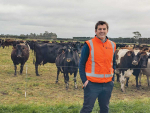
New Dairy Holdings CEO Backs Self-Contained Model
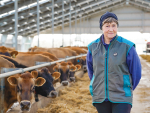
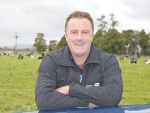
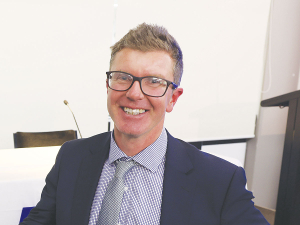
Running a tight and self-contained ship is the key to the success of the country's largest dairy farmer, says Blair Robinson, the new man at the helm of Dairy Holdings.
 increase font size
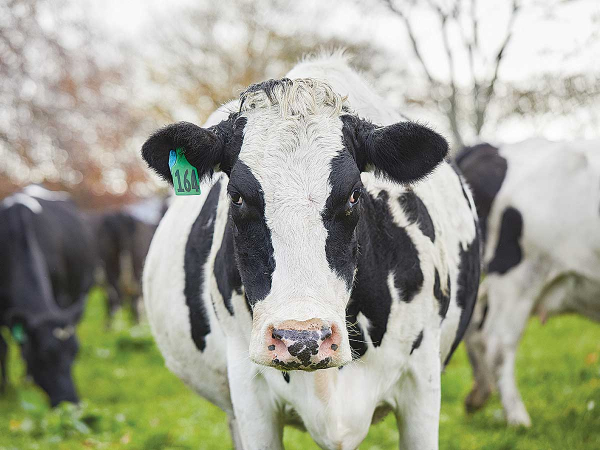 Allowing Mycoplasma bovis to spread could cause $1.3 billion in economic losses in the first ten years.
Southland has reached a landmark zero cases of the cattle disease Mycoplasma bovis but the Government says this isn’t the time for complacency.
At the height of the M. bovis response, there were 27 active properties in the region.
Biosecurity and Agriculture Minister Damien O’Connor last week extended his thanks and congratulations to the Southland farming community.
“Southland farmers were really hard hit by this disease and they’ve done the hard yards to get to this point. Full credit to them for the sacrifices they have made for the national good,” O’Connor said.
He says the achievement is a testament to the cooperation shown between farmers, government and industry groups.
“This is a 10-year programme so we need to expect that new cases will pop up from time to time, but I think it’s important to acknowledge and celebrate success along the way.
“We can’t afford to take our foot off the pedal though. Farmers need to ensure all their animals are tagged and recorded in the National Animal Identification and Tracing (NAIT) system to ensure we can trace them, should we need to.
“There’s no excuse now for farmers not knowing what they need to do to be compliant and I was very pleased to see last week a successful prosecution of a Waikato farmer for not registering 152 of his cattle. Behaviour like this makes a mockery of the heartbreak affected farmers and their families have gone through.
“If we’re going to be the first country in the world to beat this disease, every cattle farmer in the country has to play their part.”
M.bovis was first detected in New Zealand on 22 July 2017, after a large number of cattle in a South Canterbury dairy herd began displaying symptoms of a novel disease.
M.bovis had not previously been detected in New Zealand, and it was soon established that this was a new incursion that occurred around early 2015, and the disease was not widespread throughout the national cattle herd.
It was estimated that allowing the disease to spread could cause $1.3 billion in economic losses in the first ten years, along with substantial animal welfare issues, and serious ongoing challenges for farmers having to manage the disease within their herds.
In May 2018, the Government and industry bodies made the decision to attempt a world-first eradication of this disease.
The estimated budget for the ten year programme is $870 million.
Disease stats
250 total confirmed properties – 3 active, 247 cleared
Breakdown:
• 58 dairy, 137 beef, 55 other
• 69 North Island, 181 South Island
• 157,950 animals culled
• 1,541,392 tests completed
• $168.1 million compensation paid
Running a tight and self-contained ship is the key to the success of the country's largest dairy farmer, says Blair Robinson, the new man at the helm of Dairy Holdings.
OPINION: It's no surprise that "world-class biosecurity" continues to dominate as the top priority for agribusiness leaders, holding the number one spot for the 16th consecutive year in KPMG's latest agribusiness report.
A miserable budget that didn’t deliver much for anyone.
National's decision to ‘dribble’ information about the NZ/India to Labour contributed to the delay in it deciding to supported the FTA.
When it comes to international trade, politicians from all sides of the aisle are united, says Labour's trade spokesman Damien O'Connor.


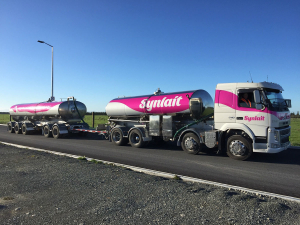
Synlait has swung to second-half profit as operations stabilise, but the dairy processor still posted a $75.4m annual loss.
LIC shareholders have elected a new North Island representative to the co-operative's Board, along with five representatives to its Shareholder Reference Group (SRG), following the company's Annual Meeting held in Invercargill.
Farmers across parts of Southland and South Otago are continuing to deal with difficult conditions after a prolonged run of wet weather, with pressure building around feed supply, stock management, pasture damage, farm infrastructure and everyday workloads.
Federated Farmers says it welcomes Labour's commitment to reviewing the Sharemilking Agreements Act, calling on other major parties to do the same.
For Canterbury dairy farmers Sian Meijer and Rick Wobben, wearable technology has become one of their most valuable on-farm tools - helping manage 1850 cows across an expansive, high-performing dairy operation while improving efficiency, mating outcomes and day-to-day decision making.
Fonterra has unveiled its annual results for the 2026 financial year, posting $27 billion in revenue and close to $20 billion returned to New Zealand farmer owners and unit holders.