Westpac Urges Farmers to Prepare Now for El Niño Drought
Westpac NZ is calling on farmers and growers to start preparing now for the possibility of a dry summer, as likely El Niño conditions raise the risk of drought across parts of the country.
 increase font size
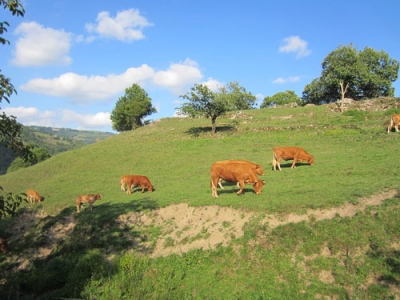 Heat stressed cows eat less with a consequent drop in milk production.
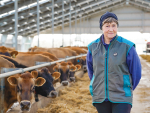
Heat stressed cows eat less with a consequent drop in milk production, says Jenny Weston, president of the dairy cattle branch of the New Zealand Veterinary Association.
When cattle start to become affected by heat stress their heart rate, breathing and body temperature can go up, Weston told Dairy News.
Cattle can acclimatise to some extent to increased temperatures but it can take two to seven weeks. But the NZ climate may not be hot enough for long enough to give them the time to acclimatise and they will be struggling during any acclimatisation period.
Weston recommends cooling cows using sprinklers when they are in the collecting yard and fans in the shed if possible.
"Anything like that to help cool them down is recommended," says Weston. "Particularly when you bring them together and they are standing close to other cows there is a lot of generated body heat which makes it harder for them to keep cool.
"Obviously shade is a good thing to provide. Possibly also think about the type of feed the cattle are on.
"A high fibre diet generates a lot more heat through digestion."
But she says the opportunities to change that may be limited.
"Think about the timing of milking such as putting cows on once-a-day so you are not milking them in the afternoon when it is possibly at its hottest. If you are milking OAD still do it reasonably early in the morning in the cool."
Heat stress comes down to a mixture of temperature, humidity and the level of solar radiation. Recent weather has been a problem on all of these accounts, she says.
"All those things are factored in. If there is a breeze it helps. Cows normally lose heat through non-evaporative methods, so the heat just generates off them, but when you've got high humidity and high wind that doesn't work. They move to sweating and panting to lose heat which means they also lose moisture and need to drink a lot more to stay hydrated."
So the main responses useful in the NZ environment are the timing of milking, providing them with sprinklers in the yard and thinking about what type of feed they are getting.
If a cow is definitely heat stressed, wet it down to help it lose heat and provide it with shade if possible, she says.
If a farm does not have shade, obviously that can't be grown overnight. "But given the predictions for more abrupt climate change and more extremes farmers should be starting to think about putting in shade if they don't have it – planting it now so it will be there in 12-15 years."
In the long run there may also be the ability to genetically select for cows better able to tolerate heat.
"The Bos indicus types of cattle in South East Asia and to some extent Queensland are better able to tolerate heat but are not strong dairy breeds so we are unlikely to be moving to a totally different type of cow," says Weston.
Westpac NZ is calling on farmers and growers to start preparing now for the possibility of a dry summer, as likely El Niño conditions raise the risk of drought across parts of the country.
A spate of southerly winds bringing cold temperatures has presented challenges for Taranaki dairy farmers.
Have a plan in place for your cows and staff.
Drench Options are become increasingly limited for sheep farmers, highlighting the importance of proactive parasite management planning within the wider farm system to stretch the longevity of drench as a tool.


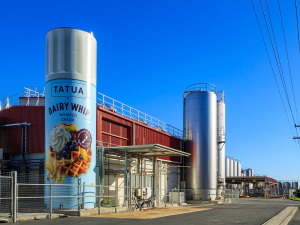
Waikato milk processor Tatua has again declared a record milk payout to farmer shareholders, leaving other processors in the dust.

A Labour-led Government won’t be bringing back the controversial freshwater rules of 2020.
National’s much-touted free trade deal with India featured in the Rural Issues Debate at Mystery Creek, Hamilton on Wednesday night.
New Zealand's 2026-27 freshwater fishing season has opened, with anglers encouraged to head to rivers and lakes over the coming days as conditions look favourable across much of the country.
Central Otago District Council (CODC) has voted against a plan to spread treated sewage sludge from Cromwell and Alexandra on farmland near Lauder, a decision Federated Farmers says reflects strong opposition from rural residents.
Pāmu has released its FY26 Integrated Annual Report, reporting a Net Operating Profit of $113 million, more than double the $49 million recorded in FY25.