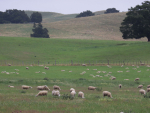
Hawke’s Bay sheep and beef farmers warned to monitor stock water wells
Sheep and beef farmers in Hawke's Bay are being urged to keep a close eye on the wells that supply water to their stock.
 increase font size
 Emergency feed carrying messages of hope bound for Hawke’s Bay.
With the drought reaching a crisis level in Central Hawkes Bay with supplementary feed almost non-existent, farmers in the Wairarapa have answered the call for help.
Farmers Sophie and Dan Hansen got working on social media and by Monday last week more than 720 bales of baleage had been shipped to Hawkes Bay.
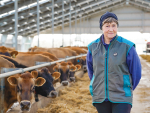
One of those who donated feed was Karen Williams who’s the chairperson of Federated Farmers Arable section. She and her husband have a mixed cropping and sheep and beef finishing operation near the town of Gladstone.
They gave five bales and also a tonne of grain. She says the social media response was great and people who donated bales wrote messages on them to the farmers who would eventually receive the feed.
“It’s just what we do in rural communities. When you see someone struggling you give generously to your country cousins. The combination of COVID and drought has been very tough for people and that’s why we look after each other. It’s about sharing the love,” she says.
Sheep and beef farmers in Hawke's Bay are being urged to keep a close eye on the wells that supply water to their stock.
Fears of a serious early drought in Hawke’s Bay have been allayed – for the moment at least.
OPINION: Farmers along the east coast of both islands are being urged to start planning for drought as recent nor'west winds have left soil moisture levels depleted.
As you approach Hastings from the south along SH2, the colour of the west-facing hills are a good indicator of a drought.
If growing more feed at home adds up to $428 profit per tonne of dry matter to your bottom line, wouldn’t it be good to have a ryegrass that gets you there quicker?


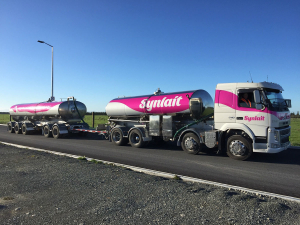
Synlait has swung to second-half profit as operations stabilise, but the dairy processor still posted a $75.4m annual loss.

LIC shareholders have elected a new North Island representative to the co-operative's Board, along with five representatives to its Shareholder Reference Group (SRG), following the company's Annual Meeting held in Invercargill.
Farmers across parts of Southland and South Otago are continuing to deal with difficult conditions after a prolonged run of wet weather, with pressure building around feed supply, stock management, pasture damage, farm infrastructure and everyday workloads.
Federated Farmers says it welcomes Labour's commitment to reviewing the Sharemilking Agreements Act, calling on other major parties to do the same.
For Canterbury dairy farmers Sian Meijer and Rick Wobben, wearable technology has become one of their most valuable on-farm tools - helping manage 1850 cows across an expansive, high-performing dairy operation while improving efficiency, mating outcomes and day-to-day decision making.
Fonterra has unveiled its annual results for the 2026 financial year, posting $27 billion in revenue and close to $20 billion returned to New Zealand farmer owners and unit holders.