Ospri Urges Farmers To Prepare NAIT Records Before Moving Day
Moving Day (June 1) is just around the corner and farmers who are moving farms with the herd are being urged by Ospri to start preparations now.
 increase font size
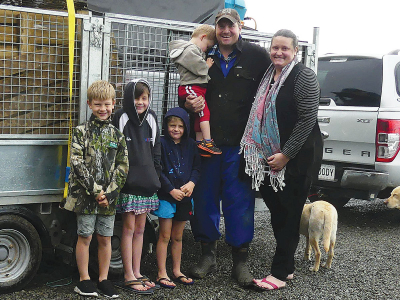 The Woodward family leaving their old farm: John 7, Kylie 9, Jack 5 and Charlie 2 with Michael and Susie Woodward.
This year's Gypsy Day marked the realisation of a dream for former Canterbury sharemilkers Michael and Susie Woodward. They are now proud owners of a 170ha farm at Otorohanga, 45 minutes southwest of Hamilton.
The change meant a huge logistics exercise for the couple and their four children. It took a large transporter for the tractor and other farm machinery, two SUVs with trailers loaded to the gunwales for the family and relays of trucks for the livestock.
The couple have been sharemilking about 1000 cows for Purata Farms just south of Dunsandel, but have pared back for the new farm, choosing to keep only their best A2 tested animals.
They took 250 dried off cows, 100 in calf heifers, about 60 empty carryovers, 16 bulls plus 50 Angora goats. The rest of the herd was sold to buyers in Oamaru and Southland.
It was nearly a one week journey on trucks backloaded with other cows coming south, the Woodwards’ cows overnighting at Blenheim and the goats overnighting at Foxton on the way north.
Susie Woodward said the only machinery they took when moving to Dunsandel was motorbikes. The move to Waikato was “not straightforward” but getting their own farm was worth the pain, she said.
“There have been a few challenges along the way,” said Michael, “But keep the end goal in mind and we’re just about there.”
His move somewhat returns him to his roots, since he was raised on an Angora goat farm two hours north of the new farm. They recently established their own Angora herd and hope to build that side of their business to complement the cows.
Woodward says the new farm consists of three older farms pulled together over time. About a third is flat, a third rolling and a third steep.
“It’s definitely got a bit more character than some of the Canterbury farms.”
Being fully self contained enables them to winter all stock on farm and to adjust cow numbers to fit the goat side of the business, he says.
“Maybe that [Angora] ramps up but we’ve got to make sure we keep the bank happy,” he says with a grin.
The farm has a 27-a-side herringbone shed with inshed feeding and a shearing shed for the goats.
They will be supplying Synlait’s new Pokeno plant.
Meanwhile, Woodward has resigned as Federated Farmers North Canterbury dairy chair but hopes to get involved again in Waikato once they’re settled in.
He remains chair of the New Zealand Dairy Industry Awards and Susie will continue on the Mohair NZ producers board.
Although milking a smaller herd than they’re used to, the Woodwards plan to milk only once a day for a “lower input, lower stress” system. On their self contained farm they expect a lot of drystock work and they intend devoting a lot of time to their four children.
“We might not be milking in the afternoon but we’ll be busy,” says Michael.
Moving Day (June 1) is just around the corner and farmers who are moving farms with the herd are being urged by Ospri to start preparations now.
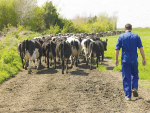
Good planning and communication are crucial to ensure a successful moving day.
OPINION: It's Moving Day end of this week.
Southern dairy farmers are being reminded to undertake best practices to safeguard water quality and transport safety when the annual stock Moving Day begins shortly.
Moving farms or relocating your herd to a new place comes with important responsibilities as a PICA (Person in Charge of Animals) in the NAIT system.


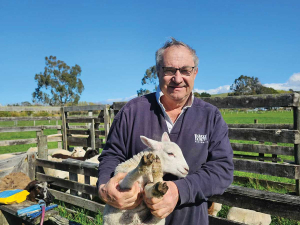
Decades piloting planes has ensured vet and farmer David Hayes is focused on safety. So, after a serious accident while welding on farm, he is sharing his experience so others can learn from it.

Canterbury milk processor, Synlait Milk has confirmed Leon Fung as its chief executive officer.
OPINION: Making it easier to collect rainwater and use it to grow crops and livestock is a no brainer.
As part of its Election 2026 coverage, Rural News asked political parties how they would help pull the arable sector out of the doldrums. Here's what they said:
Farmers are being encouraged to rethink how they manage waste on farm with the launch of ruralwastesorted.co.nz, a new website bringing together practical tips, real farmer experiences and resources.
New Zealand Winegrowers (NZW) is celebrating the India-New Zealand Free Trade Agreement (FTA) coming into force today, bringing New Zealand wine improved access to one of the world’s fastest-growing economies.