Farmers embrace online bidding
When the door slammed shut on New Zealand in March 2020 it also closed the gate to one of the viability fundamentals of the country’s livestock industry – stock auctions.
 increase font size
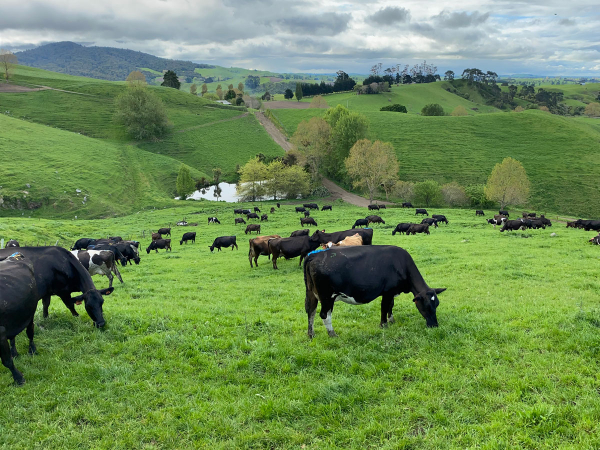 The on-farm auction (which will also be live-streamed) of around 120 cows will take place at midday on November 16 at Stony Creek Farm.
The sale of elite in-milk cows from New Zealand’s highest BW crossbred herd is attracting interest from dairy farmers across the country.
The on-farm auction (which will also be live-streamed) of around 120 cows will take place at midday on November 16 at Stony Creek Farm, 61 Ruakawa Road, Walton.
NZ Farmers Livestock agent, Ollie Carruthers, says the cows comprise 16 outstanding contract mated in-milk cows with BW 285, PW 349 and RA 100%.
“There is also a whole line of 120 quality crossbred G3 cows BW 234 PW 293 and RA 100%,” he said.
“The 12th highest BW crossbred cow in New Zealand, with BW 370, is also included in the sale.”
Carruthers said the herd has produced 327kgMS per cow “which seems modest until you consider they have produced this on steep country”.
“Seeing the land they’re coming off – combined with their BW – is all the reassurance farmers need to know these cows represent a spectacular investment. They will move exceptionally well and add tremendous value to any herd.”
Vendor Ben Watson said the cows have been farmed under System two, with a stocking rate of 3.3 cows /hectare on very steep country.
“We could milk two cows per ha and produce 550kgMS/cow with the feed available on the farm, but this is almost impossible to achieve on the hills by a non-owner operator.
“Our cows use a lot of energy to walk the hills and harvest the grass, they are fed mostly pasture and PKE and maize which is grown on farm. We can only mow about 10% of the milking platform on this farm and the rest is extreme hill.
“This is the steepest and smallest of several farms we own but is where we invest all of our breeding pressure for maximum genetic gain. Cows are herd tested 4-5 times per year, we alternate milking times as much as possible and use 7 in 10 and OAD.
“Genetic gain is maximised by shortening the generation interval and maximising selection pressure. All of these elements, and the way these cows have been farmed, give purchasers reassurance that their BW is an accurate representation of their genetic worth and potential.”
When the door slammed shut on New Zealand in March 2020 it also closed the gate to one of the viability fundamentals of the country’s livestock industry – stock auctions.
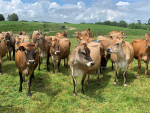
The sale of a line of elite, high BW, young Jersey cows and heifers is attracting interest from farmers across the country.
Livestock farmers can now access short term finance without having to go to a bank.
A record number of farmers took part in the largest service bull sale in New Zealand – many from the comfort of their own homes.



LIC shareholders have elected a new North Island representative to the co-operative's Board, along with five representatives to its Shareholder Reference Group (SRG), following the company's Annual Meeting held in Invercargill.
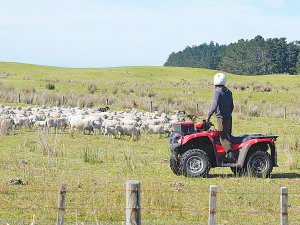
Farmers across parts of Southland and South Otago are continuing to deal with difficult conditions after a prolonged run of wet weather, with pressure building around feed supply, stock management, pasture damage, farm infrastructure and everyday workloads.
Federated Farmers says it welcomes Labour's commitment to reviewing the Sharemilking Agreements Act, calling on other major parties to do the same.
For Canterbury dairy farmers Sian Meijer and Rick Wobben, wearable technology has become one of their most valuable on-farm tools - helping manage 1850 cows across an expansive, high-performing dairy operation while improving efficiency, mating outcomes and day-to-day decision making.
Fonterra has unveiled its annual results for the 2026 financial year, posting $27 billion in revenue and close to $20 billion returned to New Zealand farmer owners and unit holders.
The first major update to the Dairy Cattle Code of Welfare in more than a decade has been released, marking what DairyNZ describes as an important step in ensuring animal welfare standards continue to evolve alongside scientific evidence and on-farm realities.