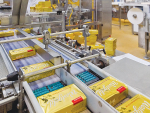
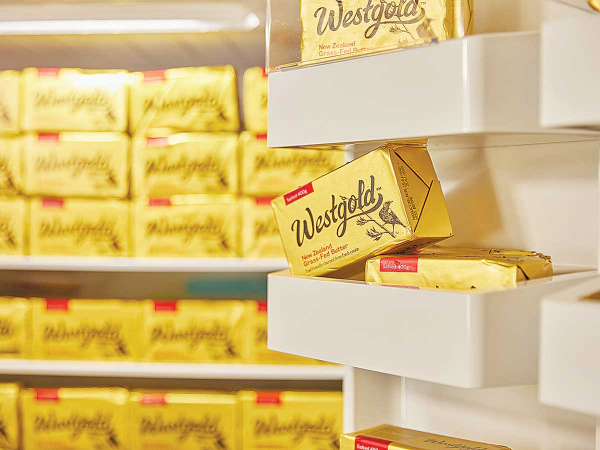
Westgold Butter Ranked Best Supermarket Butter in Consumer NZ Blind Taste Test
Westgold butter has been named New Zealand's tastiest in a blind tasting conducted by Consumer New Zealand.
 increase font size
 Westland-produced butter is already sold in more than 20 countries around the world.
Chinese-owned Westland Milk Products is ramping production of butter.
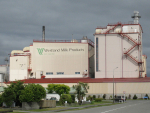
The company is spending $40 million to double capacity of its consumer butter manufacturing facility.
The plan to increase production of premium grass-fed consumer butter brand Westgold has been five years in the making and has the backing of Westland's new owners, global dairy giant Yili.
Westland resident director Shiqing Jian said the dairy company was transitioning from a supplier of mostly bulk commodities to play a greater role in the production of consumer goods in an expanding global butter and spread market.
"The investment highlights the important role Westland plays in Yili's ongoing plans to supply international industrial and consumer markets," Jian said.
Yili took over Westland Milk Products last year and also owns Oceania Dairy in South Canterbury.
Annual global butter and spread sales are predicted to grow from a current estimated $US44 trillion to $US59 trillion by 2025 - with the US, Russia and China regardeed as the world's largest importers of butter.
"New Zealand is one of the world's major butter producers and industry and consumers recognise the value of dairy products of New Zealand origin," Jian said.
"Chinese consumers are also continuously looking to improve and diversify the application of butter products in baking, cooking and desserts," he said. "In future, demand for butter production and processing of Yili and Yili subsidiary brands will be considerable and the upgraded Westland plant will play an important role."
Westland's general manager of sales and marketing Hamish Yates said Westland could leverage the West Coast's reputation as one of the most unique dairy catchments in the world to connect more directly with domestic and global consumers concerned about the provenance of food.
Westgold and Westland-produced butter is already sold in more than 20 countries around the world, including the US, Japan and China. However, a large part of what it currently supplies is bulk commodity butter.
"Given the rainfall and geographical conditions that make the West Coast catchment so unique for grass-fed farming systems, and the way our farming families have farmed for generations, we knew we were sitting on something world-leading and incredibly valuable," Yates said.
The plan to increase global market penetration of Westgold butter began in 2017. However, configuration of the old butter plant had kept retail butter production capacity capped.
"This investment now gives us the flexibility to pursue markets that will offer Westland the most value," Yates said.
Westland chief operating officer Richard Hickson says the butter plant upgrade would increase Westland's consumer butter production to a total of 42,000 tonnes a year.
The upgrade includes replacing the existing single churn that was commissioned in 1978 with two German-built churns.
These will offer greater quality control and production efficiencies, says Hickson.
"New packaging lines will also allow us to package different formats and, at the back end, we're upgrading palletising to give us greater efficiency, speed and stacking combinations to suit the varying requirements of international markets.
"Remote stacking and racking capability will also be built into a cool store upgrade to allow for quick recovery of palletised goods for transport.
Site works, construction and installation is expected to begin soon and take three months.
Westgold butter has been named New Zealand's tastiest in a blind tasting conducted by Consumer New Zealand.
Yili's New Zealand businesses have reported record profits following a major organisational and strategic transformation.
OPINION: Westland Milk may have won the contract to supply butter to Costco NZ but Open Country Dairy is having the last laugh when it comes to cashing in on NZ grass-fed butter.
Arguably one of the country's top dairy company's chief executives, Richard Wyeth has abruptly quit Chinese owned Westland Milk Products (WMP)
OPINION: This old mutt well remembers the wailing, whining and gnashing of teeth by former West Coast MP and Labour Agriculture Minister Damian O’Connor when Chineseowned Yili took over the troubled dairy company Westland Milk a few years back.


High country stations, mixed sheep and beef farms, Māori-owned farms, corporates and family operations are among the nine commercial farms taking part in the Livestock Innovation Farming Transformation programme, known as LIFT.
OPINION: New health and safety guidance unveiled by the Government recently provides farmers greater certainty about what is expected of them when managing risks on farm.
The National Animal Welfare Advisory Committee (NAWAC) is seeking public feedback on proposed changes to the Code of Welfare for Rodeos.
A New Zealand initiative supporting farmers to restore the health of grazing landscapes has received international backing through the Regenerative Fund for Nature, a global collaborative fund supporting regenerative agriculture and the communities that produce natural fibres for the fashion industry.
Combine premium New Zealand products, blend in a family ritual and what do you get? A world-class functional drink.
Entries are now open across eleven regions for the 2027 New Zealand Dairy Industry Awards (NZDIA).