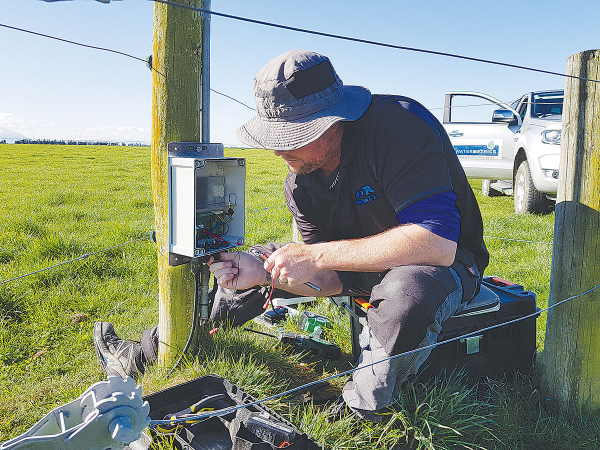
The ability to manage an irrigation system depends on the percentage of water pumped that becomes available for plants to use, according to Watermetrics.
The company which provides equipment, servicing and data management to ensure best use of water claims no irrigation system delivers water at 100% efficiency.
“Water may be lost through delivery systems or pipelines and some water may remain in the soil, but not be used by the plant. Water may be lost to evaporation in the air, or from the soil and plant surfaces.”
Farmers are urged to think about these issues on farm:
- - Is the system leaking
- - Are you putting on an even application
- - Is the amount you think you are putting on actually happening
- - How do you schedule irrigation
- - Do you keep records of irrigations
- - Is your soil moisture information detailed enough
- - Do you understand the effect of an irrigation on the particular soil
- - Is the moisture available in the root zone
- - Have you identified the best timing and amounts to irrigate your particular soil to best advantage
- - Is your weather information close to what is happening on your farm
Watermetrics says most farms have an irrigation system and without further capital expenditure the farmers can do is make it work as well as it was designed to do.
“Given varying water supplies and amounts, you design your schedule around those limits. Winter maintenance checks are important.”
Easily accessible records of irrigation give a sound base for the next irrigation decision. Looking at the effect of irrigation on the different soil levels gives solid information. Do you get the same result with the same amount of water from different moisture starting points? The answer is probably no, so you need to learn that from experience. Proper easily accessible records is very important to help add facts to the management process.
Understanding the soil moisture holding capacity is important. Soils vary under pivots, so a good average is never quite the same as text book terms for a soil.
There are text book calculations of soils trigger points and field capacities. These were set against the older Aquaflex tapes but newer probes have different calibrations, so the settings need redefining. Newer probes with 100mm level readings give a far better picture of the soil than ones that give averages or just one or two readings.
Differences also occur in the depth of different layers in the soil. For example, a clay pocket around a probe can give different readings and reactions than soil further away, so you have to get to know what the probe is telling you and adjust the irrigations to suit.
Watermetrics says what is required is knowledge of when the soil is near full (capacity), but the question remains, how much water is available to the plant roots.
“The obvious requirement is not to over irrigate and wash nutrients down through the soil. With some light soils, this cannot be avoided, so care needs taken in irrigating in these circumstances.
“It is good to get an understanding of how much moisture needs to be in the lower profile to get more response to water in the top zone.
“The timing of these irrigations becomes very important and if you let it slip. Sometimes without rain, it’s not possible to irrigate back up to where you should be for efficient irrigation.”