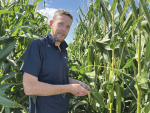
Fall Armyworm in NZ Maize: Four Years of Research
Four years since it was first detected in New Zealand, researchers and growers now know much more about management of maize pest fall armyworm (FAW).
 increase font size
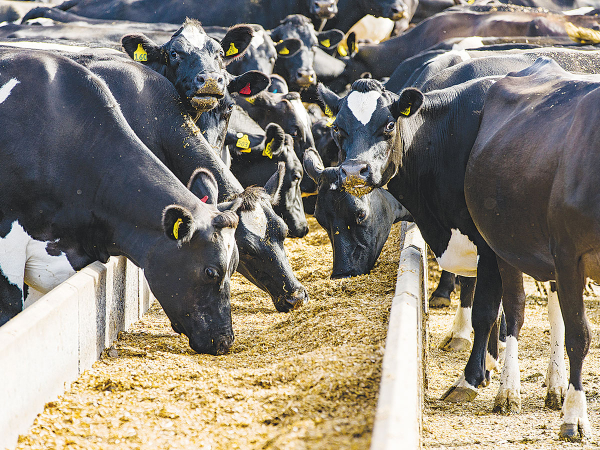 Feeding maize silage in the autumn results in substitution of pasture.
At this time of year, I regularly get asked a version of the same question: Should I dry off or keep milking my cows? I often see farmers tempted to milk on when the milk price is high.
This decision is based on the notion that you might as well make the most of a good payout this season as you can’t be sure what the next season might bring.
Research over the years has shown that it is well worth producing late lactation milk, IF:
- The milk price is right
- You don't compromise pasture cover
- You don't erode body condition score
- You and your team have the energy to do so.
It’s a real balancing act between all the abovementioned factors. Dry off too early and you miss out on potential income this season.
Milk on too long and you run the risk of a skinny herd, a burnt-out team and a whole host of issues at calving.
What do we know?
Turning a dry day into a milking day can be extremely profitable.
Trials conducted at Waimate West Demonstration Farm (Taranaki) over 25 years ago showed cows fed maize silage to extend lactation in spring and autumn had very high milksolids response and Economic Farm Surplus (EFS) per hectare when compared to an all-grass control (Table 1).
| Control (no maize silage) | Maize silage fed in spring | Maize silage fed in autumn | |
| Cows/ha | 3.8 | 3.8 | 3.8 |
| Maize silage (kgDM/dow) | 0 | 300 | 290 |
| Milksolids per cow (ig) | 285 | 332 | 337 |
| Milksolids per hectare (kg) | 1083 | 1262 | 1281 |
| Days in milk | 228 | 268 | 259 |
| Milksolids response (gMS/kgDM maize silage) | - | 157 | 179 |
| EFS ($/ha) above control | +22% | +28% |
There is a strong relationship between cow condition score (CS) at calving and milk production during the subsequent lactation.
Simply put, cows that calve at CS 5 produce 10 - 15kg more milksolids and cycle 7 - 10 days sooner than cows that calve at CS 4 (Table 2).
| Jersey (400 kg) | Holstein/Friesian (450 kg) | Friesian (500 kg) | ||
| Feed | Energy (MJME/kgDM) | kgDM/cow | kgDM/cow | kgDM/cow |
| Pasture | 11.5 | 165 | 185 | 205 |
| Pasture silage | 10.5 | 130 | 145 | 160 |
| Kale | 11.0 | 175 | 195 | 215 |
| Swedes | 12.0 | 145 | 160 | 180 |
| Maize silage | 10.5 | 130 | 145 | 160 |
Having cows in CS 5 (and heifers in CS 5.5) at calving makes good economic sense. Based on DairyNZ's Facts and Figures booklet, at a $7.00 payout, the value of an extra condition score will be around $156. A farmer feeding maize silage to a cross bred cow to put on that extra condition score, would use 145 kgDM (Table 2). At 50 c/kgDM eaten, the extra feed would cost about $72. That is a $2.15 return for every $1 invested.
Feeding maize silage in the autumn results in substitution of pasture. This can be as high as 1kgDM pasture left behind for every 1kgDM maize silage eaten.
Using this principle, feeding maize silage enables farmers to extend the pasture grazing rotation and build cover very quickly.
While low pasture cover may not be an issue in the northern North Island this year, it will be problematic in regions which have experienced a drier than normal autumn.
Other factors
While the science behind milking into the autumn is robust, there are other factors the need to be considered. Do you have:
- Sufficient staff
- The motivation to keep milking or does your team need a break
- Cashflow limitations
In the case of sharemilkers leaving the farm, there may be a provision in the sharemilker must leave a specified pasture cover and supplementary feed volume for the incoming sharemilker.
Do I milk on?
Should I keep milking or dry off? The answer is... it depends.
On many farms, if pasture cover is good, cows are on track to meet condition score targets, there is plenty of maize silage to fill any short-term late lactation gaps and the team are not too exhausted, it is likely to be highly profitable.
However, if this isn't the case, it is important to run the numbers and get advice from you farm consultant or trusted advisor.
If you want more information on this topic, listen to the next podcast in our podcast series "Feed for Thought". You can find it on the major podcast sites, at pioneer.co.nz/podcast
Ian Williams is a Pioneer forage specialist. Contact him at This email address is being protected from spambots. You need JavaScript enabled to view it.
Four years since it was first detected in New Zealand, researchers and growers now know much more about management of maize pest fall armyworm (FAW).
As spring calving cows head into dry-off, the priority shifts to one thing: setting cows up to calve at the target body condition score (BCS).
The swing-over herringbone is the most common dairy type in New Zealand, used on 69% of dairy farms. Simple changes save seconds per cow, and that quickly adds up.
Early December marks a key transition for many dairy farmers, as weaned replacement heifers head off-farm to grazing.
I recently had the pleasure of attending an AgFirst event in Hamilton where the results of the 2024-25 Waikato-Bay of Plenty Dairy Financial Survey were shared. Based on a 136ha farm milking 379 cows, average farm profit before tax was $405,892, an incredible 286% increase on the 23-24 season.



Fonterra Co-operative Group chief financial officer Andrew Murray has resigned to take up a role outside the dairy giant.
A major move is about to get underway to improve the quality and viability of dairy beef and cattle in NZ.
Veterinarians say changes to the code of welfare for dairy cattle provides a positive foundation for improved cattle welfare across the country.
Today, 15 October, is the International Day of Rural Women, which recognises rural women’s contribution to farming, communities and the environment.
Global dairy giant Lactalis has integrated its Australian operations with the Mainland Dairy consumer business it acquired from Fonterra earlier this year.
High country stations, mixed sheep and beef farms, Māori-owned farms, corporates and family operations are among the nine commercial farms taking part in the Livestock Innovation Farming Transformation programme, known as LIFT.