
Fall Armyworm in NZ Maize: Four Years of Research
Four years since it was first detected in New Zealand, researchers and growers now know much more about management of maize pest fall armyworm (FAW).
 increase font size
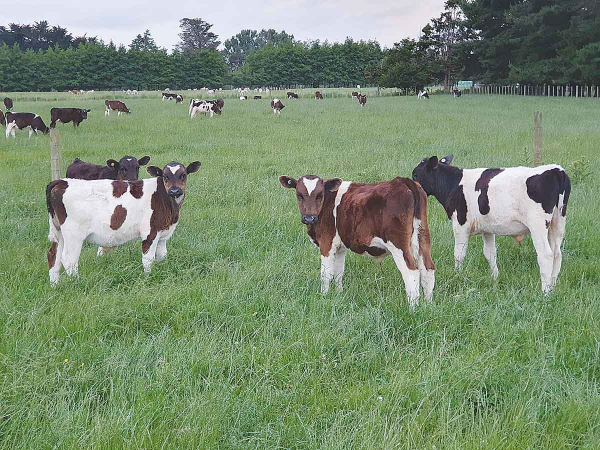 Agrifert says the weight gain among the trial group calves was particularly impressive.
Calves gain more weight in less time with probiotics included in their diet, a trial conducted by Agrifert has found.
Mobs of 50 calves, primarily Friesian bull calves, were organised randomly into a control group and a trial group on a Jyle Farms property at Mangatainoka to provide comparative data on the benefits of feeding the calves with AgriBio probiotics Fixine and Fi:d Up.
Agrifert says probiotics have become an accepted boost to human health, but farm use is relatively recent. Consumption of probiotics by farm animals boosts the natural micro-organism population in the rumen or gut, with resulting benefits to health and performance.
The control group calves were fed a conventional diet of milk powder complemented gradually by meal over the eight-week trial period. The trial group animals received Fi:d Up freeze-dried probiotics and vitamins with their milk-powder liquid and Fixine fresh live probiotics as a complement to their meal.
This trial was the first field demonstration of the effectiveness of these products, says Agrifert general manager Josh Bollen.
Positive results were expected, Bollen says, but the weight gain among the trial group calves was particularly impressive.
At the end of the eight weeks, the trial calves weighed an average of 90.9kg compared to the average 74.7kg of the control group, he says.
Among the control group calves, the average daily gain in weight was 720 grams; the trial calves gained weight by an average 840 grams per day.
Half of the trial calves ended up weighing 90kg or more with the other half tipping the scales between 70kg and 90kg.
Among the control calves, 26% weighed less than 70kg, 71% were between 70kg and 90kg, and just 3% weighed 90kg or more.
That rapid increase towards sale weight meant half the trial calves could be weaned and sold-on about two weeks ahead of almost all the control group animals - making a significant saving in feed costs and animal care and a more efficient farm operation, Bollen says.
Kyle Goodwin, Jyle Farms, was impressed with the trial results.
“Prior to the trial, I was quite sceptical of probiotics. Mid-way through, my mind was already changed; I could easily tell the difference between the control and trial mobs. The money saved just in being able to wean earlier made it worthwhile.”
Four years since it was first detected in New Zealand, researchers and growers now know much more about management of maize pest fall armyworm (FAW).

Generative AI in the workplace, trials in the field, and industry-relevant research took centre stage at this year’s Grape Days events in Central Otago, Hawke’s Bay and Marlborough.
Body Condition Score (BCS) is a critical element in managing the health and reproduction of the dairy herd.
Giving calves the best possible start to life has been shown to boost growth and resilience.
The first weeks of a calf's life quietly shape the future of the entire herd.



Federated Farmers has welcomed new rural policies released by ACT, saying they align closely with its own election priorities.

Rural Contractors NZ says proposed changes to land transport rules for agricultural vehicles are a welcome response by the Government to out of date regulations which have seen members hit with huge fines.
Alliance is calling for final applications for its 2027 Graduate Programme, with applications closing on Sunday 25 October.
Decades piloting planes has ensured vet and farmer David Hayes is focused on safety. So, after a serious accident while welding on farm, he is sharing his experience so others can learn from it.
Canterbury milk processor, Synlait Milk has confirmed Leon Fung as its chief executive officer.
OPINION: Making it easier to collect rainwater and use it to grow crops and livestock is a no brainer.