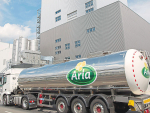
Arla targets $25b in total revenue
European dairy co-operative Arla Foods is forecasting a total revenue of nearly $25 billion this year.
 increase font size
You would be udderly surprised to encounter a Simmental or Braunvieh running up the steps of New York’s One World Trade Center or Shanghai’s equally tall World Financial Center.
But that’s the kind of climb – albeit on dirt trails, not concrete steps – a typical Swiss dairy cow makes every summer.
According to the Swiss Federal Agricultural Office, about 270,000 cows are marched from their valley farms to mountain meadows at the start of every summer, just to come back down again in early autumn. Why do it?
Dairy farmers have incentives to herd their cattle high. On the one hand, they get top dollar for the aromatic ‘Alp cheese’ made from the milk of their livestock. From June to early September, alpine pastures serve up a smorgasbord of hundreds of different grasses and herbs for the cows to graze. Lower in the valley there are only a few types.
European dairy co-operative Arla Foods is forecasting a total revenue of nearly $25 billion this year.
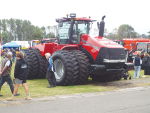
According to numbers sourced from national authorities, 151,800 tractors were registered across Europe in 2023, of which 26,200 tractors (17%) were 37kW (50 hp) and under and 131,900 (83%) were 38kW and above.
OPINION: European farmers are going to extreme lengths to have their message heard.
OPINION: Farmer protests have swept Europe in recent weeks.
OPINION: The heat wave that hit Europe last week has forced a rethink among UK dairy farmers who normally graze their cows outdoors in summer.



LIC shareholders have elected a new North Island representative to the co-operative's Board, along with five representatives to its Shareholder Reference Group (SRG), following the company's Annual Meeting held in Invercargill.
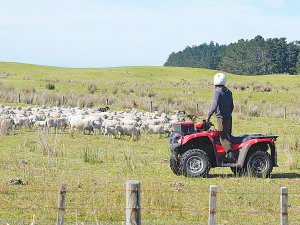
Farmers across parts of Southland and South Otago are continuing to deal with difficult conditions after a prolonged run of wet weather, with pressure building around feed supply, stock management, pasture damage, farm infrastructure and everyday workloads.
Federated Farmers says it welcomes Labour's commitment to reviewing the Sharemilking Agreements Act, calling on other major parties to do the same.
For Canterbury dairy farmers Sian Meijer and Rick Wobben, wearable technology has become one of their most valuable on-farm tools - helping manage 1850 cows across an expansive, high-performing dairy operation while improving efficiency, mating outcomes and day-to-day decision making.
Fonterra has unveiled its annual results for the 2026 financial year, posting $27 billion in revenue and close to $20 billion returned to New Zealand farmer owners and unit holders.
The first major update to the Dairy Cattle Code of Welfare in more than a decade has been released, marking what DairyNZ describes as an important step in ensuring animal welfare standards continue to evolve alongside scientific evidence and on-farm realities.