Federated Farmers Praises Labour's Emissions Tax Backdown
For the first time in a quarter of a century, Federated Farmers has something positive to say about the Labour Party’s climate change policy leading into a general election.
 increase font size
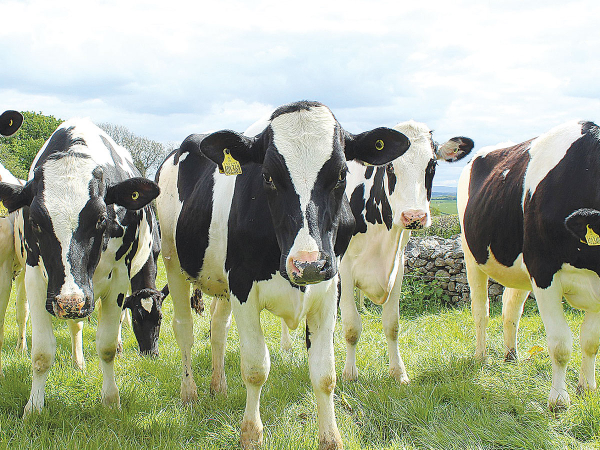 The methane narrative is an ideal tool to make natural, nutritious food unaffordable and unavailable to ordinary people.
OPINION: We are endlessly told that livestock are responsible for half of New Zealand's total emissions.
Despite research showing the warming impact of livestock methane is so small it cannot be measured; the widespread perception remains that our livestock are dangerously warming the planet.
So where does this belief come from?
Ask our industry leaders or processors how much warming our livestock cause, and they’ll often quietly admit: “not much.” Press them further - Then why do we need to act - and the reply is always the same: trade pressures or customer expectations, usually meaning supermarket buyers seeking to meet their Scope 3 emissions targets. Ask why they don’t push back, and the excuses roll in: “It’s too hard” or “It would cost too much.”
One of these technologies received a funding boost back in May. It involves daily feeding— completely impractical for New Zealand’s free-trange, grass-fed systems. In other words, it would hand our competitors an advantage based on solving a non-problem. A monthly delivery version is in development, which would mean wrestling large cows 12 times a year. Are any farmers going to buy into this nightmare?
Even if they manage a 6-month version, each 30-month steer would need four doses, its mother two. At $20 a capsule— an estimate not denied by officials—that’s $120 per steer, before on farm costs. They claim it might improve productivity by 5%. A 300 kg steer would need to fetch $8/kg just to cover the capsule cost, never mind everything else. The only guaranteed result? More food inflation, already a growing crisis.
The question no one has answered is this: how can we use these synthetic interventions without compromising the integrity of our worldleading, natural, grassfed product? At least one processor won’t accept cattle for a premium brand if they’ve grazed on oat crops that have begun to head—because that counts as grain-fed. So how will consumers respond to chemically dosed animals?
We already know. Look at Europe’s backlash against Bovaer. Consumers aren’t demanding methane cuts, despite what the hysterical media say. So where are these ‘customer demands’ really coming from?
The answer? The global elite.
Let’s step back. To bring in a One World Government, you need to control three things: money, people, and food. The money supply is already in global hands. The COVID-era showed just how easily people can be controlled. That leaves the food chain.
This methane narrative is an ideal tool to make natural, nutritious food unaffordable and unavailable to ordinary people.
There is no science in this methane reduction campaign. It’s 100% politics, —part of a long-term agenda to consolidate global value.
If you value your land, your freedom and your future, then you must stand up to our industry organisations, our processors and banks and demand they stop giving into political correctness while our industry, our nation and the farming communities that underpin them slowly die.
Neil Henderson is a founding member of Methane Science Accord.
For the first time in a quarter of a century, Federated Farmers has something positive to say about the Labour Party’s climate change policy leading into a general election.
Climate, nature and animal wellbeing make up Fonterra's refreshed sustainability roadmap released last week.
Researchers at Massey University are using a special piece of scientific equipment to improve the measurement of greenhouse gas emissions from pasture soils.
OPINION: Back in April, the Intergovernmental Panel on Climate Change delivered an update that should have triggered an 8.5 magnitude earthquake in the world of climate change policy.
A five-year study has found that the cost of reducing emissions without technology may be significant and unsustainable for Northland dairy farmers.


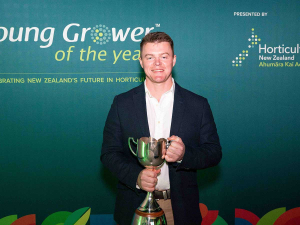
The potato industry is celebrating the success of two rising stars - James Blair, the 2026 Young Grower of the Year and runner-up and innovation award winner, Amber Davy.
Twenty-eight emerging leaders from across the horticulture sector spent two days last month learning valuable skills and connecting with industry experts.
There are five entrants in this year’s Young Horticulturist of the Year, competing in a series of technical, practical, business and leadership challenges.
A seasoned horticulturist has been appointed to deliver the Apple Action Plan, a key initiative of the India-New Zealand Free Trade Agreement.
New Zealand's citrus growers have been told to compete on the value built into their fruit rather than the volume they grow.
Hawke's Bay fruit growers are being reminded of the need to prepare for whatever the El Niño weather system may bring in the coming months.