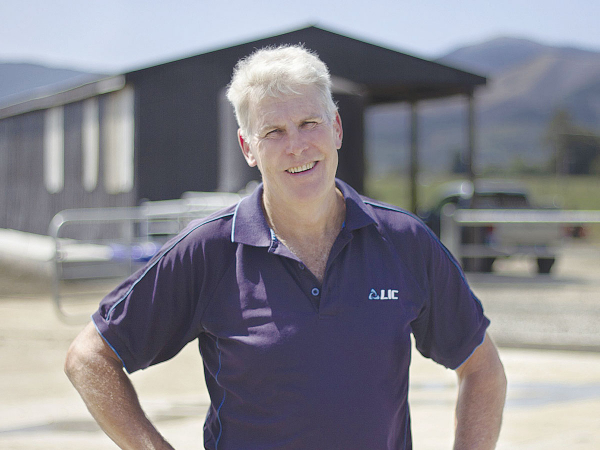
LIC chairman Murray King spoke at the farmer co-operative's virtual annual general meeting this month. The following is an excerpt from his speech, outlining LIC's annual result:
We're proud to present another strong result for the fourth consecutive year. This result is in line with our market guidance and is a credit to our shareholders for their support of significant initiatives in the last five years to transform LIC into a modern, progressive co-op.
These initiatives have delivered the benefits we said they would, including focused investment in the business and a better return for our farmers.
There are some specific numbers I would like to cover:
- Total revenue was $249 million, an increase of 3.4% from $240.9 million last year. This is from continuing operations only, so excludes the sale of LICA.
- Net profit after tax was $22.9 million, up 31% from 17.5 million last year.
- Underlying earnings of $22.3 million, this is down 1.9% from $22.7 million last year after a one-off tax benefit.
- Total assets equal $382 million, a 0.5% increase from $379.9 million last year.
- Dividend $17.8 million or 12.51 c per share, representing 80% of underlying earnings.
- Expected underlying earnings for 2021-22 are $19-25 million.
We've seen good growth across core business areas this year but particularly in our premium genetics range where young, genomically-selected bulls are used to fast track genetic gain and deliver more value on-farm through increased productivity and efficiency, including improved environmental efficiency.
That value combined with a solid dividend makes this result a win-win for our farmers. It also means we can continue our work to invest in products, services and technology that drive long term and sustainable customer value.
LIC's premium genetic range accounted for almost half of the co-op's total artificial breeding (AB) inseminations (41.3% or 1.79 of 4.3 million semen straws), more than double three years ago. This is predominantly from the Forward Pack and A2/A2 bull teams - 1.6 million straws combined. It also includes sexed semen, which experienced significant growth with triple the number of straws sold on the previous year (110,125 vs. 33,804).
The number of dairy cows mated to sexed semen is set to double this year (to around 200,000 up from 110,125 last year) as farmers look to capitaliseon the technology.
To meet the increasing demand, LIC now houses the world's biggest fresh sexed semen sorting facility in partnership with Sexing Technologies at our Hamilton headquarters.
This growth will have a significant impact on-farm this spring and deliver a huge amount of value to our farmers, with more quality heifer replacement and fewer bobby calves.
We're expecting this to be even greater next year. Meanwhile, the number of traditionally daughter proven bulls used for AB continued to decline, now down 40% from three years afo (1.2M straws in 20-21 vs. 2.02m in 17-18).
This shift reflects farmers' growing confidence in LIC's proprietary genomic work and a willingness to adopt new tools and solutions to help meet sustainability goals.