LIC Chief Says BVD Eradication in NZ Is Within Reach
A dairy industry leader believes eradicating the common and costly disease, Bovine Viral Diarrhoea (BVD) is within reach.




 increase font size
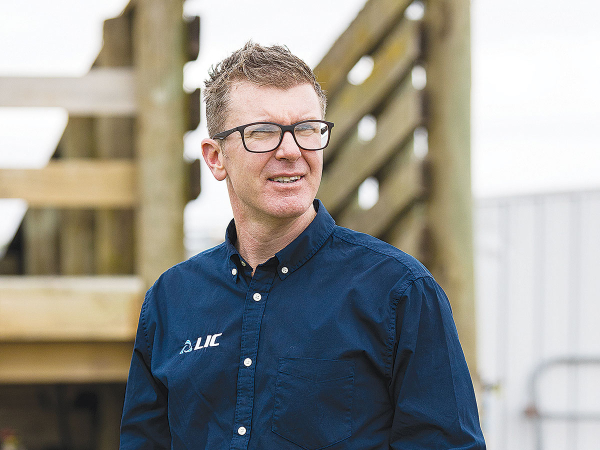 LIC chair Corrigan Sowman says farmers continue to recognise the value of investing in productive herds.
Increased farmer spending on genetics and animal health has boosted LIC’s half-year profit.
The farmer co-operative posted a net profit after tax of $39 million for six months ending November 30, up 35% over the previous year.
Total revenue rose 8% to $185m. The co-op has also signalled a full-year underlying earnings range of $18m to $22m.
It says the improved results can be attributed to improved economic conditions and farmers choosing to invest in LIC’s products and services like fresh sexed semen, GeneMark Genomics and animal health testing.
LIC board chair Corrigan Sowman expressed pride in the co-operative’s progress, saying, “I am incredibly pleased to see farmers continue to recognise the value of investing in productive herds and resilient farms.
“As a generational co-operative and world leader in pasture-based dairy herd improvement, we will continue to work alongside farmers to improve the profitability and efficiency of the national dairy herd. As your board chair, I look forward to working with the LIC board and management to continue delivering value for our farmer shareholders.”
Reflecting on the first half of the financial year, LIC chief executive David Chin noted that the cooperative’s investments are delivering tangible outcomes for farmers.
“We are making significant progress toward breeding cows with lower methane emissions,” Chin says.
“Our research (funded by the New Zealand Agricultural Greenhouse Gas Research Centre) has confirmed that genetic variation influences how much methane heifers produce.
“We are now one step closer to breeding low-emission cows.
“The next step is the building of a state-ofthe- art research barn to enable large-scale monitoring of lactating cows. We are proud to contribute to emissions reductions and look forward to offering farmers low methane-emitting genetics soon.”
In addition to methane research, LIC continues to lead in herd improvement through its genomic evaluation tools.
“The launch of our new Genomic product in July 2024 has seen significant uptake from farmers,” Chin says. “We’ve now surpassed a major milestone, genotyping over 1 million animals. This milestone reflects the growing trust farmers place in these tools to help accelerate the genetic gain in their herds.”
LIC’s commitment to operational excellence has also delivered outstanding results for the fresh sexed semen product.
“The performance of our fresh sexed semen product has exceeded expectations, with 18-24 day non-return rates now within 1% of conventional fresh semen,” says Chin.
“This allows farmers to achieve even better results by breeding from their highest-performing cows.”
Farmers’ focus on herd health is also evident, as demonstrated by a significant increase in Johnes Disease testing. Testing rates have doubled in the first six months of the season compared to 2023, reflecting a growing focus on disease management.
Strategy Review
LIC is evaluating its strategy to ensure alignment with farmers’ needs and future opportunities.
“To continue delivering for our farmer shareholders, we are revisiting our strategy to ensure it is fit for purpose,” says chief executive David Chin.
“This includes planning for future investments that benefit our farmers. We’ll share updates on this work in the first half of 2025.”
A dairy industry leader believes eradicating the common and costly disease, Bovine Viral Diarrhoea (BVD) is within reach.

LIC shareholders have elected a new North Island representative to the co-operative's Board, along with five representatives to its Shareholder Reference Group (SRG), following the company's Annual Meeting held in Invercargill.
Farmers can spend less time on paperwork, thanks to a new data sharing agreement between DairyNZ’s DairyBase and LIC’s MINDA software.
An LIC bull, Tronnoco AR Sadio-ET S3F, bred by Tony and Keri O'Connor of Tronnoco Farming Co Ltd near Timaru, has won the 2026 Mahoe Trophy.
Bovine Viral Diarrhoea (BVD) is estimated to cost New Zealand's dairy and beef industries more than $150 million every year, yet many of the tools needed to control it are already well understood. After more than 25 years in veterinary practice, Andrew Weir, animal health technical specialist at LIC, has seen firsthand the impact BVD can have on herd performance. We asked him about the role of persistently infected (PI) animals and the practical steps farmers can take to reduce their risk.


Dairy processors are ready to further boost New Zealand’s export earnings but want the incoming government to match their ambition with good policy.
Massey University is best placed to solve the “problems” facing the dairy industry, says vice chancellor, Pierre Venter.
Synlait's longest serving employee – a man who joined the Canterbury-based milk processor even before it began processing milk – is now its newest executive.
A dairy industry leader believes eradicating the common and costly disease, Bovine Viral Diarrhoea (BVD) is within reach.
A farmgate milk price of $10/kgMS this season is firming up as milk powder prices soar and the New Zealand dollar weakens.
Federated Farmers has welcomed new rural policies released by ACT, saying they align closely with its own election priorities.

OPINION: It seems Canterbury processor Synlait is still in the doldrums.
OPINION: Get offside with New Zealand First leader Winston Peters at your own peril.




