This follows a successful pilot for the 2024 harvest, initiated by the Foundation for Arable Research (FAR).
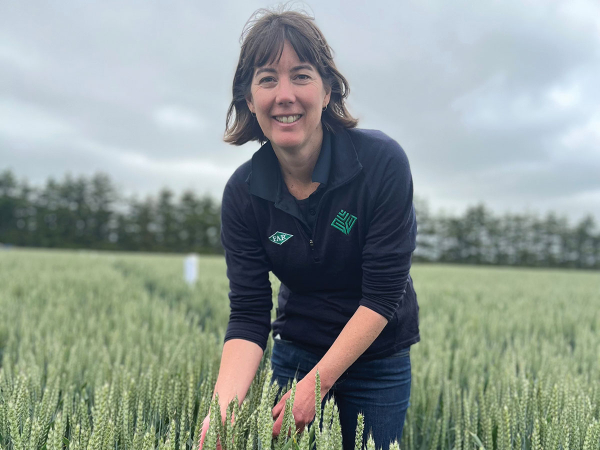
The idea started with a FAR grower group wanting to learn more about measuring and managing micronutrients to improve crop health and nutrient use efficiency, says FAR regional facilitator Donna Lill.
While growers regularly measure nutrient inputs, such as nutrient levels in the soil to decide how much fertiliser to apply, they rarely measure nutrient outputs, Lill says.
Nutrient concentrations in harvested grain and seed show whether crops captured insufficient, adequate or excess amounts of each nutrient. This enables growers to identify fertiliser over-use, potential savings and diagnose deficiencies.
"Growers who submitted samples were interested to understand how effective their existing fertiliser programmes were, as well as learning about nutrient uptake.
"It is not intended to replace soil or other tests, but is another piece of the puzzle. It's a post-mortem that provides results of previous management to influence future management."
Last year, 50 growers from throughout New Zealand submitted 126 grain samples which were analysed by Yield Enhancement Network (YEN) in the United Kingdom. Through YEN, crop samples are analysed for 12 macro and micro nutrients. As well as nitrogen (N), phosphorus (P) and potassium (K), these also include magnesium (Mg), calcium (ca) and boron (B).
Growers receive two reports, a nutrient off-take report and a nutrient benchmarking report. The nutrient off-take report gives an accurate assessment of nutrients removed from the paddock, allowing growers to manage soil nutrient status and applications for following crops.
The benchmarking report compares grain nutrient concentrations against thresholds for each nutrient, indicating whether the crop had sufficient or a deficit in relation to yield.
Samples from the 2024 harvest showed very few deficiencies.
"This is only one year of data and we do expect seasonal variations," Lill says.
"The benefit of working with YEN UK is they have the systems and database. They also have the knowledge around benchmarking and the critical levels for different nutrients. There may be differences between the UK and New Zealand but it is a starting point."
To be involved, growers need to collect a grain or seed sample at harvest and provide some paddock information. Growers can submit samples of cereals, oilseed rape, linseed and peas. This year, these will be analysed in New Zealand at Hill Laboratories rather than being shipped to the UK. The results will then be sent to YEN UK for nutrient analysis and benchmarking.
Testing of other crops may be possible if there is enough interest from growers. Hill Labs' samples submitted via the YEN-NZ programme will cost growers $102 a sample.
FAR and the Fertiliser Association of NZ are covering the cost of data analysis and reporting from YEN for 2025 harvest samples.
For more information or to submit a sample, contact FAR.