Rabobank Launches HortPathways for Emerging Hort Leaders
Twenty-eight emerging leaders from across the horticulture sector spent two days last month learning valuable skills and connecting with industry experts.
 increase font size
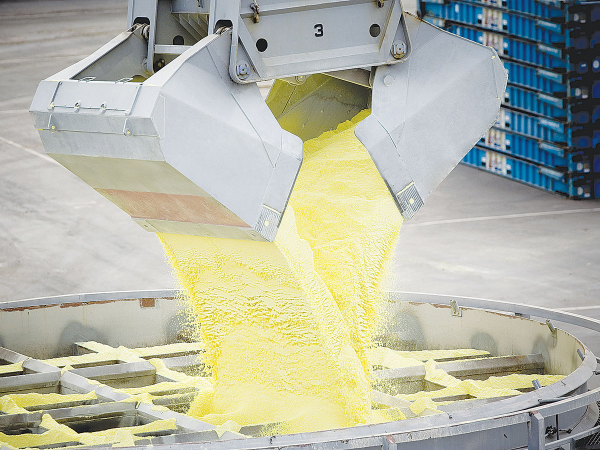 Global fertiliser prices are expected to settle in 2024, despite uncertainty posed by the Israel-Hamas conflict.
After extreme market volatility and record-high prices in recent years, global fertiliser prices are expected to settle in 2024, despite uncertainty posed by the Israel-Hamas conflict as it currently stands.
That’s according to agri-banking specialist Rabobank’s just-released Semi Annual Fertiliser Outlook, titled What is Next? In it, Rabobank says while escalating tensions in the Middle East create some uncertainty in the outlook for fertiliser markets, the current impact for the food and agri sectors is manageable.
Report co-author, RaboResearch farm inputs analyst Vitor Pistoia says that, overall, farmers around the world may feel some negative impact due to potentially rising costs of energy and fertilisers. He adds this comes on top of slightly lower import demand and prices for grains and oilseeds due to the Israel- Hamas conflict.
However, Pistoia warns if the conflict spreads to the broader Middle East/North African (MENA) region, impacts on fertiliser supply – as well as grain, meat, and dairy demand – could be notable.
“If the conflict escalates to surrounding countries and one of these countries is Iran, and we have proper military movement from Iran versus Western countries, it can drive crude oil up to 160 USD (90.07 USD as of October 30th),” he told Rural News.
“Iran controls the Strait of Hormuz and if there is an escalation they will very likely close the strait so that can impact the surrounding countries i.e. Iraq, Saudi Arabia – that’s a large part of the oil supply.”
Israel exports 6% of the world’s potash and 8% of its phosphate fertilisers (2022 data), while the broader MENA region accounts for 30% of the world’s nitrogen fertiliser exports.
The region also accounts for more than 25% of global mixed fertiliser exports, 10% of potassic fertilisers and almost half of the phosphatic fertiliser exports. It remains to be seen how much of those trade volumes will be impacted in the coming months.
Pistoia says while 2024 is still some months away, this year has been a much calmer year for the fertiliser market and can be seen as a transition year, even with some remnants of all the market complications from 2022.
The bank’s models indicate a recovery in global fertiliser usage in 2023, up by around 3%, compared to the 7% drop in 2022, with an initial analysis suggesting an increase in global fertiliser use of close to 5% in 2024.
Pistoia said local fertiliser prices were significantly lower than a year ago, but this would not necessarily lead to increased fertiliser usage across New Zealand farms over coming months.
“Farm margins are incredibly tight across the majority of New Zealand farming businesses due to lower commodity prices and ongoing elevated costs for other farm inputs – like fuel and feed – as well as higher interest costs,” he adds.
“And a key question is how much the recent drop in the New Zealand dollar will offset the reduced cost of fertiliser in farmers’ budgets. When this lower dollar is combined with the recent crude oil hikes, how much is left in those budgets to increase fertiliser application rates?”
Twenty-eight emerging leaders from across the horticulture sector spent two days last month learning valuable skills and connecting with industry experts.

A 'tsunami' of milk from key exporting countries is winding down and this may be good news for New Zealand dairy farmers.
Chinese beef trade quotas and a looming suspension of Brazilian beef imports into the European Union are expected to reshape global beef trade flows over the remainder of 2026, with implications for New Zealand exporters, according to Rabobank's Q3 Global Beef Quarterly report.
New Zealand consumers are paying more for beef mince than ever before, with the average retail price now sitting above $24 per kilogram, according to Rabobank.
Plan ahead and be patient. That’s the message to farmers and horticulturalists from the chairman of the NZ Agricultural Aviation Association, Kent Weir.



Farmers are being encouraged to rethink how they manage waste on farm with the launch of ruralwastesorted.co.nz, a new website bringing together practical tips, real farmer experiences and resources.

New Zealand Winegrowers (NZW) is celebrating the India-New Zealand Free Trade Agreement (FTA) coming into force today, bringing New Zealand wine improved access to one of the world’s fastest-growing economies.
New Zealand’s red meat sector has welcomed the India-New Zealand Free Trade Agreement taking effect, which removes India’s 33% tariff on New Zealand sheepmeat.
More than 95 per cent of New Zealand’s forestry and wood exports to India can now enter tariff free as the New Zealand-India Free Trade Agreement comes into force today.
Federated Farmers is backing Feilding High School’s call to keep Agriculture and Horticultural Science as a standalone subject in Year 11.
Food and fibre exports have returned a billion- dollar bonus to the country.