Kiwifruit Growers Prepare for El Niño, Stay Optimistic
Kiwifruit growers are watchful but remain optimistic as concerns around the potential effects of the El Niño weather pattern this season.
 increase font size
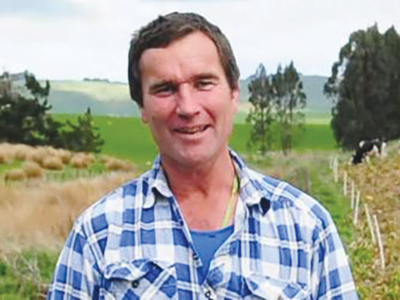 West Otago sheep and beef farmer Simon O’Meara.
While winter feed crops are crucial in Simon O’Meara’s farm system, the West Otago sheep and beef farmer is making changes to cut their damage to the environment.
Poorly managed winter feed crops harm the environment, he says, and that requires a change of mindset.
“We are used to having our paddocks look like golf courses, but we have to get away from that.”
O’Meara has taken onboard the findings of P21 Project trial work at Telford Research Farm that showed that the protection of ‘critical source areas’ (CSAs) and strategic grazing management can reduce soil and P losses by 80-90%.
This might mean having long rank grass around CSAs -- not aesthetically pleasing but raising water quality for the whole catchment.
O’Meara farms 565ha of rolling country at Wilden behind Heriot, running 3000 ewes, 800 hoggets and 250 cattle. Like many sheep and beef farms in the area, 5-10 % of his farm is in winter feeds crops -- kale, swede and fodder beet.
O’Meara is in the Pomahaka Water Care Group, learning of the main contributors to water quality issues in the Pomohaka catchment. He is now working to minimise sediment and phosphate losses caused during soil movement on his farm over winter.
He starts this process at crop establishment by selecting paddocks to suit the stock class. Dry, rocky paddocks suit winter feed crops that will be grazed by cattle, while sheep can be wintered on heavier soils.
“The heavier the stock class the drier the paddock,” he says.
He has also identified parts of his farm that no longer suit winter feed crops.
He will renew pastures on these areas in a straight grass-to-grass rotation, minimising soil disturbance and sediment and phosphate losses.
When establishing a winter feed crop (spraying, cultivating and drilling), he or his contractor will identify where the ‘critical source areas’ (CSA) are. These include hollows, swales or wet areas in the paddock, to be left in grass, fenced off and grazed last after the crop has been eaten.
In winter, he begins grazing the crop from the top of the paddock so any soil and water flowing downhill is filtered through the crop.
Where hollows at the bottom of paddocks feed directly into waterways, he will build a bund or sediment trap that can be cleaned out over summer.
This also means he will remove cattle from feed crops in bad weather and run them on a dry pasture paddock, but he will also back-fence to prevent cattle pugging the grazed areas.
Kiwifruit growers are watchful but remain optimistic as concerns around the potential effects of the El Niño weather pattern this season.

With forecasters advising El Niño conditions will develop through winter and strengthen into spring and summer, Ballance Agri-Nutrients is encouraging farmers and growers to think ahead about nutrient planning and be prepared to work around challenging weather conditions.
Farmers wanting to establish subterranean clovers in their pastures this autumn are encouraged by Beef + Lamb NZ to graze pastures down to 700-1000 kg DM/ha prior to sowing.
Recent weather events in the Bay of Plenty, Gisborne/Tairawhiti, and Canterbury have been declared a medium-scale adverse event.
Agriculture and Forestry Minister Todd McClay is encouraging farmers and growers to stay up to date with weather warnings and seek support should they need it.


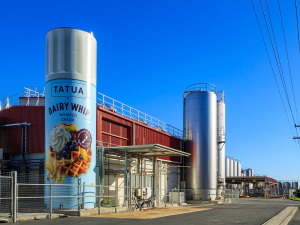
Waikato milk processor Tatua has again declared a record milk payout to farmer shareholders, leaving other processors in the dust.
A Labour-led Government won’t be bringing back the controversial freshwater rules of 2020.
National’s much-touted free trade deal with India featured in the Rural Issues Debate at Mystery Creek, Hamilton on Wednesday night.
New Zealand's 2026-27 freshwater fishing season has opened, with anglers encouraged to head to rivers and lakes over the coming days as conditions look favourable across much of the country.
Central Otago District Council (CODC) has voted against a plan to spread treated sewage sludge from Cromwell and Alexandra on farmland near Lauder, a decision Federated Farmers says reflects strong opposition from rural residents.
Pāmu has released its FY26 Integrated Annual Report, reporting a Net Operating Profit of $113 million, more than double the $49 million recorded in FY25.