EU dairy co-ops to merge
Two European dairy co-operatives are set to merge and create a €14 billion business.




 increase font size
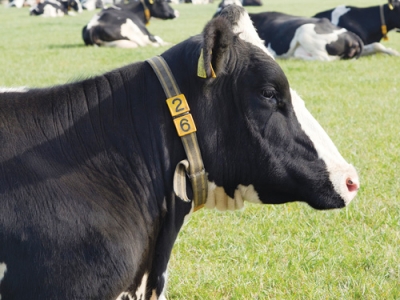 EU dairy processors are paying an allowance to farmers who are grazing cows outdoors.
One of Europe's largest dairy cooperatives is paying farmers to graze cows on pasture as demand for grass-fed milk products rise.
FrieslandCampina says the number of dairy products made from pasture milk is increasing.
Last year more dairy farms let their cows graze on pasture, ending a decline in the number of dairy farms doing outdoor grazing, which started in the 1990s.
FrieslandCampina suppliers' pasture-grazed cows increased by 100 in 2015, the co-op says. Some 78% of its member 12,618 farms in the Netherlands grazed outdoors in 2015 versus 77.25 in 2014.
The co-op wants to have 81.2% of the farms doing outdoor grazing by 2020.
FrieslandCampina and other dairy companies in the Netherlands are said to be pushing this policy. The co-op aims at a minimum of 400 farms, whose cows are now barn raised and milked. It plans to approach dairy farms that stopped outdoor grazing in the past three years, to prompt the farmers to use a national scheme for 'new grazers'.
The co-op says grazing cows have been part of the traditional Dutch landscape for many centuries.
Dairy farmers who pasture graze their cows at least 120 days/year for a minimum of six hours/day are entitled to an outdoor grazing allowance of 1 euro (NZ$1.63)/100kg of milk. And FrieslandCampina rewards partly grazing outdoors with 0.46 euro (75c)/100kg milk.
Campina cheese, a series of Gouda cheeses made from pasture milk, was launched in March 2016. Milner and the North Holland Gouda cheese with the red label are also made from pasture milk. Some supermarket chains will soon start buying FrieslandCampina pasture milk cheese for their private labels, the co-op says.
Two European dairy co-operatives are set to merge and create a €14 billion business.
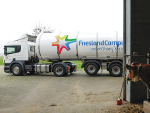
One of the world's largest dairy co-operatives is reporting a slump in half-year profits on the back of declining commodity prices and lower sales volumes.
Three major Dutch agribusinesses are joining forces to reduce nitrogen emissions at dairy farms.
European dairy co-operative FrieslandCampina is trialling a feed additive that is said to reduce methane emissions from cows by 30%.
One of the world's largest dairy co-operatives celebrated its 150th birthday this month.

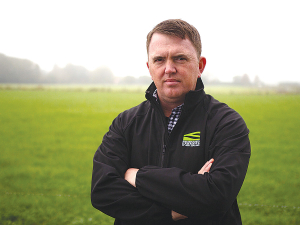
A verbal stoush has broken out between Federated Farmers and a new group that claims to be fighting against cheaper imports that undermine NZ farmers.
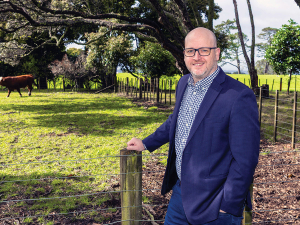
According to the latest ANZ Agri Focus report, energy-intensive and domestically-focused sectors currently bear the brunt of rising fuel, fertiliser and freight costs.
Having gone through a troublesome “divorce” from its association and part ownership of AGCO, Indian manufacturer TAFE is said to be determined to be seen as a modern business rather than just another tractor maker from the developing world.
Two long-standing New Zealand agricultural businesses are coming together to strengthen innovation, local manufacturing capability, and access to essential farm inputs for farmers across the country.
A new farmer-led programme aimed at bringing young people into dairy farming is under way in Waikato and Bay of Plenty.
The Government has announced changes to stock exclusion regulations which it claims will cut unnecessary costs and inflexible rules while maintaining environmental protections.


OPINION: Reckless action by Greenpeace in 2024 forced Fonterra to shut down a drying plant for four hours, costing the co-op…
OPINION: The global crusade against fossil fuel is gaining momentum in some regions.