Biosecurity Ranked Top Priority In KPMG Agribusiness Agenda 2026
According to new research, industry leaders have ranked world-class biodiversity as the number one priority for the 16th year in a row.
 increase font size
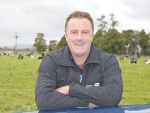
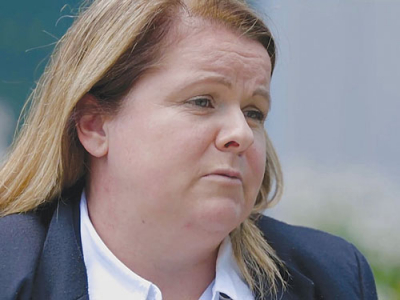 Julie Jones, KPMG.
We need to be tough on issues but careful with people, KPMG farm specialist, agri-food, Julia Jones told an Auckland Climate Change conference.
She was talking about the introduction of new environmental requirements and the threat of alternative proteins to dairy and the agriculture sector in general.
“If we don’t have economic sustainability in this country we will not have environmental sustainability,” she says.
Jones says you can put in all the regulation in the world but things will fall through the cracks of economic sustainability. “Without both of those we will never have social sustainability.”
And while she warned that change is coming faster than anyone realised, including the move towards alternative proteins, she says you have to also think about the well-being of farmers.
“Until something has happened to you which has a consequence, you tend not to do anything about it. That’s not the right way to be but it is a natural part of humans,” she says.
“We need to take people on the journey; that doesn’t mean we don’t have conversations, it doesn’t mean we are not honest and it doesn’t mean we are not hard. It means we don’t do the blame game, we don’t hammer people.
At the moment, farmers’ mental health is being severely affected, despite “people doing some fantastic things ….”
She says we need to celebrate the good, but not tolerate the bad.
“We need to be conscious of the people, the human aspect… we need to take people on this journey -- understand where they are coming from and what they are scared of. You’ve got to keep in mind, as soon as you say ‘alternative protein’ it tells someone they no longer have relevance….
“I think we need to be a little careful, a little cautious; though this doesn’t mean we don’t keep talking about it ….”
At the same time, she says, we are going to have scary conversations. “You need to show people how it can help them.”
Earlier in her presentation Jones said her role is to help people understand change and move quickly. The world is moving much faster than we thought and people are not keeping up with that change, including towards alternative proteins.
‘Value-add’ is an overused word, very much like sustainability. “If you think of a value-add customer or a premium customer, imagine a pyramid upside down.
“At the bottom I still expect the food to be safe, I’ll spend a little more money on something that is going to be good for me and I will spend even more on something that has a positive mutual impact on animals, environment and people.
“We will pay even more money at the top of the upside-down pyramid if what you are producing is really regenerating the environment.
“I think there is enough science there that [shows] we can’t add any more animals, or if we do we have to be very smart. It will take a lot of technology to make sure we do it the right way.”
She has eaten an Impossible Burger made of plant based material that could not be distinguished from meat.
California-based Perfect Day has learnt how to make milk out of casein DNA: they inject it into yeast and it grows itself into vegan milk.
“For New Zealand it is about finding that balance; I don’t think it needs to be all or nothing; I don’t think we need to shut down farming all together… it is about finding a balance.
According to new research, industry leaders have ranked world-class biodiversity as the number one priority for the 16th year in a row.

As the Agri Women’s Development Trust (AWDT) begins the process of winding down, the organisation’s general manager Julia Jones says there’s still a place for its programmes within the industry.
OPINION: Across rural conversations, we're heading the same tune: crisis.
Biosecurity remains the top priority for agribusiness leaders, according to KPMG’s 2025 Agribusiness Agenda released last week.
OPINION: I'm unashamedly including in this op-ed a plug for one of Agri-Women's Development Trust's (AWDT's) programmes.


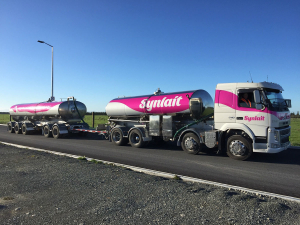
Synlait has swung to second-half profit as operations stabilise, but the dairy processor still posted a $75.4m annual loss.
LIC shareholders have elected a new North Island representative to the co-operative's Board, along with five representatives to its Shareholder Reference Group (SRG), following the company's Annual Meeting held in Invercargill.
Farmers across parts of Southland and South Otago are continuing to deal with difficult conditions after a prolonged run of wet weather, with pressure building around feed supply, stock management, pasture damage, farm infrastructure and everyday workloads.
Federated Farmers says it welcomes Labour's commitment to reviewing the Sharemilking Agreements Act, calling on other major parties to do the same.
For Canterbury dairy farmers Sian Meijer and Rick Wobben, wearable technology has become one of their most valuable on-farm tools - helping manage 1850 cows across an expansive, high-performing dairy operation while improving efficiency, mating outcomes and day-to-day decision making.
Fonterra has unveiled its annual results for the 2026 financial year, posting $27 billion in revenue and close to $20 billion returned to New Zealand farmer owners and unit holders.