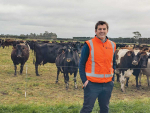
New Dairy Holdings CEO Backs Self-Contained Model
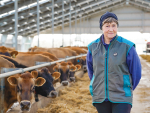
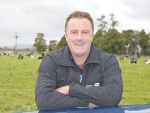
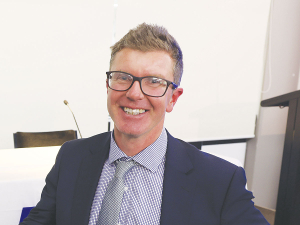
Running a tight and self-contained ship is the key to the success of the country's largest dairy farmer, says Blair Robinson, the new man at the helm of Dairy Holdings.
 increase font size
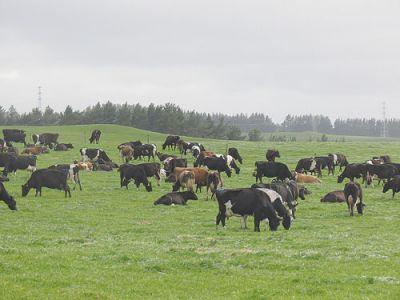 Mycoplasma bovis has now been found in Waikato.
Cattle disease, Mycoplasma bovis has spread to the Waikato region.
Ministry of Primary Industries’ business unit, Biosecurity New Zealand, today confirmed that a farm in the Cambridge area has tested positive for M. bovis.
The Waikato region dairy farm was identified through the tracing of cattle movements from infected properties and has been put through an exhaustive testing process to achieve a reliable result. The farm is under strict controls preventing the movement of animals and other risk goods on and off the property.
Biosecurity New Zealand’s director, response, Geoff Gwyn says it is very disappointing to find the disease in another of New Zealand’s key dairying regions.
“It was, however, not a huge surprise, given the sheer number of farms we are uncovering that have received cows and calves from affected farms.
“It’s a reality of New Zealand’s farming system that large numbers of animals are sold and moved across big distances. This response is serving to underline just how much movement takes place and it is this, coupled with poor record keeping through NAIT that is making our job very challenging.”
The new Cambridge positive takes the number of infected properties across the country to 39.
Since the beginning of the response, Biosecurity New Zealand (MPI), animal industry bodies, vets and farmers have been intent on identifying new infected farms, containing the disease and keeping all options open to make the best possible decision on how the disease should be managed in future.
“Currently many of our people, along with our partners in industry, are putting in big hours to gather the information needed to make such a significant decision – do we attempt to eradicate the disease or move to some form of management over the long term?,’ says Gwyn.
“It is not an easy decision to make. All options remain on the table, but we are now looking harder at the possibility of having to manage it over the long term.”
A decision is expected by the end of this month.
“It’s taking time because we want to get it rightand we are working hard with industry representatives to get us in the best place to make the best decision,” Gwyn says.
DairyNZ and Beef+Lamb New Zealand have been a vital part of the disease and cost modelling work that is needed to develop our future options and they continue to work as part of MPI’s planning team for those options.
DairyNZ is also providing support directly to farmers to help them make compensation claims.
“This is vital, as the quality of the information we receive when a claim is made has a direct bearing on how fast we can turn them around,” Gwyn says.
“Along with DairyNZ and Beef+Lamb New Zealand, the Dairy Companies Association of New Zealand, Federated Farmers and the Meat Industry Association have all had intimate involvement in the governance of this response and they continue to make important contributions to it operationally. This is important, as whatever decisions are made later this month around eradication or long-term management, a joined up approach between government and industry organisations will be critical to supporting farmers through it.”
Running a tight and self-contained ship is the key to the success of the country's largest dairy farmer, says Blair Robinson, the new man at the helm of Dairy Holdings.
OPINION: It's no surprise that "world-class biosecurity" continues to dominate as the top priority for agribusiness leaders, holding the number one spot for the 16th consecutive year in KPMG's latest agribusiness report.
Compensation assistance for farmers impacted by Mycoplama bovis is being wound up.
New Zealand's world-first Mycoplasma bovis eradication programme is making great strides but this isn't the time for complacency, says Ospri.
A national pest management plan to eradicate Mycoplasma bovis (M. bovis) will come into effect by the end of this year.


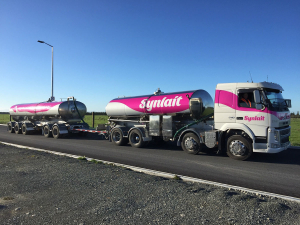
Synlait has swung to second-half profit as operations stabilise, but the dairy processor still posted a $75.4m annual loss.
LIC shareholders have elected a new North Island representative to the co-operative's Board, along with five representatives to its Shareholder Reference Group (SRG), following the company's Annual Meeting held in Invercargill.
Farmers across parts of Southland and South Otago are continuing to deal with difficult conditions after a prolonged run of wet weather, with pressure building around feed supply, stock management, pasture damage, farm infrastructure and everyday workloads.
Federated Farmers says it welcomes Labour's commitment to reviewing the Sharemilking Agreements Act, calling on other major parties to do the same.
For Canterbury dairy farmers Sian Meijer and Rick Wobben, wearable technology has become one of their most valuable on-farm tools - helping manage 1850 cows across an expansive, high-performing dairy operation while improving efficiency, mating outcomes and day-to-day decision making.
Fonterra has unveiled its annual results for the 2026 financial year, posting $27 billion in revenue and close to $20 billion returned to New Zealand farmer owners and unit holders.