While New Zealand is the land of the bale feeder that cleverly unrolls a bale in the paddock, much feed is wasted when stock trample it on the ground.
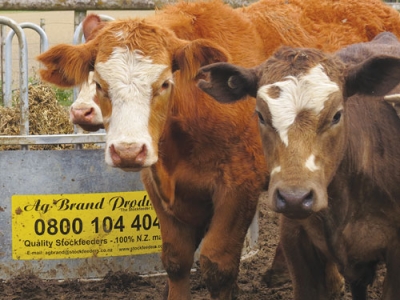
So there's a place for simple, low-tech stock feeders, as made by QC Engineering, Napier, and sold under the AgBrand and Red Barns brands.
The company offers a broad range of styles from basic 1.6m diameter units, with 12 positions and capable of feeding 30 animals, to larger units of heavier construction and wider access points, that can accommodate bull beef animals over 24 months of age.
A range of rectangular and oval feeders will suit larger mobs, can hold up to three large round bales, and suit feeding out hay or silage as supplements for animals feeding on break crops such as fodder beet or kale.
The company also manufactures modular feed fences useful for constructing feed pads, and accessories such as liners for round units, allowing meal, pellets or nuts to be fed efficiently, and covers for feeders used in inclement conditions.
All construction uses heavy gauge steel for the framing, and quality galvanising for a long, trouble-free life.
Units are easily broken down for movement or storage and use a bolt or removable pin system to fix panels together.
The modular design can be extended to meet changing situations or number changes, and is easily customisable around farm buildings and feed-pads.