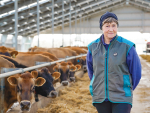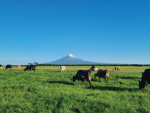
Lanaco and Blueair Launch World-First NZ Wool Air Filter
New Zealand wool is reaching new heights as air filtration companies move away from synthetic products to biodegradable alternatives.
 increase font size
 Mark Ross, chief executive of Agcarm.
New Zealand farmers and growers are one step closer to accessing new, improved technologies and products to keep them internationally competitive.
A new bill introduced to Parliament will address NZ's woeful data protection regime – one of the worst in the developed world – which causes many problems for farmers and growers unable to get fit-for-purpose products needed to farm productively.
Farmers of minor species such as goats, and growers of minor crops, are most affected. The change will also go a long way to replacing older chemistries with more environmentally friendly options.
With the phasing out of some products the pressure is on farmers and growers to find alternative 'softer' chemistries. In many cases these chemicals exist but are less likely to be marketed in NZ. Diazinon is one example: the insecticide is used to kill grass grub and is due to be phased out in 2028.
Grass grub, which attacks the root systems of plants, is estimated to affect almost half NZ's productive land – about 17.5 million ha. Grass grub incurs production losses of up to $90m a year.
If there are no registered alternatives to Diazinon by 2028, many hectares of pasture could be lost or unregistered chemical products could be used instead. Extended data protection will go a long way to encouraging the development of replacement insecticides.
In the goat industry, the most commonly used veterinary medicines are drenches. Many anthelmintics have to be used 'off label', because there is no registration for these products to be used for goats. They have been tested and registered for use on cattle, sheep or horses – but not goats.
Growers of minor crops including citrus, squash, sweet corn, kumara, tamarillos, field tomatoes, avocados, berry fruit and stonefruit often ask Agcarm member companies to introduce products their companies have available overseas to NZ.
Despite the demand these products aren't being introduced because our market is very small and developing new technology is expensive due to the cost of assembling thousands of pages of data proving that a product works, is safe for people and the environment, and that residues in produce are well within acceptable limits.
Manufacturers need to provide this information in order to get approval from two regulators – the Ministry for Primary Industries and the Environmental Protection Authority. The data package that must be supplied in support of an application costs hundreds of thousands of dollars to assemble.
Often this data is not protected from competitors. So there is no incentive for companies to invest in researching solutions for NZ pest and diseases.
Ten to 15 years of data protection is common in other developed countries. So while the Government is taking a step in the right direction with an increase to eight years, 10 years protection would enable NZ farmers and growers to access products similar to their international counterparts.
• Mark Ross is chief executive of Agcarm, the organisation representing agricultural and horticultural chemicals.
New Zealand wool is reaching new heights as air filtration companies move away from synthetic products to biodegradable alternatives.

Generative AI in the workplace, trials in the field, and industry-relevant research took centre stage at this year’s Grape Days events in Central Otago, Hawke’s Bay and Marlborough.
An insecticide widely used to control pests in pasture and grain crops will be banned by the end of next year, but farmers warn of a looming gap in treatments to fight native grass grub, which costs the agricultural sector hundreds of millions of dollars each year.
Virtual fencing company Halter is going global but for founder Craig Piggott, New Zealand farmers will always remain their main partners.
Use of agricultural drones by contractors in New Zealand is soaring.


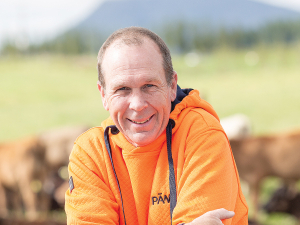
Pāmu has released its FY26 Integrated Annual Report, reporting a Net Operating Profit of $113 million, more than double the $49 million recorded in FY25.

Meat Industry Association data, released alongside the Red Meat Sector conference in Wellington, shows export value climbing across the US, China, UK and Canada.
Applications are set to open for the 2027 Zanda McDonald Award, a trans-Tasman award recognised for identifying and fast-tracking talented young leaders in agriculture and agribusiness.
The Royal New Zealand College of General Practitioners (the College) and Hauora Taiwhenua Rural Health Network are calling for investment in a proposed new training pathway for rural GPs, warning that many rural practices are struggling to recruit while a large share of the existing workforce nears retirement.
Federated Farmers has called on Central Otago District Council (CODC) to drop or vote down a plan to truck sludge from Alexandra and Cromwell to farmland near Lauder, warning it would compound an "outrageous" situation created by a separate council's decision weeks earlier.
Synlait has swung to second-half profit as operations stabilise, but the dairy processor still posted a $75.4m annual loss.