New Zealand and Ireland Extend $34.5m Climate Research Partnership for Agriculture
Ireland and NZ have concluded a deal to extend a joint research programme on climate change.
 increase font size
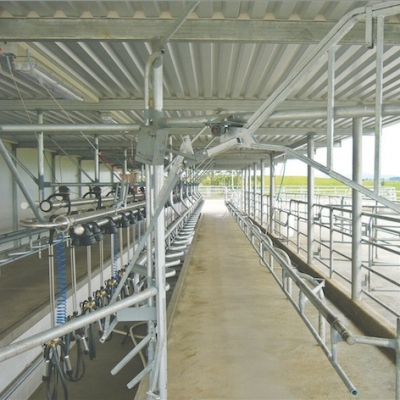
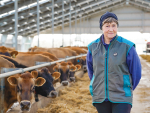
IRELAND’S NATIONAL research body Teagasc says dairy farmers need to examine labour use and efficiency.
Speaking at a Teagasc/ ICOS Dairy Expansion Seminar last week, dairy specialist Pat Clarke said that to efficiently use their work time farmers must simplify their operations, provide facilities adequate to their herd size and make timely use of contractors.
Those who start evening milking about 4.30pm are consistently found more labour efficient by having organised themselves between morning and afternoon milkings, he said. Studies have shown that 4.30pm milkings have no detriment to milk yield while allowing time for family and lifestyle.
Clarke emphasised suitable buildings, machinery, equipment and farm infrastructure are important to optimise labour efficiency, in particular adequate milking machine capacity, as milking typically consumes 34% of a dairy farmer’s total working time.
Clarke’s colleague John McNamara, Teagasc’s health and safety officer, cited international research showing the three main farm workplace stressors are long working hours and poor safety conditions, worries about money, and poor health.
McNamara urged farmers to look after their health because of the stress poor health causes, and its impact on income by limiting a farmer’s capacity to farm. He referred farmers to the health booklet ‘Staying Fit for Farming’ on Teagasc’s website. It has also been circulated as hard copy nationwide.
He also reminded farmers of their responsibility to make their farms “a safe and comfortable place to work for everybody.”
At the seminar Peter Byrne, chief executive of Farm Relief Services advised farmers to “gear up for more efficient labour use by looking at farm layout, roadways and buildings and identify changes necessary to improve labour efficiency.”
He outlined labour options including family, direct employment, student, contractor, Farm Relief Services and various collaborative farming arrangements.
“Each comes with advantages and disadvantages and the first thing every farmer should do is to identify which option suits their situation best.”
If employing extra labour he advised, “be aware of your legal requirements relating to the provision of a contract of employment, a payslip and a method for recording hours worked.”
Tom O’Dwyer, Teagasc’s head of dairy knowledge transfer stressed the importance of getting labour efficiency right before adding more cows. Currently the most labour efficient farms in Ireland manage 100 livestock units per labour unit, he pointed out.
“This has to be the benchmark in labour efficiency. But it is also important that dairy expansion does not take place at the expense of the farmer’s physical, mental and social health.”
The Farmer Health Booklet ‘Staying Fit for Farming’ is available at http://www.teagasc.ie/publications
Ireland and NZ have concluded a deal to extend a joint research programme on climate change.
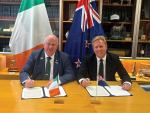
Ireland's Minister of state for Agriculture says it’s hard to explain to Irish farmers the size and scale of NZ farms.
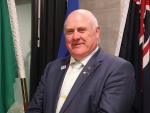
The Irish Minister of State for Rural Communities says his country and New Zealand face very similar challenges on a range of issues related to agriculture, including climate change, biodiversity and rural depopulation.
In the rural landscapes of New Zealand and Ireland, a shared agricultural heritage thrives, built on a strong mixture of tradition and innovation, with mirror image climates earning both countries global acclaim for their food quality and sustainable agriculture.
MPI director general Ray Smith reckons NZ has a lot to learn from the Irish Agriculture and Food Development Authority – called Teagasc (pronounced ‘Chog us’).


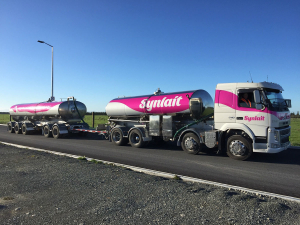
Synlait has swung to second-half profit as operations stabilise, but the dairy processor still posted a $75.4m annual loss.

LIC shareholders have elected a new North Island representative to the co-operative's Board, along with five representatives to its Shareholder Reference Group (SRG), following the company's Annual Meeting held in Invercargill.
Farmers across parts of Southland and South Otago are continuing to deal with difficult conditions after a prolonged run of wet weather, with pressure building around feed supply, stock management, pasture damage, farm infrastructure and everyday workloads.
Federated Farmers says it welcomes Labour's commitment to reviewing the Sharemilking Agreements Act, calling on other major parties to do the same.
For Canterbury dairy farmers Sian Meijer and Rick Wobben, wearable technology has become one of their most valuable on-farm tools - helping manage 1850 cows across an expansive, high-performing dairy operation while improving efficiency, mating outcomes and day-to-day decision making.
Fonterra has unveiled its annual results for the 2026 financial year, posting $27 billion in revenue and close to $20 billion returned to New Zealand farmer owners and unit holders.