Deer Industry NZ Eyes Market Recovery
It's our time to shine, says Deer Industry NZ chief executive Rhys Griffiths.
 increase font size
Consolidation in the deer industry in the last five years means mainly the more committed farmers are left, which is good for the industry, says Kris Orange.
“Some are expanding and generally the ones with a bit of scale are the ones sticking with it,” he says.
“This is the sixth season of over $100/kg for velvet so it has been very stable and that sort of money is quite profitable. Venison has been on a low for four or five years, but this year it looks like it will pick up a bit, partly through the exchange rate and partly through supply and demand. There’s probably less venison from New Zealand so there’s less to go around.”
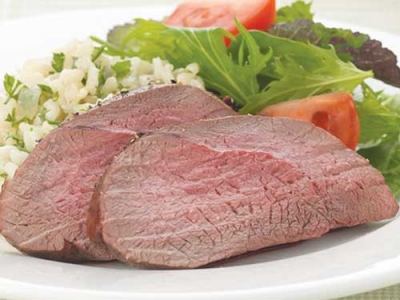
New markets outside the traditional market of Germany are developing, particularly with Cervena Venison, a brand product made from the high-end top part of the carcase which has to be under three years old. Of guaranteed quality, it is being pushed into the US and some trial work is underway in the Netherlands and Denmark.
In the traditional German market venison is seen as a meat you cook in a hot-pot for three-four hours. Cervena is used in barbecue or grill type meals which is not traditional for them though they are quite big beef eaters, says Orange. They are trying to get into that market with Cervena to appeal in a similar way to Wagyu beef products. It is not seasonal, but rather is in chilled form so could be in the market 52 weeks of the year.
“We are also doing some investigation in China, mainly targeted at western world people living there. Some big hotels might take on something like that.”
The Passion to Profit primary growth partnership (PGP) just started in the last six months. Under the project, deer is the first in the NZ meat industry to get its main processors in the same room working together. The objective is to market Cervena into new markets and the PGP is also trying to lift farmer output production-wise.
“We’ve got Alliance, Silver Fern, Duncan NZ Ltd, Firstlight and Mountain River all signed up to the document and working out how that will work. Cervena will be the brand; it doesn’t matter who processes it, when it goes into the market it will be Cervena, with few other companies’ logos.
“It is all happening, it’s quite exciting. The wheel never turns as quick as you like but it is starting to roll now.”
It's our time to shine, says Deer Industry NZ chief executive Rhys Griffiths.
Management practices that aim to cull the poor performers rather than boost the best are a key to success for Canterbury deer farmer Stu Stokes.
Improved market conditions for venison are expected for the 2021 season, according to industry body Deer Industry NZ (DINZ).
Innes Moffat says he is optimistic for exports of venison in 2021.
While the deer industry faces several challenges in the short term, there will be a strong rebound in New Zealand venison sales once global demand recovers.

Now in its fourth year, the 2026 Fencing Industry Awards, formed part of the proceedings of the FCANZ Conference, held in Nelson during August.
DairyNZ deputy chair Cameron Henderson has been re-appointed unopposed for another term.
OPINION: The stats speak for themselves.
Farms across the upper North Island are trialling different pasture mixes as part of a research programme that aims to build greater resilience into farming systems.
Election years are always a concerning time for farmers, according to DairyNZ chair Tracy Brown.
The Ballance Farm Environment Awards are coming to the West Coast of the South Island.