McRae Wins Southern South Island B+LNZ Director Vote
Matt McRae, a farmer from Mokoreta in Southland who runs a sheep, beef and dairy support business alongside a sheep stud, has been elected to the Beef +Lamb NZ Board as a farmer director.



 increase font size
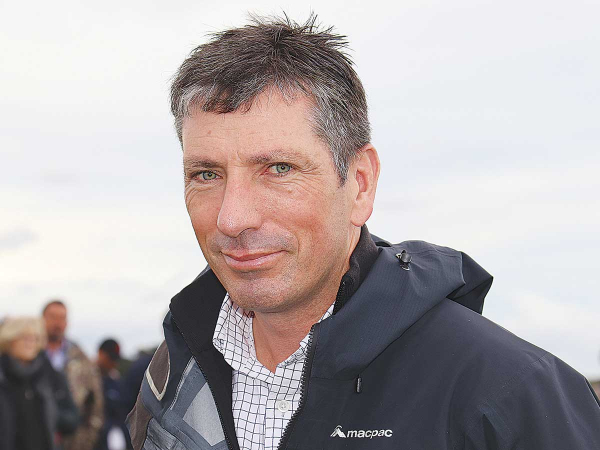 Beef+Lamb NZ chief executive Sam McIvor.
People should be able to eat red meat and not feel guilty about it, according to Beef+Lamb NZ chief executive Sam McIvor.
He says some of the narrative from the alternative protein lobby groups is starting to resonate in the community to the point where people are being made to feel guilty about eating red meat. He says that commentary needs to be countered.
“The way these people [alternative protein lobby] have marketed themselves is that they have cast aspersions on natural meat production,” he told Rural News. “The two angles that they come from is the negative impact of red meat production on the environment and the animal welfare aspect.”
McIvor says what is concerning is that lobby groups have become effective in influencing policy makers, to the point where the world cancer organisation has questioned the role of meat in the diet.
“We also see government departments, including our own Ministry of Health, starting to talk about taking meat out of the diet because of environmental impacts. What we are seeing is a growing societal commentary around meat with people raising issues such as whether it is ‘safe’ in their diet as well as environmental and animal welfare issues.”
But McIvor says the reality is that there is large bunch of people who like meat in their diet and argue, equally convincingly, that meat is good for you and that it is a sustainably produced product. But he says in some circles of society speaking out in favour of meat is often questioned.
“People who love meat should not be made to feel guilty about their choice because there are compelling arguments in favour of their preference.”
He says opponents of red meat should be reminded that in NZ, animals are ‘free range’, that NZ is ranked number two in the world for animal welfare and – as a country – we have an absolute commitment to the environment.
McIvor points out that NZ meat producers don’t use hormone growth promotants and make minimum use of antibiotics to treat our stock. He says those who criticise our farming systems should be aware that 1.4 million hectares of land is held in native bush on NZ’s sheep and beef farms.
He adds that many countries have the highest regard for NZ meat products and says China, for example, sees meat as a product which is special to their people’s health and wellbeing and that is a driver for their consumption of meat.
“I was on a call with the chief executive of the National Beef Cattleman’s Association in the USA recently and he was talking about what has happened with meat consumption there through the Covid situation,” McIvor told Rural News. “He told me that they have evidence that in supermarkets, red meat has sold out, while artificial meat was still on the shelves unsold.
“He made the interesting observations that people have gone back to the things they know and they can trust such as red meat,” he says.
Matt McRae, a farmer from Mokoreta in Southland who runs a sheep, beef and dairy support business alongside a sheep stud, has been elected to the Beef +Lamb NZ Board as a farmer director.

Ospri is reducing TB testing frequencies and movement control measures as the disease risk subsidies in parts of the country.
Recent widespread autumn rain will have triggered the germination of subterranean clover seeds, and the resulting seedlings should be allowed to reach the 3–4 trifoliate leaf stage before grazing, says Beef+Lamb NZ.
Southland farmer and director Tony Cleland has been named OSPRI New Zealand’s new chair.
A hub farm in each of Beef + Lamb NZ’s seven regions and more focus groups are being rolled out for the red meat sector this year.


Federated Farmers says it welcomes Labour's commitment to reviewing the Sharemilking Agreements Act, calling on other major parties to do the same.
For Canterbury dairy farmers Sian Meijer and Rick Wobben, wearable technology has become one of their most valuable on-farm tools - helping manage 1850 cows across an expansive, high-performing dairy operation while improving efficiency, mating outcomes and day-to-day decision making.
Fonterra has unveiled its annual results for the 2026 financial year, posting $27 billion in revenue and close to $20 billion returned to New Zealand farmer owners and unit holders.
The first major update to the Dairy Cattle Code of Welfare in more than a decade has been released, marking what DairyNZ describes as an important step in ensuring animal welfare standards continue to evolve alongside scientific evidence and on-farm realities.
Ravensdown shareholders have elected Jane Montgomery and Kate Acland to the Ravensdown Board for three-year terms, following a closely contested director election.
Federated Farmers says new legislation replacing the Resource Management Act will cut red tape, unlock investment and help grow New Zealand's export-led economy, after the Planning Bill and Natural Environment Bill passed their third reading in Parliament yesterday.




