
NZ Beef Mince Now Over $24/kg as Export Demand Stays Strong
New Zealand consumers are paying more for beef mince than ever before, with the average retail price now sitting above $24 per kilogram, according to Rabobank.
 increase font size
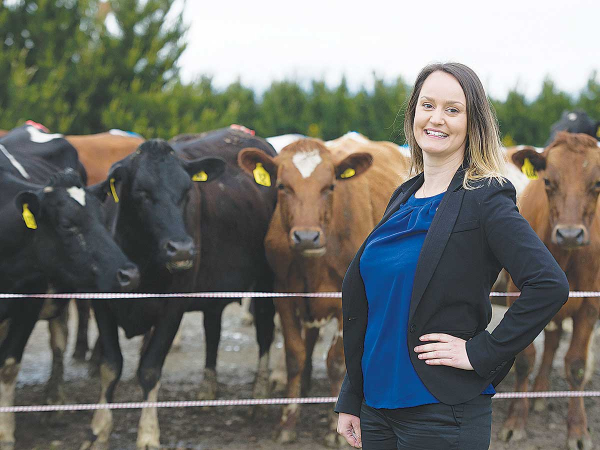 Rabobank senior agricultural analyst Emma Higgins says dairy supply and demand looks more balanced.
New Zealand is set to ride a wave of change in the coming year, but the dairy sector is in better shape than the red meat sector, says Rabobank senior agricultural analyst Emma Higgins.
Higgins says the dairy sector looks more balanced, due in part to less milk being produced in the coming 12 months by major milk producing nations and production matching demand, not flooding the market.
“The data shows that there are fewer hooves on the ground and milk yields are down, all of which will be to the advantage of NZ and help prices at the farmgate,” she told Dairy News.
A key factor for NZ is what is happening in China. Higgins notes that milk inventories in China, that have been high in recent times, are now declining along with the local milk supply.
She says this will set the scene for China to come back more positively into the market – especially in regard to whole milk powder.
“While this is good news, there are still some challenges ahead, with consumer data still showing us that sentiment is still weak and is not necessarily likely to change so much,” she says.
Higgins says the present situation is seen as a win for NZ, given the challenges that have existed in the Chinese market and still do for meat products.
But as in previous years there is still uncertainty. Higgins points to factors outside the control of NZ such as the Ukraine war and the attacks on shipping in the Red Sea. She says this could lead to another global supply chain shock, as occurred several years ago.
However, Higgins believes that the recent high farm input costs will likely see a reversal this year, resulting in more affordable fertilisers and agrichemicals.
“All this depends on what happens in the Middle East,” she says.
The other factor out of NZ’s control is the possibility of some global political instability. Almost half of the world’s population is set to go to the polls in 2024. Higgins says these elections are taking place in country’s which are some of NZ’s key trading partners such as the US, the EU, UK, Korea and Indonesia.
At the same time, NZ will have to tread a fine path with China – our biggest export market.
“Maintaining good relations with China is crucial for our farmgate prices,” says Higgins.
She says NZ must walk a fine line between standing up for its own values while constructively engaging with such a huge market, which gives us preferential access and can pay a premium for our products.
New Zealand consumers are paying more for beef mince than ever before, with the average retail price now sitting above $24 per kilogram, according to Rabobank.

West Otago dairy farmer Luke Kane has been awarded the 2026 Rabobank Dr John Morris Business Development Prize.
Twenty five secondary school students from around New Zealand recently completed a three day residential programme designed to explore career opportunities across the food and fibre production supply chain.
OPINION: With 10,500 dairy farms, New Zealand continues to punch above its weight around the world.
A team effort that is paying dividends for the wider New Zealand economy.



New Zealand's pest problem has reached crisis point, according to Federated Farmers' second National Pests Survey, which shows farmers are spending more money and effort on control — yet pest numbers keep climbing faster than they were two years ago.

Testing confirms H5 bird flu in a single northern giant petrel, found dead on a remote Cape Palliser beach in the Wairarapa, says Dr Mary van Andel, the Ministry for Primary Industries' (MPI) Chief Veterinary Officer.
"What's for dinner?" may sound like a simple question, but for many Kiwi parents, answering it has become a job in itself.
Fifty Eight years ago, on the 16th of August 1968, August Claas, the founder of the harvesting company and father of Helmut Claas, personally presented a Claas Senator combine harvester to Scottish farmer John Steven.
New Zealand consumers are paying more for beef mince than ever before, with the average retail price now sitting above $24 per kilogram, according to Rabobank.
State farmer Pamu has delivered its strongest operating result on record.