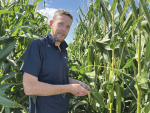
Fall Armyworm in NZ Maize: Four Years of Research
Four years since it was first detected in New Zealand, researchers and growers now know much more about management of maize pest fall armyworm (FAW).
 increase font size
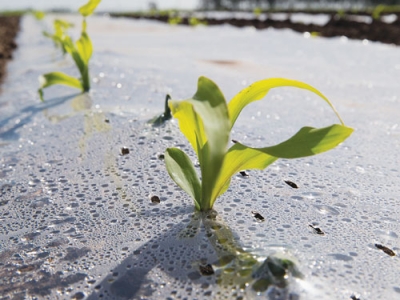 A greenhouse effect keeps the young maize seedlings in a warm and humid environment.
One of the biggest recent advances in maize agronomy has been the growing of maize crops under film using the SAMCO System.
This allows the production of higher yielding maize crops in cooler regions and can even allow the establishment of successful crops in areas previously considered marginal.
The SAMCO System 3-in-1 maize-planting machine was awarded the Innovation Award for International Distinction at the 2014 National Fieldays. Developed in Ireland, it plants the maize seed, sprays the soil with a pre-emergent herbicide and covers the planter rows with a degradable film in a single pass.
The degradable and breathable film creates a greenhouse effect by keeping the young maize seedlings in a warm and humid environment for four-six weeks. During this time, plants are protected from late frosts and adverse weather and they grow faster because there is more heat. The film also helps to conserve soil moisture.
When the maize plant touches the film, the root system develops more rapidly and this helps to sustain the plant in the later growth stages. Eventually the plant breaks through the film and is on its way to producing a high-yielding crop. The SAMCO film itself is naturally broken down by warm temperatures and ultraviolet light, and the residue is eaten by soil microorganisms, meaning eventually it completely disappears.
I’ve observed the SAMCO System in various regions over the past growing season. It offers a number of advantages.
In traditional maize growing areas crops can be planted up to four weeks earlier, allowing earlier harvest and subsequent establishment of pasture or a winter crop. Alternatively growers can plan a longer maturity maize hybrid and achieve higher drymatter yields.
In cooler or higher altitude areas SAMCO offers the opportunity to grow crops in areas previously considered too cold. It also protects the young plants from late season frosts for four-six weeks.
In drier areas SAMCO retains moisture for successful maize crop establishment. Ventilation holes in the film limit temperature buildup and prevent the young seedlings from overheating.
Research overseas and locally shows a number of factors that help get the best results out of the SAMCO System. These include:
For further information on growing maize under the SAMCO System, call 0800 746 633 or speak to your local Pioneer representative.
• Ian Williams is a Pioneer forage specialist. Contact him at This email address is being protected from spambots. You need JavaScript enabled to view it.
Four years since it was first detected in New Zealand, researchers and growers now know much more about management of maize pest fall armyworm (FAW).
As spring calving cows head into dry-off, the priority shifts to one thing: setting cows up to calve at the target body condition score (BCS).
Early December marks a key transition for many dairy farmers, as weaned replacement heifers head off-farm to grazing.
I recently had the pleasure of attending an AgFirst event in Hamilton where the results of the 2024-25 Waikato-Bay of Plenty Dairy Financial Survey were shared. Based on a 136ha farm milking 379 cows, average farm profit before tax was $405,892, an incredible 286% increase on the 23-24 season.
Over the past few months, I’ve had the privilege of speaking with many farmers at events and one-on-one.



LIC shareholders have elected a new North Island representative to the co-operative's Board, along with five representatives to its Shareholder Reference Group (SRG), following the company's Annual Meeting held in Invercargill.
Farmers across parts of Southland and South Otago are continuing to deal with difficult conditions after a prolonged run of wet weather, with pressure building around feed supply, stock management, pasture damage, farm infrastructure and everyday workloads.
Federated Farmers says it welcomes Labour's commitment to reviewing the Sharemilking Agreements Act, calling on other major parties to do the same.
For Canterbury dairy farmers Sian Meijer and Rick Wobben, wearable technology has become one of their most valuable on-farm tools - helping manage 1850 cows across an expansive, high-performing dairy operation while improving efficiency, mating outcomes and day-to-day decision making.
Fonterra has unveiled its annual results for the 2026 financial year, posting $27 billion in revenue and close to $20 billion returned to New Zealand farmer owners and unit holders.
The first major update to the Dairy Cattle Code of Welfare in more than a decade has been released, marking what DairyNZ describes as an important step in ensuring animal welfare standards continue to evolve alongside scientific evidence and on-farm realities.