Fall Armyworm in NZ Maize: Four Years of Research
Four years since it was first detected in New Zealand, researchers and growers now know much more about management of maize pest fall armyworm (FAW).
 increase font size
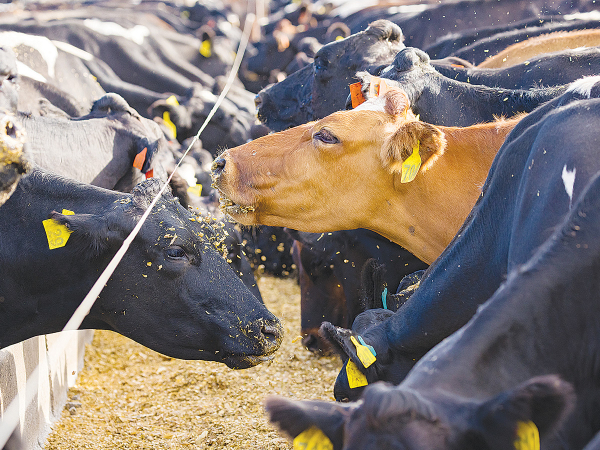 When things are tight, rather than changing systems, look at what improvements you can make within the system.
I started my career in agriculture in Northland in 1982 as a consultant for the Ministry of Agriculture and Fisheries.
I worked in the same region as Hugh Kirton, a legend in dairy consulting. Wanting to be the kind of consultant Hugh had become, I asked him what I needed to do. He told me there were only two things: (1) learn from your best farmers and (2) learn from the best scientists. I have taken Hugh’s advice. Farmers and scientists have been my teachers.
During the 40 or so years of my career, I have seen farming go through good times and tough times. There is no doubt this last season has been tough for many farmers.
Rising interest rates have made tight margins even tighter and they hit in a season which was heavily impacted by extreme weather events. It looks like the coming season could be another tough one. One thing I have learnt over the past four decades is that the top farmers who get through tough times best are the ones who only make minor system changes. In other words, they stick with their knitting. These farmers stay the course and keep doing what they know works.
Data from DairyNZ’s Economic Farm Survey shows this quite clearly. Figure 1 shows the return on assets (ROA) from different farm systems. The average ROA of the low, medium, and high feeding systems ranges from 5.3% to 6.9%. However, the ROA of the medium (System 3) ranges from below zero to more than 25%. In other words, the difference between systems is far less than the difference between farms running the same system.
When things are tight, rather than changing systems, look at what improvements you can make within the system you are currently running to reduce the impact of forces largely outside of your control.
If you are running a system which feeds maize silage, consider fine tuning your management to:
The key points can be summarised as follows:
Feed silage when you will get the best response rate.
The more milk produced per kilogram of dry matter fed, the higher the return. I have also written extensively on this, and the summary is:
Fill short term feed gaps to keep cows milking. When supplements are used well, it is reasonable to expect response rates of 80-130gmsMS.
Increasing BCS from a 4 to 5 results in an extra 15kgMS and earlier calving the following season.
Keep maize silage costs to a minimum.
The cost of feed has a big impact on the profit received. Some ways farmers can reduce feed costs are:
Consider growing maize silage on your effluent paddocks. Research has shown maize grown on effluent paddocks needs little or no fertiliser. This could save around $1,600/ha.
Think carefully how you source your maize silage.
Home-grown maize silage is usually cheaper however remember that difference in price between home grown and bought in maize is the price you are willing to pay for risk.
I have just covered ways farmers can maximise their return from feeding maize silage. However, there are many factors within a farm system that impact profitability.
If you are concerned about your system, it is worth getting either a farm consultant or a top farmer who is running a system similar to yours to have a look at how you can improve physical and/ or financial performance. Alternatively, you can contact Wade Bell, Matt Dalley, or me through the Pioneer website (pioneer.co.nz).
Ian Williams is a Pioneer forage specialist. ContactThis email address is being protected from spambots. You need JavaScript enabled to view it.
Four years since it was first detected in New Zealand, researchers and growers now know much more about management of maize pest fall armyworm (FAW).
As spring calving cows head into dry-off, the priority shifts to one thing: setting cows up to calve at the target body condition score (BCS).
Early December marks a key transition for many dairy farmers, as weaned replacement heifers head off-farm to grazing.
I recently had the pleasure of attending an AgFirst event in Hamilton where the results of the 2024-25 Waikato-Bay of Plenty Dairy Financial Survey were shared. Based on a 136ha farm milking 379 cows, average farm profit before tax was $405,892, an incredible 286% increase on the 23-24 season.
Over the past few months, I’ve had the privilege of speaking with many farmers at events and one-on-one.



LIC shareholders have elected a new North Island representative to the co-operative's Board, along with five representatives to its Shareholder Reference Group (SRG), following the company's Annual Meeting held in Invercargill.
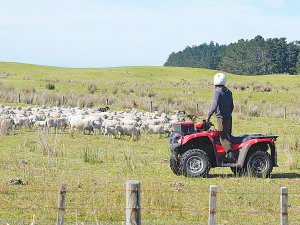
Farmers across parts of Southland and South Otago are continuing to deal with difficult conditions after a prolonged run of wet weather, with pressure building around feed supply, stock management, pasture damage, farm infrastructure and everyday workloads.
Federated Farmers says it welcomes Labour's commitment to reviewing the Sharemilking Agreements Act, calling on other major parties to do the same.
For Canterbury dairy farmers Sian Meijer and Rick Wobben, wearable technology has become one of their most valuable on-farm tools - helping manage 1850 cows across an expansive, high-performing dairy operation while improving efficiency, mating outcomes and day-to-day decision making.
Fonterra has unveiled its annual results for the 2026 financial year, posting $27 billion in revenue and close to $20 billion returned to New Zealand farmer owners and unit holders.
The first major update to the Dairy Cattle Code of Welfare in more than a decade has been released, marking what DairyNZ describes as an important step in ensuring animal welfare standards continue to evolve alongside scientific evidence and on-farm realities.