Turning data into dollars
If growing more feed at home adds up to $428 profit per tonne of dry matter to your bottom line, wouldn’t it be good to have a ryegrass that gets you there quicker?



 increase font size
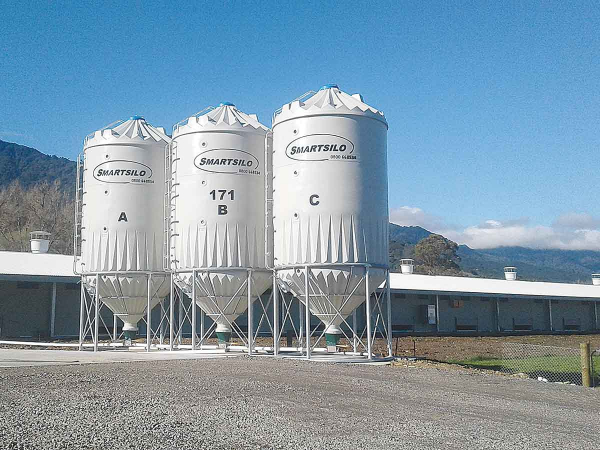 Smart Silos.
Made from rotationally moulded polyethylene, the Smart Silo range offers capacities from 280 litres to 30 tonnes.
They offer a longer lasting and more hygienic storage solution for all types of contents and operations.
New Zealand made and available direct from the manufacturer, Advantage Plastics, Smart Silos have been providing all types of farmers throughout the country with storage solutions for the likes of grains and feeds for two decades.
The one-piece product design means there is no assembly required on-site. More importantly, it eliminates the risk of moisture ingress and the spoiling of the contents.
Manufactured from medium density, food grade, UV-stable rated polyethylene, the silos are tough, durable and rust-free, so will retain their value and condition.
As part of the customisation package offered by Smart Silo, all framework and plastic moulding is carried out in-house, so the company is able to meet special requirements such as bespoke framing to accommodate machinery or systems, and colour matching to complement existing buildings or landscapes. They can also help with obtaining resource consents.
If growing more feed at home adds up to $428 profit per tonne of dry matter to your bottom line, wouldn’t it be good to have a ryegrass that gets you there quicker?
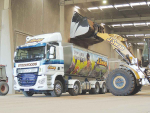
When buying supplementary feeds, farmers need to consider the entire package on offer – service, freight and all the components in a feed mix – not just focus on the price of the cheapest component – palm kernel meal, according to J. Swap Stockfoods sales manager Joe Hardman.
Two high producing Canterbury dairy farmers are moving to blended stockfeed supplements fed in-shed for a number of reasons, not the least of which is to boost protein levels, which they can’t achieve through pasture under the region’s nitrogen limit of 190kg/ha.
OPINION: Few things are more stressful for dairy farmers than running out of feed when cows need it most.
Now is not the time to stop incorporating plantain into dairy pasture systems to reduce nitrogen (N) loss, says Agricom Australasia brand manager Mark Brown.

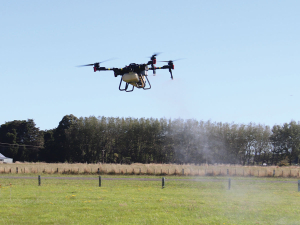
OPINION: David Seymour and James Meager's plan to make it easier for farmers and orchardists to operate drones can best be described a 'courageous' move.
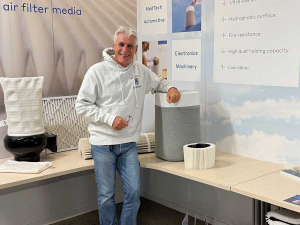
New Zealand wool is reaching new heights as air filtration companies move away from synthetic products to biodegradable alternatives.
Opuha Dam's ability to protect South Canterbury communities from major flooding has taken a significant step forward, with Opuha Water Limited (OWL) successfully commissioning a new outlet valve capable of releasing record volumes of water from the dam ahead of a weather event.
There's been widespread support from the primary sector for the Government's announcement on changes to freshwater farm plans that come under the Natural Environment Bill, which is now set to replace the existing RMA.
A partnership between state-owned enterprise Pāmu (Landcorp Farming Limited) and charity Meet the Need is putting more than quality New Zealand beef into food bank parcels this year.
The Opportunity Party has faced criticism during the election campaign that its policies are too urban-focused and offer little for rural communities.