ACT MPs Slam Green Party's Fertiliser Ban Policy
Retiring MP and dairy farmer Mark Cameron is blasting the Green Party for proposing to ban the use of synthetic fertiliser and cutting cow numbers.



 increase font size
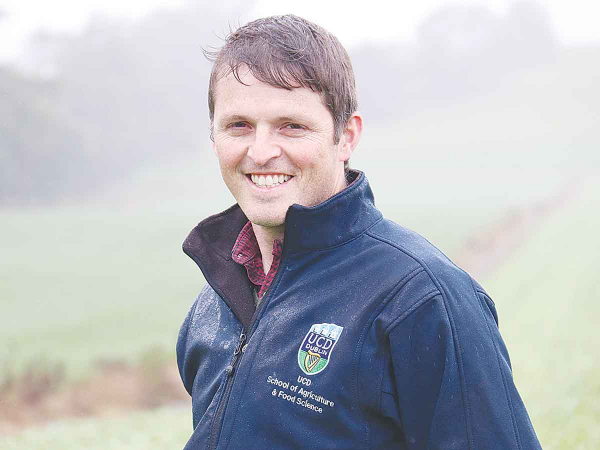 Professor Tommy Boland of the University College Dublin, like colleagues in NZ, is looking to find practical solutions that farmers can use to reduce their environmental footprint.
Complying with new and stricter environmental requirements is for farmers a major challenge worldwide.
When Rural News reporter Peter Burke was in Ireland last year, he met up with Professor Tommy Boland of University College Dublin (UCD) who, like colleagues in NZ, is looking to find practical solutions that farmers can use to reduce their environmental footprint and somehow meet the new standards of policy makers and politicians.
Tommy Boland has been to New Zealand several times and understands the situation in this country.
He says both countries are recognised for their efforts and achievements in environmental pasture-based meat, milk and fibre production, while leading the way in developing new approaches to ensuring future sustainability.
Boland believes farmers are very much engaged with the environment because they are dealing with it every day. However, he concedes that farmers in Ireland are frustrated by the targets that are being set for them – especially as the exact scale of emissions from agriculture is often over reported.
Sound familiar?
Recent research in both New Zealand and Ireland has shown that the emissions factors for calculating nitrous oxide emissions from pasture was over-estimating the actual production of nitrous oxide from dung and urine. “Farmers have a pretty good track record of adopting new technologies,” Boland told Rural News. “They are very dynamic, for the most part, when presented with an opportunity to improve their lot and that of the industry, quite often they will take it. But at the moment, researchers and rural professionals need to come up with more solutions and practical ones.”
He says there has been a lot of research carried out in Ireland to produce practical solutions to help farmers reduce their environmental footprint. This includes low emission slurry spreading techniques, which has quite positive results in terms of ammonia loss to the atmosphere. Boland says new fertiliser products will also help farmers, but adds that when it comes to the ruminant side there are fewer technology choices available.
One of the field trials he is working on at the UCD farms, just out of Dublin, is establishing three separate and isolated hydrological farms to accurately measure drainage rates and the nutrients (nitrates and phosphorous) in the water from these paddocks. The long term aims of this project include determining the impact of sward type on carbon sequestration. This research comes under a research project called ‘SMARTSWARD’, which aims to not only improve the quality of the pasture, but also to make production systems more sustainable from both an economic and environmental perspective.
Boland is one of a multi-disciplinary team working on this project, which includes Massey University on the UCD Long-term Grazing Platform. This will investigate a range of aspects including sward production and quality, animal health and performance, meat/milk quality and yield, soil health, biodiversity, water quality and carbon sequestration.
He is also involved with GREENBREED – lead by Professor Donagh Berry in Teagasc – to identify animals with a lower environmental impact.
“As a member of the EU we are committed to a 30% reduction in greenhouse gas emissions compared with 2005 levels,” Boland explains. “So, there is real pressure going on. If we don’t meet those targets, there will potentially be financial penalties for Ireland as nation.”
The race is on in Ireland, as it is in NZ, to find answers and quickly. Researchers in Ireland are looking at the diet of animals – grass species, feed additives in the concentrates they feed stock at certain times of the year and how best this feeding can be managed to reduce GHG emissions.
Boland says the issue is far from simple and the results are similar to what researchers have found in NZ, that such characterises are not found in any specific breed of animal – rather it is more genetic based within a breed. The other factor is the unintended consequences – meaning that an animal may be low emitter of GHG’s but may lack other vital productivity attributes.
Retiring MP and dairy farmer Mark Cameron is blasting the Green Party for proposing to ban the use of synthetic fertiliser and cutting cow numbers.
A five-year study has found that the cost of reducing emissions without technology may be significant and unsustainable for Northland dairy farmers.
OPINION: With the winter months officially here, I trust all is well at your place.
OPINION: The global crusade against fossil fuel is gaining momentum in some regions.
Specialist horticulture and viticulture weather forecasters Metris says the incoming Cyclone Vaianu is likely to impact growers across the country.


A Palmerston North shearer has been sentenced to six months' community detention and 12 months' supervision after being found to have physically abused three lambs while shearing them.
Power Farming has launched a joint venture in Southland.
Food rescue charity Meet the Need has released its 2025/26 Impact Report, revealing a record year of growth alongside a stark warning: demand for food support across New Zealand is rising faster than supply can keep up.
As we move into the second half of 2026, the Tractor and Machinery Association (TAMA) reports that Year-to-Date figures ending June 30 saw new tractor deliveries hitting 1,386 units or 10.7% ahead of the same period in 2025.
The avocado sector is entering the new season with a larger crop and positive market opportunities.
New Zealand growers have always adapted to changing conditions, but one challenge is steadily gaining ground across the horticulture sector: resistance.