
Pick-your-own becomes new floral trend
As the summer wedding season picks up, a new trend has come to the fore: Picking your own wedding flowers.



 increase font size
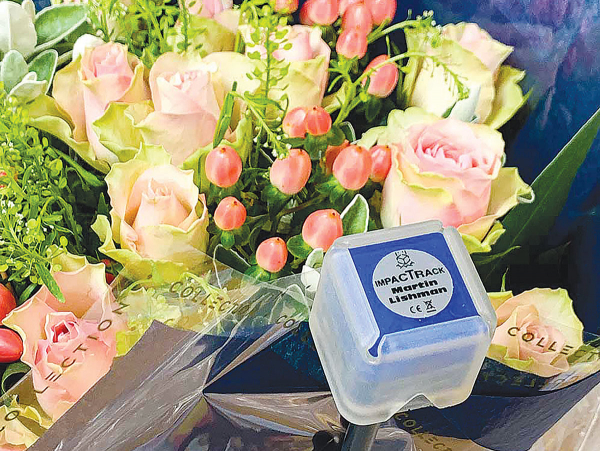 Martin Lishman’s data logger is designed to replicate the movement characteristics of fresh produce during handling and transport.
In an industry estimated to be worth up to US$9 billion a year, offering the highest quality flowers possible is at the forefront of any operation.
This is the challenge facing the global cut flower industry during all stages of processing and handling, from the grower to the consumer.
To analyse where impacts and temperature fluctuations occur, both within intentional supply chains and home delivery networks, UK-based MM Flowers turned to a data logger typically used in the fresh produce industry. The data captured gave the team an opportunity to understand exactly where problems occur and then develop mitigation methods and remedial procedures to reduce waste and improve the quality of the flowers.
Developed by UK-based crop quality specialists Martin Lishman Ltd, ImpacTrack is a shock sensing data logger that sits inside dummy produce shapes designed to replicate the movement characteristics of fresh produce during handling and transport.
Using advanced 3D printing technology, Martin Lishman's in-house design team can create virtually any shape of fresh produce that requires monitoring. "I discovered the ImpacTrack during my PhD, where the device was placed into a 3D-printed electronic parsnip and was used to identify destructive processes that cause damage during post-harvest processing", explains technical & quality developer of MM Flowers, David Booth.
"I could see its value for the cut flower market, so I worked with Martin Lishman to create what we have dubbed the Magic Flower".
Designed to be the same size and shape as a premium-quality rose and complete with interchangeable stem length, the Magic Flower is placed in a boutique for shipping.
"Supply chain challenges can cause sub-optimal transit conditions, so monitoring temperature and impacts during transit is key to identifying opportunities to improve the quality of our flowers," explains Booth.
ImpacTrack shapes can be made to a customer’s specific requirements, to ensure that they behave and react (including floating in water) in the same way as the real items being processed. The data recorded is as close as possible to the actual impact and temperature exposures.
The data is transmitted in real time using Bluetooth to the ML Sensing smartphone app, making it ideal for on-site analysis of handling equipment.
Operators can also use the app to record the journey of flowers during shipping and other transport methods.
The data is downloaded at the end of the journey and provides a record of impacts sustained and the temperature history.
As well as helping to improve transport packaging, this can provide insurers with evidence of where damage has taken place.
“The ImpacTrack gives MM Flowers an objective insight into how the flowers are being handled, highlighting impacts that would be very difficult to see with the naked eye and sudden changes in temperatures that could be potentially missed with traditional monitoring methods”, explains Gavin Lishman, managing director of Martin Lishman Ltd.
“The cost savings from even minor machine or packaging adjustments can be significant; given that the cost of the unit is relatively low it represents an unrivalled return on investment in this category of quality control”.
The company has worked with growers and producers worldwide to create a whole range of different ImpacTrack shapes.
New shapes with many different sizes, weights and shapes are constantly being created.
Booth says Martin Lishman’s service has always been exceptional, throughout his association with the company.
“The technology continues to progress and the price has come down – making employing the loggers at scale more realistic,” he adds.
“Access to the data is straightforward either via smartphone or via download for analysis. I would recommend the ImpacTrack to any fresh produce professional looking at reducing or mitigating processing or harvesting damage.”
As the summer wedding season picks up, a new trend has come to the fore: Picking your own wedding flowers.

A Gisborne based project is exploring an organic method of dealing with pests on citrus orchards by understorey planting to attract beneficial insects.


Farmer-owned fertiliser company, Ballance Agri Nutrients is welcoming National’s plan to negotiate security agreements with key supplier countries to protect New Zealand-bound products from export restrictions and greater supply chain certainty.

Carrfields has announced the appointment of Stu Hall to the newly created role of chief operating officer, Carrfields Ltd, reflecting the continued growth of their agribusinesses and the need to ensure the company has the leadership capacity and support in place as it pursues the emerging opportunities ahead.
New Zealand's role is not to compete with Indian growers, according to NZ Apples and Pears.
The potato industry is celebrating the success of two rising stars - James Blair, the 2026 Young Grower of the Year and runner-up and innovation award winner, Amber Davy.
Twenty-eight emerging leaders from across the horticulture sector spent two days last month learning valuable skills and connecting with industry experts.
There are five entrants in this year’s Young Horticulturist of the Year, competing in a series of technical, practical, business and leadership challenges.


OPINION: The same mainstream media muppets that brought you Jacindamania in 2017 have been flat out pimping for the Opportunities…
OPINION: Your old mate reckons the atrocious way farmers in the UK are treated by their lords and masters in…




