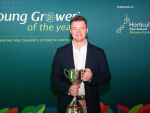
James Blair Named 2026 Young Grower National Champion
James Blair, an agronomist for AS Wilcox and the Pukekohe regional champion, has won the 2026 Young Grower national title.



 increase font size
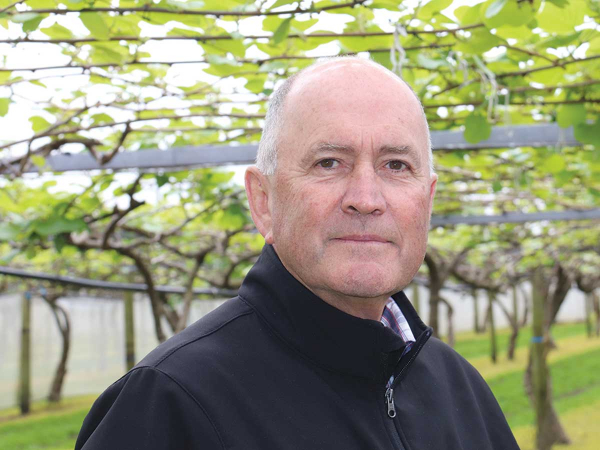 Hort NZ president Barry O'Neil described the past 12 months as one of the most bizarre and interrupted years ever.
Horticulture NZ's annual report for 2020-2021 shows it was a mixed bag for the country's growers.
It says there was growth in the sector and a general sense of rising to last year's challenges. However, this was countered by difficulty in finding skilled labourers, the effects of climate change and uncertainty regarding the future resulting in muted enthusiasm for the coming year.
"The past 12 months will likely go down as the most bizarre and interrupted year in most of our lifetimes," Hort NZ president Barry O'Neil explained.
He says that despite the unprecedented challenges the horticulture sector quickly adapted. O'Neil claims it adopted a more collaborative approach with other growers to growing crops, recruiting talented Kiwis and engaging with government on plan changes - as well as promoting recognition of horticultural land and its importance in feeding the nation.
"Some challenges have been from things out of our control like Covid-19, extreme weather events and shipping disruptions," he added. "But others should have been under our control if the Government supported our need to access Pacific seasonal labour to ensure our crops are picked and packed."
The lack of skilled temp and permanent workers from abroad and the difficulty of getting local Kiwis into taking up these jobs was - along with the international difficulties in shipping the harvested produce - the main source of trouble for the sector. Meanwhile, extreme weather events were more regionalized sources of trouble.
Although the report points to how in the early days of the pandemic, meetings between Hort NZ and the Government was able to keep the horticulture industry sector open. It nevertheless admits that it was unsuccessful in keeping many smaller, independent fruit and veg retailers open during the first lockdown. In subsequent lockdowns these independent retailers where allowed to stay open, however, the initial lockdown still caused a significant drop in business and revenue for said retailers.
O'Neil says that engagement with government through advocacy and industry representatives is key to preserving the gains being made for growers, and preventing losses.
"With such a complex change agenda, not all proposals are aligned, so we end up having to advocate [so] that the left and right hands talk to each other," he says.
"As Queen Elizabeth II once famously said, it was our 'annus horribilis', so let's hope going forward we return to annus mirabilis!"
The report also highlights that despite the challenges, horticulture largely rose to the economic task with an overall New Zealand market value of $6.73 billion. Earning $4.55 billion in exports, up from $4.2 billion in 2019.
Some 83% of surveyed growers also expressed satisfaction in Hort NZ's representation of issues facing growers.
"As an organisation, we are totally committed to working on your behalf to deliver the best possible outcomes for members and for growing in New Zealand," O'Neil added. "We would like to express our thanks to all growers and the wider horticultural sector for their ongoing commitment and passion."
James Blair, an agronomist for AS Wilcox and the Pukekohe regional champion, has won the 2026 Young Grower national title.
Blueberries have the potential to become a major horticultural export, earning up to $150 million within the next three to five years.
New Zealand needs to make sure that it continues to focus on its own food security, according to HortNZ board member and blueberry grower Dermott Malley.
According to a progress report on the Aotearoa Horticulture Action Plan (AHAP), New Zealand's horticulture sector is making real progress on the big issues facing growers.
Agriculture Minister Todd McClay has admitted that a scheme bringing workers from Pacific nations to work on orchards has become too hard to navigate but says changes are coming.



LIC shareholders have elected a new North Island representative to the co-operative's Board, along with five representatives to its Shareholder Reference Group (SRG), following the company's Annual Meeting held in Invercargill.
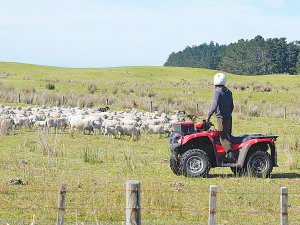
Farmers across parts of Southland and South Otago are continuing to deal with difficult conditions after a prolonged run of wet weather, with pressure building around feed supply, stock management, pasture damage, farm infrastructure and everyday workloads.
Federated Farmers says it welcomes Labour's commitment to reviewing the Sharemilking Agreements Act, calling on other major parties to do the same.
For Canterbury dairy farmers Sian Meijer and Rick Wobben, wearable technology has become one of their most valuable on-farm tools - helping manage 1850 cows across an expansive, high-performing dairy operation while improving efficiency, mating outcomes and day-to-day decision making.
Fonterra has unveiled its annual results for the 2026 financial year, posting $27 billion in revenue and close to $20 billion returned to New Zealand farmer owners and unit holders.
The first major update to the Dairy Cattle Code of Welfare in more than a decade has been released, marking what DairyNZ describes as an important step in ensuring animal welfare standards continue to evolve alongside scientific evidence and on-farm realities.


OPINION: The same mainstream media muppets that brought you Jacindamania in 2017 have been flat out pimping for the Opportunities…
OPINION: Your old mate reckons the atrocious way farmers in the UK are treated by their lords and masters in…




