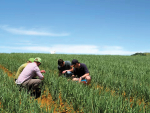
Keep What Works Working: NZ's New Resistance Campaign
New Zealand growers have always adapted to changing conditions, but one challenge is steadily gaining ground across the horticulture sector: resistance.



 increase font size
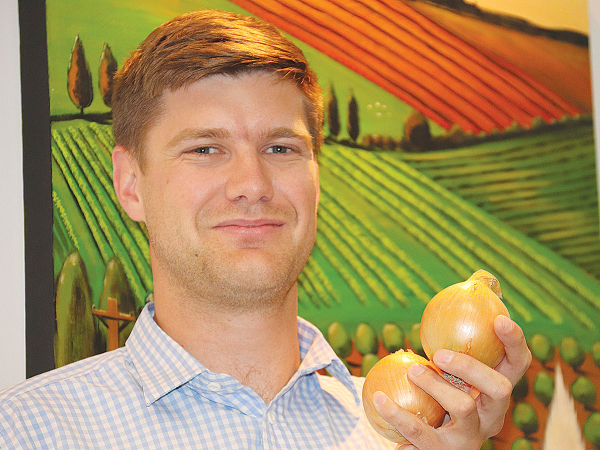 Onions New Zealand chief executive James Kuperus.
Onion export returns may look good for NZ, but the actual earnings for growers is far from great.
Onions New Zealand chief executive James Kuperus says it's been an incredibly difficult year for the sector. He says there's going to be a drop in revenue for growers due to increases in inputs including fertiliser, chemicals and labour. He says, on top of this, there have been massive shipping problems.
"All these factors have combined to reduce profitability right across the primary sector," Kuperus told Hort News.
He adds that there have been compounding issues with getting product out of the South Island to market, due to a lack of ships and containers down there. Kuperus says the weather has caused problems with a drought in Pukekohe, one of the main onion growing areas in the country, which reduced yields; the same happened in Hawke's Bay.
However, Kuperus says it was the heavy rain that caused problems in the Manawatū and Horowhenua regions.
"The result is that overall onion production is down by about 20%, which is very high.
"But at the same time, it's not a bad year to be down on production with the shipping issues," he explains. We probably wouldn't have been able to ship product if we had more and the end result is a difficult season, but it could have been worse."
Just on 80% of the onions grown in NZ are exported, with the main market being continental Europe - with Indonesia, Japan and Malaysia also taking some product. Kuperus says, in the past season, getting product to Europe was very difficult due to the shipping disruptions.
"Historically it would take about six weeks to get product to Europe, but in the past year it could have taken up to ten weeks," he says.
"With Europe it's a counter essential supply so we have a very limited window to get product in, so the net result was we were slightly back on sales to Europe but fairly consistent for the rest of the markets."
On the domestic market, he says it was pretty much business as usual and although there were some price fluctuations, the returns to growers were about normal.
Looking to next season, Kuperus says planting has started in Pukekohe and planting preparation was good despite some quite heavy rainfalls. He says growers are still going to have to contend with increasing input costs and says they will have to factor that into their businesses.
Kuperus says with rising fertiliser prices, growers will have to optimise its use, but adds if they cut back too much they run the risk of reduced yields and quality.
Tears of Joy For EU Deal
Kuperus says the future prospects are looking quite good with tariffs coming off in the UK and the slightly longer prospects of tariffs coming off in the EU as a result of the recent FTA.
He told Hort News that in the last three years NZ has exported on averaged $75m worth of onions a year to the EU. Kuperus says the tariffs on these exports range from between $6.5m to $7m a year.
"For our industry that is quite a substantial saving."
Kuperus says it's likely to be 2024 before the EU FTA officially takes effect. He says the onion sector is very grateful for the excellent work done by the NZ trade negotiators.
New Zealand growers have always adapted to changing conditions, but one challenge is steadily gaining ground across the horticulture sector: resistance.

Exporters need to understand that India should not be seen as just one country to export to, rather a country of many unique states and regions.
Onion exports to the lucrative Indonesian market are resuming after officials negotiated an end to costly pre-export methyl bromide fumigation.
Some smart planning by NZ’s onion growers has enabled them to quickly cash in on the Free Trade Agreement between New Zealand and the European Union which came into effect on May 1.
NZ onion growers are getting an extra $3 million this season for exports to the European Union, thanks to the early ratification of a free trade agreement (FTA).


New Zealand's citrus growers were challenged to build their future on the value embedded in their fruit rather than the volume they produce, at Citrus New Zealand's annual gathering in Gisborne on 17 September.

Leading John Deere technicians and apprentices from New Zealand and Australians were recognised at the recent sixth annual JD Technician of the Year Awards, held in Brisbane.
In Dacre, near Invercargill in New Zealand’s South Island, Bruce Dinnington is running a dairy operation unlike any other.
A free online platform aggregating governance vacancies across rural and regional New Zealand has been launched.
Environment Minister Nicola Grigg has announced details of a new rural plastics recycling scheme.
Agricultural drone operators say that a government decision to allow lower-risk drone work without certification won’t lower standards but drive innovation and efficiency.



OPINION: The same mainstream media muppets that brought you Jacindamania in 2017 have been flat out pimping for the Opportunities…
OPINION: Your old mate reckons the atrocious way farmers in the UK are treated by their lords and masters in…




