NZKGI Responds to Migrant Worker Exploitation Reports
Where any worker in the kiwifruit industry is mistreated, we expect the authorities to take action.



 increase font size
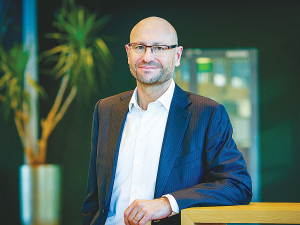
 T&G Global chief executive Gareth Edgecombe.
T&G Global wants to continue its transformation towards becoming the world’s leading, premium fresh produce company, says chief executive Gareth Edgecombe.
However, it was not without its challenges, he concedes in the company’s annual report.
“Over the past few years, our financial performance has been weak, with market forces putting pressure on our operating model and our investments for the long term yet to see yields.
“To unleash our full potential, we had to evolve. This hasn’t been easy and some of the decisions we’ve made have been tough, but they were needed.”
He claims the company is now one year into its three-year roadmap for growth, with “many green shoots are coming through”.
In the year to December 31, 2019 the operating profit increased to $16.5 million, from $15.6m million in 2018. Revenue was maintained at $1.2 billion and profit for the year $6.6 million, compared to $8.3 million in 2018.
Strong sales and margin growth were achieved in key export markets, including Asia, Australia, the United States, United Kingdom and Pacific Islands, says Edgecombe.
An “enviable” premium position was built in the United States for Envy, with sales revenues increasing by 43%.
The transition continued to premium apples, including the re-planting of some orchards.
“While this has had a cost impact, it’s vital for setting us up for the future,” says Edgecombe.
The company divested low returning or non-core assets to use cash more productively and re-invest it into capability and infrastructure to support our future growth. This included the sale of its Mt Wellington site in Auckland for $65 million.
T&G is harnessing its vertical model strengths to develop two new categories – blueberries and grapes.
“We’re one year into this plan and expect it to take another few years to see the value. We see a strong future for these emerging categories.”
The company is boosting its in-market sales presence in Asia and moving globally towards a world-class sales model.
Edgecombe says the International Produce division had a strong close to the year, increasing revenue by 14%, to $305.1 million, largely driven by its Asian trading business boosting revenue by $40.6 million.
“A critical aspect of realising the potential of our Apples division is the increased focus on premium varieties. In 2019, this saw us re-planting some orchards which, while vital for setting us up for the future, had a cost impact,” says Edgecombe.
“In the United States, as a result of bolstering our sales and marketing expertise and an integrated activation programme, we accelerated the growth of our premium apple brands, delivering 43% growth in Envy sales.
Meanwhile, favourable growing conditions in NZ throughout 2019 resulted in an abundance of supply.
“This adversely affected sales values across most product groups, resulting in a 2% decline in revenue for our New Zealand Produce division, to $227million.”
Where any worker in the kiwifruit industry is mistreated, we expect the authorities to take action.

Kiwifruit growers are watchful but remain optimistic as concerns around the potential effects of the El Niño weather pattern this season.
More signs of a booming kiwifruit sector.
James Blair, an agronomist for AS Wilcox and the Pukekohe regional champion, has won the 2026 Young Grower national title.
Claimed to be the first autonomous robot for New Zealand vegetables growers, the first Kilter AX-1 unit has arrived in the country.

Farmer-owned fertiliser company, Ballance Agri Nutrients is welcoming National’s plan to negotiate security agreements with key supplier countries to protect New Zealand-bound products from export restrictions and greater supply chain certainty.

Carrfields has announced the appointment of Stu Hall to the newly created role of chief operating officer, Carrfields Ltd, reflecting the continued growth of their agribusinesses and the need to ensure the company has the leadership capacity and support in place as it pursues the emerging opportunities ahead.
New Zealand's role is not to compete with Indian growers, according to NZ Apples and Pears.
The potato industry is celebrating the success of two rising stars - James Blair, the 2026 Young Grower of the Year and runner-up and innovation award winner, Amber Davy.
Twenty-eight emerging leaders from across the horticulture sector spent two days last month learning valuable skills and connecting with industry experts.
There are five entrants in this year’s Young Horticulturist of the Year, competing in a series of technical, practical, business and leadership challenges.

OPINION: The same mainstream media muppets that brought you Jacindamania in 2017 have been flat out pimping for the Opportunities…
OPINION: Your old mate reckons the atrocious way farmers in the UK are treated by their lords and masters in…




