
Primary sector leaders praise speed and ambition of India–NZ free trade deal
Primary sector leaders have praised the government and its officials for putting the Indian free trade deal together in just nine months.



 increase font size
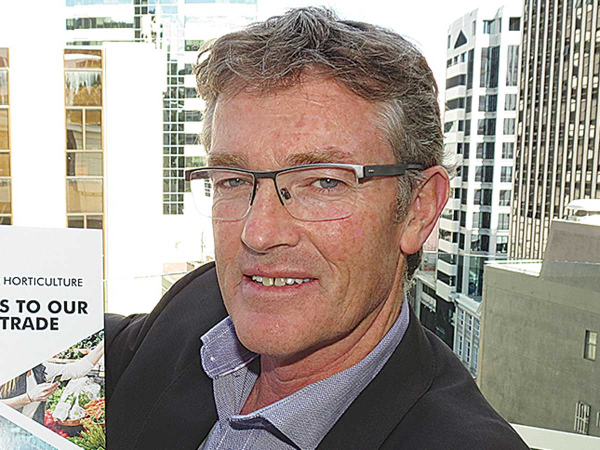 Simon Hegarty believes that while market prospects look reasonably promising for the coming seasons, the logistics supply chain issues are as bad - if not worse - than last year.
NZ's horticulture sector is facing headwinds on a number of fronts, according to Horticultural Export Authority (HEA) chief executive Simon Hegarty.
HEA is the sector organisation which promotes the export of horticultural products and also liaises with sector stakeholder groups on matters relating to market access, trade barriers and their removal.
Hegarty says while market prospects for products look reasonably promising for the coming seasons, the logistics supply chain issues are as bad - if not worse - than last year with no exporters immune from disruptions.
"We think that there will be major problems getting our perishable products to market on schedule to meet customer requirements," he told Hort News. "There is a lot of uncertainty around which is creating extra tension and stress in the sector."
Hegarty says some sectors, such as kiwifruit, are better placed because they have scale and can manage or partly manage some of the issues through existing charter arrangements. However, he says it will still be affected or at least partly affected in some shape or form. "Certainly, the smaller to medium-sized operators will have a tough time securing space at affordable rates," he adds.
"The larger ones will also have complications and difficulties as well."
Hegarty says the shipping lines are mostly focused on the Asia to North American, and Asia to Europe trades - which are the most lucrative at the moment. He says there has been a lot of rescheduling of shipping to those zones.
"This means the more isolated destinations or pick up points - such as NZ - drop down the priority ladder. We are going to be finding fewer vessels calling and greater difficulty getting equipment such as reefer containers, which are needed for most of our food exports."
Hegarty says another issue is that with fewer and larger vessels coming to NZ, it is likely that some of the smaller ports will find themselves left off the schedules. This is not new, but it is likely to extend deep into 2022.
"There will also be difficulties getting product on vessels because of the competition for space," he told Hort News.
"With reduced number of vessels calling to NZ and more infrequently, competition for securing space on these vessels, not to mention the historically high shipping rates, add to the uncertainty," he explains. "Shipping rates are at least four times higher than they were pre-Covid, so the cost and delays they may encounter to get to their destination ports are going to make exporting very risky."
Hegarty says there is not much an individual exporter can do to change the present situation because it is a global logistics issue. He says everyone is the victim of broader circumstances and the best they can do is manage their individual risks as best they can.
He believes that the logistical cost increases and risks will place greater pressure on net returns. "It is certainly going to be a tough period ahead for exports."
Primary sector leaders have praised the government and its officials for putting the Indian free trade deal together in just nine months.

"Unwelcome" is how the chief executive of the Horticulture Export Authority (HEA), Simon Hegarty, describes the 15% tariff that the US has imposed on primary exports to that country.
Non-tariff trade measures (NTM) remain a problem for NZ exporters, according to Horticulture Export Authority (HEA) chief executive Simon Hegarty.
Fruit and vegetable farmers and beekeepers are welcoming the signing of the Free Trade Agreement (FTA) with the European Union (EU) today.
NZ's horticultural exports have risen in dollar terms, but at the same time, percentage wise, the tariffs these incur have dropped by nearly two thirds since 2004.



LIC shareholders have elected a new North Island representative to the co-operative's Board, along with five representatives to its Shareholder Reference Group (SRG), following the company's Annual Meeting held in Invercargill.
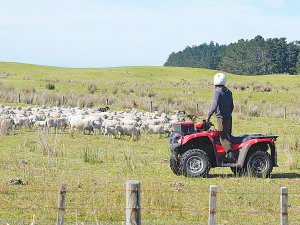
Farmers across parts of Southland and South Otago are continuing to deal with difficult conditions after a prolonged run of wet weather, with pressure building around feed supply, stock management, pasture damage, farm infrastructure and everyday workloads.
Federated Farmers says it welcomes Labour's commitment to reviewing the Sharemilking Agreements Act, calling on other major parties to do the same.
For Canterbury dairy farmers Sian Meijer and Rick Wobben, wearable technology has become one of their most valuable on-farm tools - helping manage 1850 cows across an expansive, high-performing dairy operation while improving efficiency, mating outcomes and day-to-day decision making.
Fonterra has unveiled its annual results for the 2026 financial year, posting $27 billion in revenue and close to $20 billion returned to New Zealand farmer owners and unit holders.
The first major update to the Dairy Cattle Code of Welfare in more than a decade has been released, marking what DairyNZ describes as an important step in ensuring animal welfare standards continue to evolve alongside scientific evidence and on-farm realities.


OPINION: The same mainstream media muppets that brought you Jacindamania in 2017 have been flat out pimping for the Opportunities…
OPINION: Your old mate reckons the atrocious way farmers in the UK are treated by their lords and masters in…




